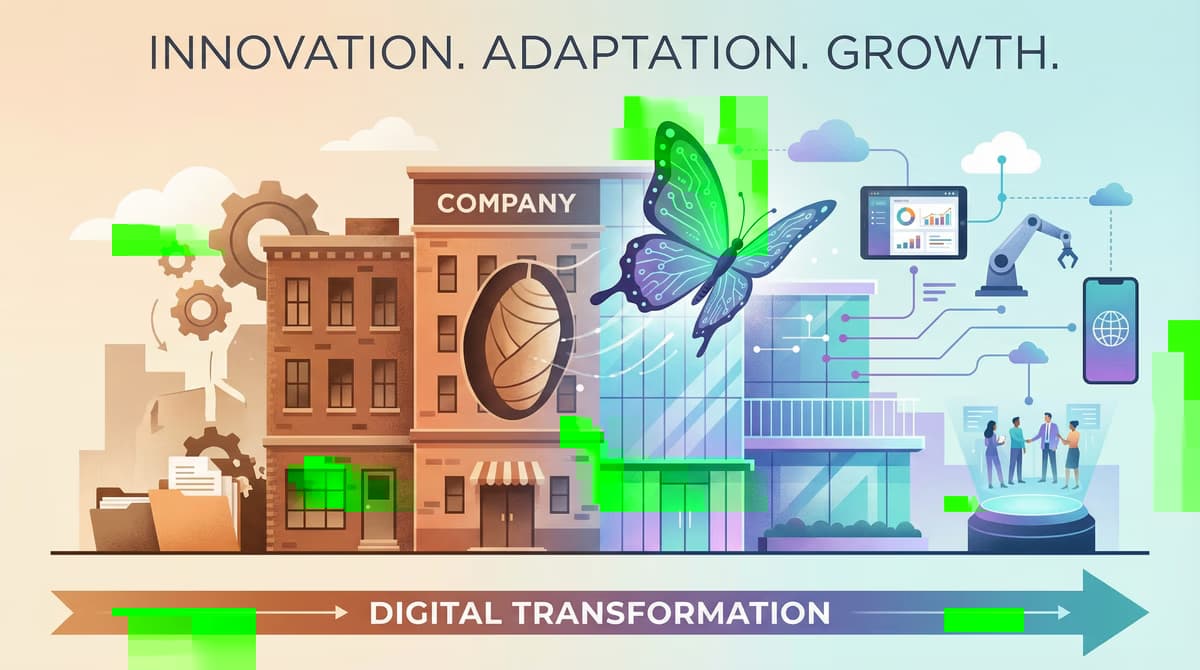
As of: 23 September 2026 · Reading time: 4 min
Key takeaways
- Digital transformation is no longer an option for small and medium-sized enterprises (SMEs), but a need to compete.
- But while many companies are new ...
Digital transformation is no longer an option for small and medium-sized enterprises (SMEs), but a need to compete. But while many companies are new ...
“Good software is not an accident—it comes from a structured development process with clear quality standards.”
– Björn Groenewold, Managing Director, Groenewold IT Solutions
Digital transformation is no longer an option for small and midsize companies (SMEs). However, a need to compete.
But while many companies invest in new technologies, they often overlook the decisive factor for successful rollout.
Their own organizational culture. Digital transformation in SMEs is only possible if employees carry the change and the corporate culture actively promotes it.
The two sides of the digital transformation: More than just technology
Digital transformation is no longer an option for small and midsize companies (SMEs), but a need to compete.
If Digital transformation: How the change in organizational culture… is on your roadmap, View services und Discover solutions outline services and next steps.
Often, the digital transformation is incorrectly reduced to the pure rollout of new software or the automation of processes. But this is only one side of the medal.
The other, far more decisive side is the resulting change in the thinking and functioning of the entire company.
It is about creating a culture in which digital technologies are understood not as a threat but as a chance.
A culture characterized by openness, willingness to learn and the courage to go new ways. This cultural change is not a self-professor.
However, must be actively designed and previved by the management of the company. It is not enough to introduce new tools.
Employees must also be empowered and motivated to use them effectively and to adapt their working methods.
Why the organizational culture is the key to success
A corporate culture that supports digital change is crucial for several reasons.
It promotes the acceptance of new technologies among employees, accelerates innovation processes and increases the agility of the company.
Employees who find themselves in corporate culture and share their values are more motivated, more committed and actively contribute to the success of digital transformation.
Open and transparent communication on the part of the leadership is essential to reduce fears and uncertainties and to inspire the workforce to change.
A positive and supportive culture can thus become a decisive competitive advantage, as it sustainably strengthens the new strength and adaptability of the company.
The biggest cultural obstacles to SMEs
Especially in SMEs, often characterized by long-term traditions and proven processes, cultural hurdles can make digital transformation considerably more difficult.
The most common challenges include resistance to changes, fear of the unknown and a lack of digital mindset.
The following table shows some of these hurdles and possible solutions:
| Cultural hurdle | Possible solutions |
|---|---|
| Resistance against changes | Transparent communication, employee involvement in the change process, training and further education |
References and further reading
The following separate references complement the topics in this article:
- Bitkom – German digital industry association.
- German Federal Office for Information Security (BSI).
- European Commission – Digital strategy.
- MDN Web Docs (Mozilla)
- W3C – World Wide Web Consortium.
"DevOps is less about tools and more about shared ownership of quality and release discipline."
— Björn Groenewold, Managing Director, Groenewold IT Solutions
Frequently Asked Questions (FAQ)
What is this article about: “Digital transformation: How the change in organizational culture becomes a success fact…”?
This post explores Digital transformation. How the change in organizational culture becomes a success fact… from the perspective of needs, typical pitfalls. And sensible next steps. In short.
Digital transformation is no longer an option for small and midsize companies (SMEs). However, a need to compete.
Who benefits most from the content described here?
Useful for project leads and product owners in Software development who must choose between standard software, custom development, and integration.
How does this topic fit into an IT or digital strategy?
Technically and organizationally, alignment with experienced partners pays off — from requirements to operations; start with the [services overview](/en/services/software-development). For multi-system landscapes, [IT consulting and architecture](/en/services/it-consulting) helps align vendors and internal teams.
What are sensible next steps if we need support?
A practical next step: book a consultation and clarify which MVP or pilot fits your team and landscape.
About the author

Managing Director of Groenewold IT Solutions GmbH and Hyperspace GmbH
Since 2009 Björn Groenewold has been developing software solutions for the mid-market. He is Managing Director of Groenewold IT Solutions GmbH (founded 2010) and Hyperspace GmbH. As founder of Groenewold IT Solutions he has successfully supported more than 250 projects – from legacy modernisation to AI integration.
Blog recommendations
Related articles
These posts might also interest you.

Logistics software: seamless integration with ERP systems as key to success
In today's fast-paced and globalised economy, efficient logistics processes are a decisive competitive advantage. Companies face the challenge of their supply chains...

Logistics Software: Cloud vs. On-Premise – What solution fits your company?
In today's fast-paced and globalised economy, efficient logistics is crucial for the success of a company. A powerful Software for Logistics is...
Data protection in the public sector: A comprehensive view of the specific requirements
In an increasingly digitized world, the protection of personal data is of fundamental importance. This is particularly true for the public sector, which is an immense amount ...
Free download
Checklist: 10 questions before software development
Key points before you start: budget, timeline, and requirements.
Get the checklist in a consultationRelevant next steps
Related services & solutions
Based on this article's topic, these pages are often the most useful next steps.
Related services
Related solutions
Practical next steps after Digital transformation: How the change in organizational culture becomes a success factor
Digital transformation: How the change in organizational culture becomes a success factor addresses a practical choice for product and IT teams. Start with one clear goal: align software scope, technical risk, and business value before the next investment.
Check the current process, the data involved, and the result users need. Then record the main risks and define a small first step. This keeps the decision easy to review and gives your team a shared basis.
For implementation support, our custom software development connects the article's guidance with architecture, delivery, and stable operations. Engineering and project ownership stay with our team in Leer, Germany.
This post belongs to Software development. Browse the related Software development articles or use the English software blog for other topics.
When budget is the next question, the software cost calculators provide planning ranges. The IT glossary explains key terms, while in-depth technology guides cover wider decisions.
If the topic affects a live project, book a technical consultation or send the context through our project contact form. We usually reply within one working day.