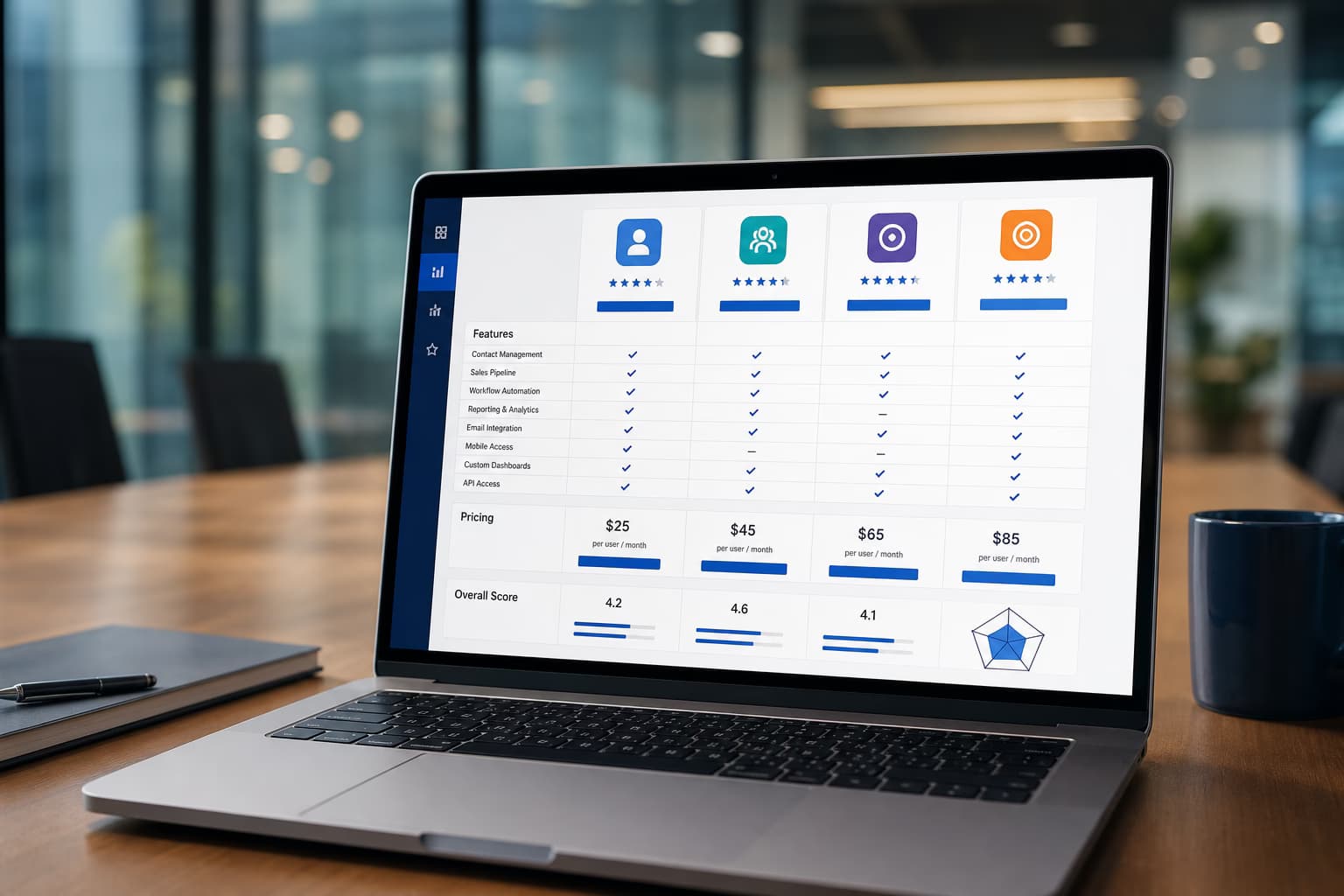
A CRM system is often the hub for leads, opportunities, customer service and marketing automation. The market spans global cloud suites, Microsoft-centric stacks, open-source CRM and industry-specific tools. This comparison focuses on mid-market decisions: architecture fit, realistic total cost, and integration with ERP, e-commerce and telephony – not vendor slogans.
Typical CRM categories
Salesforce & similar clouds suit international sales teams with complex forecasting and large data volumes. Strengths: ecosystem and AppExchange; watch licence cost per user, data residency and GDPR-aligned processing. To avoid seat licences and platform lock-in, consider a custom Salesforce alternative.
HubSpot shines for inbound marketing and quick onboarding; deep ERP processes are rarely replaced by CRM alone. Microsoft Dynamics 365 Sales pays off when you already use Microsoft 365, Azure and Power Platform – identity, security and reporting often integrate faster.
Odoo CRM (bundled with ERP modules) appeals when you want sales, stock and accounting on one platform. See also our Odoo vs SAP comparison and the ERP systems comparison.
Cloud, on-premises or hybrid?
Cloud CRM reduces operations overhead and speeds rollouts. Regulated industries or strict policies may require on-premises or a dedicated EU tenant. Hybrids – core data on-prem, marketing in the cloud – are feasible but increase integration and identity complexity.
Clarify early: where personal data lives, who is processor, and how erasure and access requests are handled – before sales goes live and retrofit becomes expensive.
Integration: ERP, shop, telephony
CRM depends on fresh customer data. Without stable sync to ERP (orders, invoices, delivery status), teams see broken journeys. Standard connectors often cover ~80%; the rest is custom logic – special pricing, multiple ship-to addresses or B2B roles.
Plan e-commerce links (Shopify, WooCommerce, Shopware) and CTI/telephony early. Our API integration services and the topic overview ERP & CRM systems help shape a durable integration blueprint before you lock licences.
Decide which system is the source of truth for master data – without that, you get duplicate maintenance or conflicting reports.
Costs: licences, partners, customising
Beyond per-user licences you pay implementation, migration, training and operations. Many programmes underestimate data cleansing and interface count. For mid-market teams, totals often land in a high five- to six-figure euro range depending on scope.
Open-source CRM or suite approaches like Odoo can lower entry cost but need disciplined partner onboarding and upgrade discipline. Enterprise licences only pay off when global processes, compliance and volume really require them – not because the brand feels safe.
Selection and next steps
Start from requirements: sales process, service levels, marketing touchpoints, reporting and mobile use. Shortlist vendors, run a proof of concept with realistic data, and define KPIs (e.g. time-to-qualify, ticket resolution, data quality).
If you want help with architecture, interfaces or a second opinion before you sign – we support you from discovery to handover to your team or integration partner. When the CRM must match your exact sales and service processes, a custom B2B CRM is often a better fit than a standard product.