
As of: 23 September 2026 · Reading time: 4 min
Key takeaways
- In today's fast-paced and globalised economy, efficient logistics processes are a decisive competitive advantage.
- Companies face the challenge of their supply chains...
In today's fast-paced and globalised economy, efficient logistics processes are a decisive competitive advantage. Companies face the challenge of their supply chains...
“Good software is not an accident—it comes from a structured development process with clear quality standards.”
– Björn Groenewold, Managing Director, Groenewold IT Solutions
In today's fast-paced and globalised economy, efficient logistics processes are a decisive competitive advantage. Companies face the challenge of improving their supply chains.
This reduces costs and meeting customer goals for fast and transparent deliveries. Modern Software for Logistics is an vital tool.
But it only develops its full potential in combination with a powerful ERP system (Enterprise Resource Planning).
Why the integration of logistics software and ERP systems is crucial
In today's fast-paced and globalised economy, efficient logistics processes are a decisive competitive advantage.
When planning Logistics software: seamless integration with ERP systems as key to… from idea to delivery, API & Integration Projects, Cost Calculator: API Development, Solution: Integration Chaos sowie RPA vs. API Integration offer practical next steps on our site.
Many companies use expert software solutions for different areas. One for warehouse management (WMS), one for transport management (TMS) and another for customer relationships (CRM).
However, the core of the company is usually the ERP system that controls central business processes such as finance, human resources, production and sales.
Work these systems isolated from each other quickly creates problems:
- Data silos: Information is trapped in different systems and not available across the company.
- Manual data transfer: Employees must transfer data manually from one system to another. This is not only time-consuming, but also error-prone.
- Comprehensible real-time information: Decisions are often based on outdated data, which can lead to errors, delays in delivery and unsatisfied customers.
- Inefficient processes: Without a continuous flow of information, processes are slowed down and teamwork between departments is made more difficult.
The integration of Software for Logistics and ERP systems breaks through this silos and creates a uniform, central database.
Information flows automatically and in real time between the systems. This results in a major increase in efficiency and better decisions.
The technological implementation: APIs as bridge builders
The technical connection between the different systems is generally realized via programming interfaces (APIs).
These APIs act as a kind of universal translator that allows logistics software and ERP system to communicate with each other and exchange data.
Modern APIs are flexible and standard, which significantly simplifies and accelerates integration.
They enable secure and controlled access to the required data and functions of the respective other system without having to make profound changes to the core architecture of the software.
The advantages of an integrated solution in detail
The seamless connection of logistics and ERP software offers a variety of benefits that directly affect the company's success.
Increased efficiency and automation
If a customer
References and further reading
The following separate references complement the topics in this article:
- Bitkom – German digital industry association.
- German Federal Office for Information Security (BSI).
- European Commission – Digital strategy.
- MDN Web Docs (Mozilla)
- W3C – World Wide Web Consortium.
"Privacy by design is an architecture issue—especially when master data is personal."
— Björn Groenewold, Managing Director, Groenewold IT Solutions
Frequently Asked Questions (FAQ)
What is this article about: “Logistics software: seamless integration with ERP systems as key to success”?
Here we cover Logistics software. Seamless integration with ERP systems as key to success — focused on architecture, process. And business outcomes.
In short: In today's fast-paced and globalised economy, efficient logistics processes are a decisive competitive advantage.
Who benefits most from the content described here?
Typical readers are business and IT leaders in Software development who want to secure quality, security, and ease of upkeep over the long term.
How does this topic fit into an IT or digital strategy?
In a digital strategy, prioritize stable core processes first, then extensions. See also professional software development and consulting.
For multi-system landscapes, IT consulting and architecture helps align vendors and internal teams.
What are sensible next steps if we need support?
If you need support with design, delivery, or modernization: schedule an appointment or outline your project via contact.
About the author

Managing Director of Groenewold IT Solutions GmbH and Hyperspace GmbH
Since 2009 Björn Groenewold has been developing software solutions for the mid-market. He is Managing Director of Groenewold IT Solutions GmbH (founded 2010) and Hyperspace GmbH. As founder of Groenewold IT Solutions he has successfully supported more than 250 projects – from legacy modernisation to AI integration.
Blog recommendations
Related articles
These posts might also interest you.

Logistics Software: Cloud vs. On-Premise – What solution fits your company?
In today's fast-paced and globalised economy, efficient logistics is crucial for the success of a company. A powerful Software for Logistics is...
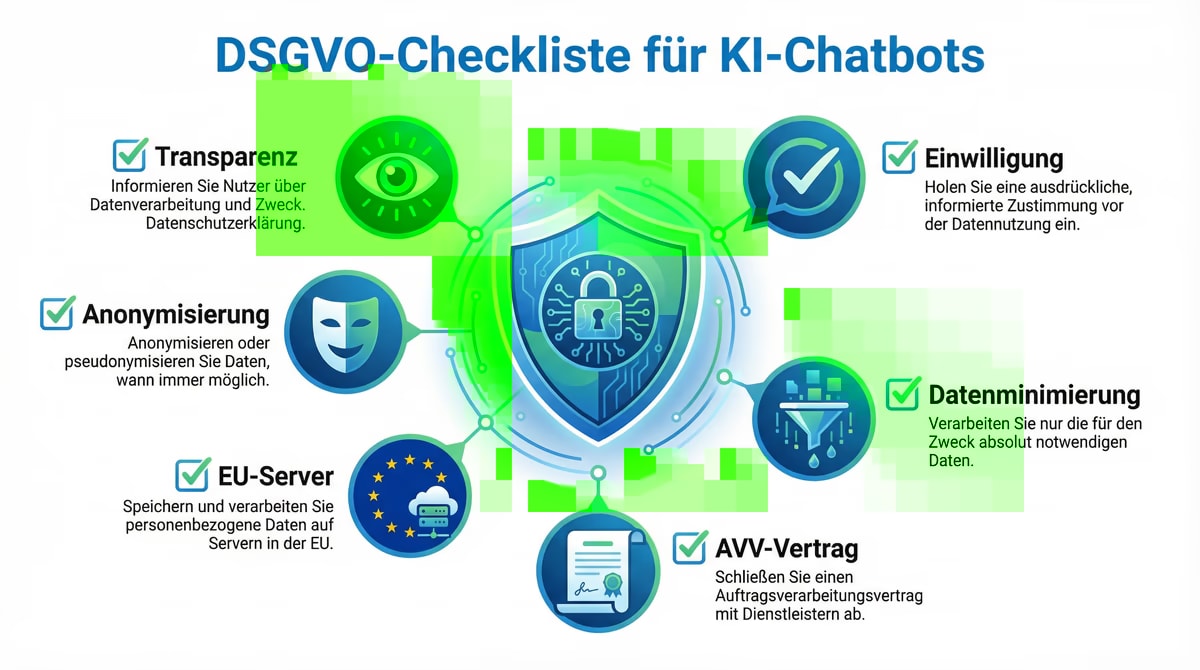
Data protection in the public sector: A comprehensive view of the specific requirements
In an increasingly digitized world, the protection of personal data is of fundamental importance. This is particularly true for the public sector, which is an immense amount ...
Open Source Software in Authorities: Opportunities and Challenges
Digitization of public administration is one of the central tasks of our time. Bund, countries and municipalities face the challenge of their services more citizen-friendly, eff...
Free download
Checklist: 10 questions before software development
Key points before you start: budget, timeline, and requirements.
Get the checklist in a consultationRelevant next steps
Related services & solutions
Based on this article's topic, these pages are often the most useful next steps.
Related solutions
Related comparison
Cost calculators
Related industries
Practical next steps after Logistics software: seamless integration with ERP systems as key to success
Logistics software: seamless integration with ERP systems as key to success addresses a practical choice for logistics teams. Start with one clear goal: select and adapt an ERP setup around real workflows instead of generic feature lists.
Check the current process, the data involved, and the result users need. Then record the main risks and define a small first step. This keeps the decision easy to review and gives your team a shared basis.
For implementation support, our Odoo ERP consulting and development connects the article's guidance with architecture, delivery, and stable operations. Engineering and project ownership stay with our team in Leer, Germany.
This post belongs to Software development. Browse the related Software development articles or use the English software blog for other topics.
When budget is the next question, the software cost calculators provide planning ranges. The IT glossary explains key terms, while in-depth technology guides cover wider decisions.
If the topic affects a live project, book a technical consultation or send the context through our project contact form. We usually reply within one working day.