Schnittstellen
API Testing: Strategies & Tools for Reliable Interfaces
API Testing: Strategies and tools for reliable interfaces. Unit tests, integration tests, contract testing and load tests with Postman, Jest and k6.

System integration coordinates ERP, CRM, commerce and cloud across several data paths. It defines middleware, master-data ownership, release dependencies, monitoring and incident responsibility for the complete business flow. A single API interface is one possible component, not the entire operating model.
System integration is more than a technical topic. It defines where your systems hold the truth about customers, orders, and stock—and how data moves without manual steps. Without solid IT system integration consulting, businesses risk expensive rework. Common problems include duplicate entry between ERP and CRM, CSV exports used as a "night-time interface", and reporting that is only accurate days after the fact.
Data flow optimization starts with domain logic and ownership. We clarify which fields are the authoritative source, which processes trigger events, and where safe retry is guaranteed without creating duplicates. Where teams rely on separate tools, you need to deliberately connect siloed solutions—from message formats and APIs to a middleware hub once more than a few targets are involved.
International tenders and group standards often use enterprise system integration or IT integration solutions. In those contexts, operations, security, and change management must be documented—not just an endpoint URL. From Leer, Lower Saxony, we deliver architecture, implementation, and monitoring in one engagement. Pragmatic for mid-market companies, and documented for audits and supply chains.
Go deeper on interfaces under API integration and interface development, estimate budget and milestones with the system integration cost calculator , and plan legacy stock with legacy modernization and system connectivity so migrations and interfaces are not underestimated.
Project references
Documented examples with transparent evidence types — browse matching references or open the full case study.
API Development & Integration
Development and integration of custom APIs.
ERP & CRM Integration
Connection of ERP and CRM systems.
IoT Integration
Connection of IoT devices and sensors.
On the scheduling page, pick a free slot for a 30-minute intro call about System Integration – straightforward next steps.
Free & non-binding · 30-minute intro call
Book next available slotMost enterprise IT landscapes are not single systems. They are collections of specialized tools built up over years. Your ERP handles finance, a separate CRM manages customer relationships, the warehouse runs its own software, and marketing uses yet another platform. Without integration, employees waste hours transferring data by hand. Errors multiply at every handoff, and management never has a single, reliable view of the business. System integration solves this by creating automated data connections between your core applications.
We start every integration project with architecture planning. Poorly planned connections quickly become an unmanageable web of point-to-point links. For businesses with more than three connected systems, we usually recommend a middleware layer or integration platform as a central hub for routing, transforming, and monitoring data.
This hub-and-spoke model makes it easy to add new systems later without rewriting existing connections. That significantly reduces the long-term cost of keeping your IT landscape in sync.
Choosing between real-time and batch integration has a big impact on both cost and complexity. Order processing and stock updates usually need real-time sync through event-driven connections. Master data and reporting can often run on a scheduled interval.
We map each data flow to its actual business priority. That way you only invest in real-time capabilities where they genuinely matter—avoiding over-engineering for flows that work perfectly with hourly updates.
The value of system integration shows up quickly:
We have seen integration projects pay for themselves within six months through lower labor costs and better data quality alone. Our monitoring and alerting keeps data flows reliable around the clock, with automatic retries and clear escalation paths when action is needed.
Frequently asked questions
An API project connects one clearly bounded pair of systems and defines mapping, authentication, idempotency and error handling.
System integration coordinates several source and target systems, shared middleware, cross-domain master-data ownership and end-to-end operations. We scope the work accordingly so a single interface does not silently inherit responsibility for the entire landscape.
IT system integration consulting defines goals, data ownership, and risks before anything is built.
We clarify which system holds the master data for customers and products, which legacy interfaces are stable, and where ERP upgrades could cause downtime. Data flow optimization starts with a clear target: which processes must run end-to-end, and which KPIs prove success?
In international programmes the terms enterprise system integration or IT integration solutions often appear. They imply documented architecture, tests, and operations—not only a REST URL. We translate domain logic and your system landscape into an integration plan with clear milestones.
That avoids costly rework when connecting siloed solutions only reveals gaps after go-live.
Data flow optimization means keeping orders, deliveries, and invoices consistent across all systems—without manual CSV exports.
IT system integration consulting plans the sequence of events, batch jobs, and retries. We define what happens during partial outages and where each data type is the single source of truth.
Enterprise system integration often uses middleware or an API gateway once more than three targets are involved. Without that hub, point-to-point connections quickly become unmanageable. We connect siloed solutions with clear interface contracts, monitoring, and error queues—so no message is lost silently.
IT integration solutions work best when support teams and the business share the same picture of the interfaces. That is why we document mapping rules and acceptance tests in one package.
Connecting two systems directly is often cheaper in the short term.
But once three or four targets are involved, the cost of change and testing grows fast. Data flow optimization via a central hub or integration platform brings mapping, monitoring, and approvals into one place—lowering long-term costs.
IT system integration consulting reviews the integration paths and release cycles of every system involved. Enterprise system integration also requires governance: who can change fields, and which API version is running in production?
IT integration solutions in tenders often need audit-ready logs and clear interface records—not just day rates. We recommend a hub whenever domains or teams are growing, or when compliance checks are expected.
Enterprise system integration means reliable connections across many modules and tenants.
It covers master data authority, consistent error handling, and performance under load. IT integration solutions typically describes the full package: architecture, build, and operations—including SLA and handover to your team.
Data flow optimization stays measurable through throughput, error rate, and latency per interface. IT system integration consulting should clarify legacy limits and API constraints before any fixed-price phase. Connecting siloed solutions without that transparency leads to change requests after launch.
We deliver integration blueprints, test catalogues, and monitoring from one partner—Made in Germany, with direct contacts in Leer.
After go-live, IT integration solutions need monitoring, incident playbooks, and version control for interfaces.
Without these, data flow optimization breaks silently with every ERP patch. Connecting siloed solutions is an ongoing task: new payment providers, CRM field changes, or new plant locations must be handled in a repeatable way.
IT system integration consulting can transition into a managed retainer with clear escalation paths. Enterprise system integration often requires audit trails and alerts—dashboards for queue depth and retry history. We train your team for first-level support and hand over runbooks.
Or we take coordinated second-level responsibility together with your IT team. Either way, interfaces stay auditable and predictable.

Clarify goals before build-out
We align system landscape, interface risks, and data ownership—before development and budget lock in.
System integration connects heterogeneous systems, data flows and process chains. Concrete API builds sit on API integration.
ERP and M365: ERP implementation, Microsoft 365 consulting. Legacy: legacy modernization.
Service overview: Integration & interfaces (overview)

Use our funding calculator to see which government grants may apply to your project.
Björn Groenewold – Managing Director
Service cluster
Related services for Integration & interfaces: find the right entry point
Quick orientation for APIs, system landscapes, ERP, Microsoft 365 and legacy – with separate entry points for interface and integration projects.
Related topics
Complementary services from other areas
These services are frequently requested together with System Integration or complement it thematically.
Software & platforms: choose the right delivery route
Data & analytics: analysis, BI or database engineering?
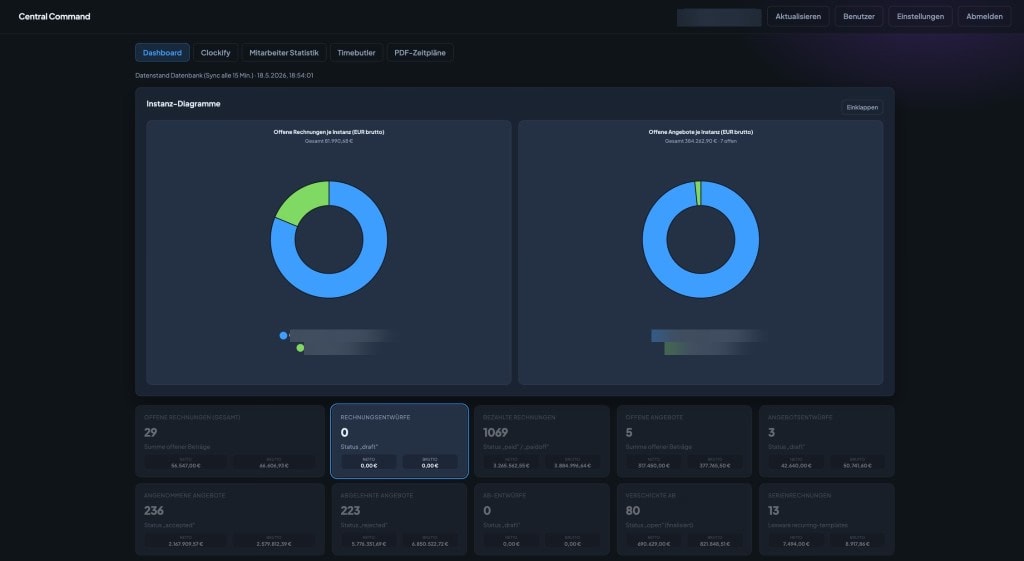
From the field: Central Command – Lexware, Clockify & Timebutler (in-house). All references.

Use our interactive calculator for a first budget indication—free and non-binding.
Thorsten Frieling – Projektmanagement
Our topic overview links related articles and entry points alongside this service page.
Recent articles from our blog that match this service.
API Testing: Strategies & Tools for Reliable Interfaces
API Testing: Strategies and tools for reliable interfaces. Unit tests, integration tests, contract testing and load tests with Postman, Jest and k6.
API-Monetization: Market interface as a product
API monthlyization: How to successfully market your interface as a product. Business models, pricing strategies and API marketplaces.
Microservices & API gateways: scalable architecture
Microservices and API gateways: architecture for scalable systems. Learn how API gateways act as a central control level for microservices.