
As of: 19 June 2026 · Reading time: 4 min
Key takeaways
- A detailed comparison between Bluetooth Low Energy (BLE) and Classic Bluetooth.
- Learn what technology is right for your IoT project.
A detailed comparison between Bluetooth Low Energy (BLE) and Classic Bluetooth. Learn what technology is right for your IoT project.
“BLE enables use cases that felt like science fiction five years ago—with minimal power draw.”
– Björn Groenewold, Managing Director, Groenewold IT Solutions
BLE (Bluetooth Low Energy) is ideal for battery-powered devices with low data volume (sensors, wearables, beacons), while Classic Bluetooth is suited for audio-intensive applications and higher data rates (headphones, file transfer).
BLE 5.0+ also offers mesh networking for IoT scenarios.
This article is part of our series about [Bluetooth](/leistungen/systemintegration integration) Low Energy. You can find the complete guide here: The ultimate guide to [BLE](/services/system integration) App Development in Germany (2026)
BLE vs. Classic Bluetooth: The right choice for your IoT project
Short: When talking about "Bluetooth", most people mean a single technology.
When talking about "Bluetooth", most people mean a single technology.
In fact, behind the name is a brand family with two main variants: Classic Bluetooth (Official BR/EDR for Basic Rate/Enhanced Data Rate) and Bluetooth Low Energy (BLE).
Although both run under the same brand and are managed by the same standard, they are designed for fundamentally different purposes.
For developers and product managers in the IoT sector, understanding these differences is crucial for the success of a project.
The wrong choice can lead to poor performance, short battery life and unsatisfied customers.
The decisive difference: Energy consumption
Short: Executive answer: A detailed comparison between Bluetooth Low Energy (BLE) and Classic Bluetooth.
Executive answer: A detailed comparison between Bluetooth Low Energy (BLE) and Classic Bluetooth.
For BLE vs. Classic Bluetooth: The right choice for your..., see View services und Discover solutions on our website for implementation paths and planning.
As the name says, the main advantage of Bluetooth Low Energy is extremely low energy consumption. BLE is designed to run for months or even years with a single small button cell.
This is achieved by keeping the device in a deep sleep mode most of the time and only awakening for very short periods of time to send or receive small data packets.
Classic Bluetooth is improved for a continuous, data-intensive connection.
It consumes significantly more energy and is therefore dependent on devices with larger batteries and regular charging cycles, such as wireless headphones or loudspeakers.
Data rate and application cases
Short: The different design in energy consumption is reflected directly in the possible data rate and the typical applications:
The different design in energy consumption is reflected directly in the possible data rate and the typical applications:
Classic Bluetooth (BR/EDR)
High data rate (up to 3 Mbit/s): Ideal for applications requiring a constant data stream.
Applications: The most famous example is audio streaming. If you stream music on wireless headphones or a Bluetooth speaker, use Classic Bluetooth.
It is also the right choice for transferring larger files or for wireless keyboards that require a low latency.
Bluetooth Low Energy (BLE)
Slower data rate (up to 2 Mbit/s): Improved for the transmission of small, periodic data packets.
Applications: Here is the domain of the Internet of Things.
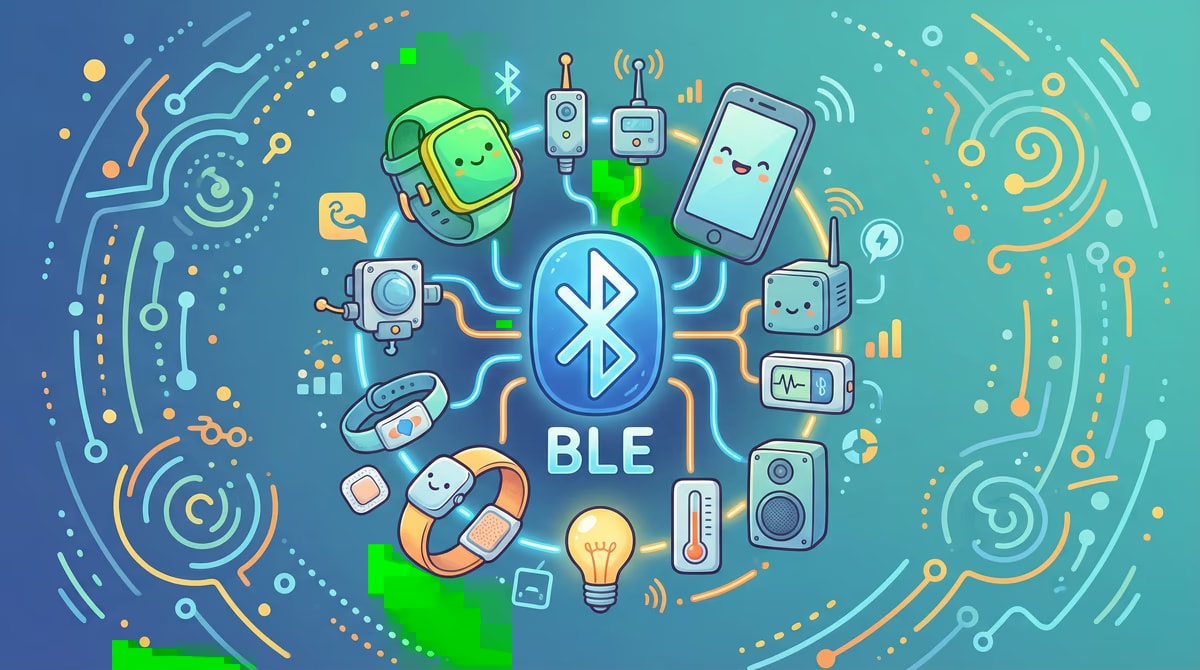
Fitness trackers that send heart rate data, thermometers that transmit room temperature, or BLE beacons that send out their identification – all these devices only occasionally send small amounts of information.
BLE is perfect for sensor data, status updates and simple control commands.
connection structure and latency
Significant U
References and further reading
Short: The following independent references complement the topics in this article:
The following independent references complement the topics in this article:
- Bitkom – German digital industry association
- German Federal Office for Information Security (BSI)
- European Commission – Digital strategy
- MDN Web Docs (Mozilla)
- W3C – World Wide Web Consortium
Frequently Asked Questions (FAQ)
What is this article about: “BLE vs. Classic Bluetooth: The right choice for your...”?
This article summarizes practical aspects of BLE vs. Classic Bluetooth: The right choice for your... for decision-makers and delivery teams.
In short: A detailed comparison between Bluetooth Low Energy (BLE) and Classic Bluetooth. Learn what technology is right for your IoT project.
Who benefits most from the content described here?
It is especially relevant for organizations in BLE development that need reliable systems, clear interfaces, and predictable delivery — from mid-market teams to specialized departments.
How does this topic fit into an IT or digital strategy?
You can map the topic to service building blocks such as custom software and delivery support: architecture reviews and iterative rollout reduce risk and rework. For multi-system landscapes, IT consulting and architecture helps align vendors and internal teams.
What are sensible next steps if we need support?
For architecture, implementation, or a second expert opinion, book a free initial consultation — including timeline and interface alignment.
About the author

Managing Director of Groenewold IT Solutions GmbH and Hyperspace GmbH
Since 2009 Björn Groenewold has been developing software solutions for the mid-market. He is Managing Director of Groenewold IT Solutions GmbH (founded 2012) and Hyperspace GmbH. As founder of Groenewold IT Solutions he has successfully supported more than 250 projects – from legacy modernisation to AI integration.
Blog recommendations
Related articles
These posts might also interest you.
From prototype to series: The development process of a...
A step-by-step guide to the development process of a BLE application, from idea to prototype to mass production and certification.

The way to success: How to find the right BLE App...
A checklist with the most important criteria for selecting the right BLE app developer or a specialized app agency for your IoT project.

BLE in Smart Home: Trends and Potentials for the German Market
Discover the role of Bluetooth Low Energy (BLE) in Smart Home, the latest trends, applications and the importance of standards such as Matter.
Free download
Checklist: 10 questions before software development
Key points before you start: budget, timeline, and requirements.
Get the checklist in a consultationRelevant next steps
Related services & solutions
Based on this article's topic, these pages are often the most useful next steps.
Related services
Related solutions
More on BLE development and next steps
This article is in the BLE development topic. In our blog overview you will find all articles; under category BLE development more posts on this subject.
For topics like BLE development we offer matching services – from app development and AI integration to legacy modernisation and maintenance. We describe typical use cases under solutions. Our cost calculators give initial estimates. Key terms are in the IT glossary. Books and long-form guides appear on the publications page; deeper articles live under topics.
If you have questions about this article or want a non-binding discussion about your project, you can book a consultation or reach us via contact. We usually respond within one working day.