
As of: 19 June 2026 · Reading time: 4 min
Key takeaways
- A comprehensive guide to AI chatbots in 2026.
- Learn all about the functionality, advantages, costs, GDPR and the future of this technology.
A comprehensive guide to AI chatbots in 2026. Learn all about the functionality, advantages, costs, GDPR and the future of this technology.
“A good AI chatbot does not only answer questions—it understands context and keeps learning.”
– Björn Groenewold, Managing Director, Groenewold IT Solutions
AI chatbots in 2026 are based on large language models, understand natural language in context, and can be integrated into CRM, ERP, and ticketing systems via APIs.
Use cases: customer service, internal knowledge assistance, and lead qualification — with the option for seamless handoff to human agents.
Artificial intelligence (AI) is no longer a music of the future, but is already shaping the digital landscape. One of the most exciting and effective applications of this technology is AI chatbots.
They revolutionise the way companies interact with their customers, automate processes and increase efficiency. This guide offers you a complete overview of everything you need to know about AI chatbots.
1. Basics: How does an AIChatbot work?
Short: Executive answer: A complete guide to AI chatbots in 2026.
Executive answer: A complete guide to AI chatbots in 2026.
For The ultimate guide to AI Chatbots 2026: Everything you need..., see Cost Calculator: AI Development und Discover solutions on our website for implementation paths and planning.
Modern AI chatbots combine several advanced concepts to allow human-like conversations. The focus is on technologies such as Natural Language Processing (NLP), Large Language Models (LLMs) and Generative AI.
The process begins with entering the user, which is then processed by the NLP module to understand the intention.
The chatbot then accesses its knowledge database and generates a suitable answer with NLG.
Two. The unmistakable benefits of AI chatbots
The implementation of an AI chatbot offers measurable advantages for almost every business area.
Advantages Description
**24/7 availability * * Answering customer requests around the clock, which significantly increases customer satisfaction.
** Cost savings * * Automation of routine requests relieves personal resources in customer service.
**Efficient lead generation * * Proactive address of website visitors and qualification of leads.
**Scalability * * Unproblematic handling of thousands of requests simultaneously without waiting times.
3. Application cases and industries
Short: The use of AI chatbots is extremely diverse and spans all departments and many industries, especially e-commerce, financial services and tourism.
The use of AI chatbots is extremely diverse and spans all departments and many industries, especially e-commerce, financial services and tourism.
4. Implementation in 7 steps
Short: The introduction of an AI chatbot can also be realized with a structured approach for non-technicians.
The introduction of an AI chatbot can also be realized with a structured approach for non-technicians.
Five. What costs a [KI chatbot](/services/centric intelligence)?
Costs vary greatly but can be divided into installation costs, monthly royalties and maintenance costs.
6. GDPR & Privacy
Short: A data protection compliant use is not only a legal necessity, but also creates trust with your users.
A data protection compliant use is not only a legal necessity, but also creates trust with your users.
7. Future outlook
Short: The future promises even more intelligent, more autonomous and more integrated systems that go far beyond today's capabilities.
The future promises even more intelligent, more autonomous and more integrated systems that go far beyond today's capabilities.
8. Frequently Asked Questions (FAQ)
What is the difference between a normal and an AI chatbot?
Short: A normal, rule-based chatbot follows a fixed script.
A normal, rule-based chatbot follows a fixed script. On the other hand, an AI chatbot uses technologies such as NLP to understand the user's intention and to generate dynamically matching answers.
Can an AI chatbot completely replace human staff?
Short: No, AI chatbots are a support and relief for m
No, AI chatbots are a support and relief for m
References and further reading
Short: The following independent references complement the topics in this article:
The following independent references complement the topics in this article:
- Bitkom – German digital industry association
- German Federal Office for Information Security (BSI)
- European Commission – Digital strategy
- MDN Web Docs (Mozilla)
- W3C – World Wide Web Consortium
Frequently Asked Questions (FAQ)
What is this article about: “The ultimate guide to AI Chatbots 2026: Everything you need...”?
This article summarizes practical aspects of The ultimate guide to AI Chatbots 2026: Everything you need... for decision-makers and delivery teams. In short: A complete guide to AI chatbots in 2026.
Learn all about the functionality, advantages, costs, GDPR and the future of this technology.
Who benefits most from the content described here?
It is especially relevant for organizations in KI chatbots that need reliable systems, clear interfaces, and predictable delivery — from mid-market teams to specialized departments.
How does this topic fit into an IT or digital strategy?
You can map the topic to service building blocks such as custom software and delivery support: architecture reviews and iterative rollout reduce risk and rework. For multi-system landscapes, IT consulting and architecture helps align vendors and internal teams.
What are sensible next steps if we need support?
For architecture, implementation, or a second expert opinion, book a free initial consultation — including timeline and interface alignment.
About the author

Managing Director of Groenewold IT Solutions GmbH and Hyperspace GmbH
Since 2009 Björn Groenewold has been developing software solutions for the mid-market. He is Managing Director of Groenewold IT Solutions GmbH (founded 2012) and Hyperspace GmbH. As founder of Groenewold IT Solutions he has successfully supported more than 250 projects – from legacy modernisation to AI integration.
Blog recommendations
Related articles
These posts might also interest you.

KI-Chatbot Trends 2026: What the future of...
A look at the most important AI chatbot trends for 2026: hyperpersonalization, AI agents, multimodal interaction, emotional AI and voice-first.

Successful funding applications for software development: Best Practices
Innovation is the key to success in the dynamic world of information technology. But especially for small and medium-sized enterprises (SMEs) the financing of ambitious...
Build developer team vs. commission agency: The right choice for your software project
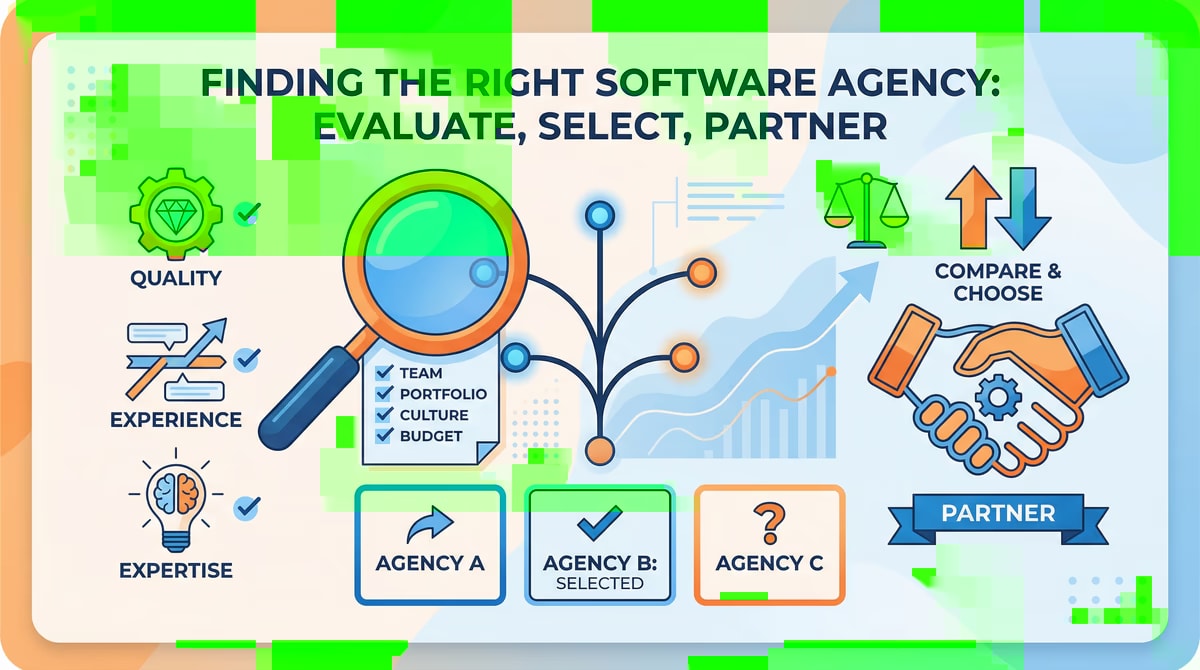
The decision whether a company builds an internal team for the development of its software or commissions an external agency is of strategic importance. Both models, **Inhouse vs....
Free download
Checklist: 10 questions before software development
Key points before you start: budget, timeline, and requirements.
Get the checklist in a consultationRelevant next steps
Related services & solutions
Based on this article's topic, these pages are often the most useful next steps.
Related services
Related solutions
Cost calculators
More on KI chatbots and next steps
This article is in the KI chatbots topic. In our blog overview you will find all articles; under category KI chatbots more posts on this subject.
For the EU AI Act timeline, risk classes and GPAI obligations in practice, see our pillar guide EU AI Act for mid-sized companies.
For topics like KI chatbots we offer matching services – from app development and AI integration to legacy modernisation and maintenance. We describe typical use cases under solutions. Our cost calculators give initial estimates. Key terms are in the IT glossary. Books and long-form guides appear on the publications page; deeper articles live under topics.
If you have questions about this article or want a non-binding discussion about your project, you can book a consultation or reach us via contact. We usually respond within one working day.