
As of: 19 June 2026 · Reading time: 4 min
Key takeaways
- In today's digital landscape, software is the backbone of countless business processes.
- But with increasing digitalization, the responsibility for dealing with personal data is also increasing.
In today's digital landscape, software is the backbone of countless business processes. But with increasing digitalization, the responsibility for dealing with personal data is also increasing.
“Good software is not an accident—it comes from a structured development process with clear quality standards.”
– Björn Groenewold, Managing Director, Groenewold IT Solutions
GDPR-compliant Develop software: Requirements and checklist
Short: In today's digital landscape, software is the backbone of countless business processes.
In today's digital landscape, software is the backbone of countless business processes. But with increasing digitization, the responsibility for dealing with personal data is also increasing.
Since May 2018, the General Data Protection Regulation (GDPR) has set a strict legal framework for this.
For companies that develop or use software, compliance with these regulations is not only a legal obligation, but also a decisive factor in the trust of their customers.
But what does it mean to develop DSGVO-compliant software?
Why GDPR compliance is crucial in software development
Short: Executive answer: In today's digital landscape, software is the backbone of countless business processes.
Executive answer: In today's digital landscape, software is the backbone of countless business processes.
For Developing GDPR-compliant software: Requirements and Checklist, see IT Security und Discover solutions on our website for implementation paths and planning.
The development of software that meets the requirements of the GDPR goes far beyond the blossoming of legal requirements. It is a proactive approach to protecting users' privacy and strengthening data security.
Companies that pay attention to data protection from the outset not only minimise the risk of sensitive bus money, but also position themselves on the market as trusted and responsible partners.
The disregard of the GDPR may, on the other hand, lead to reputation damage which often weighs harder than the financial burden of punishment.
The fundamental pillars of the GDPR for software
Short: In order to meet the requirements of the GDPR, developers and companies must take into account several basic principles that influence the entire life cycle of the software.
In order to meet the requirements of the GDPR, developers and companies must take into account several basic principles that influence the entire life cycle of the software.
Purpose, legal basis and data economy
Short: Any processing of personal data must serve a clear and legitimate purpose and must be on a sound legal basis.
Any processing of personal data must serve a clear and legitimate purpose and must be on a sound legal basis. The principle of data-saving (Article 5 para.
1 c GDPR) requires that only the data which are absolutely necessary for the respective purpose are collected and processed.
For development this means: ask each data field whether it is really necessary. For example, a newsletter delivery requires an e-mail address, but usually no postal address or telephone number.
The central role of consent
Short: If no other legal basis such as a contract or legal obligation legitimates data processing, the explicit consent of the data subject is required.
If no other legal basis such as a contract or legal obligation legitimates data processing, the explicit consent of the data subject is required. This consent must be voluntary, informed and unambiguous.
In practice, this is often ensured by a double opt-in method in which the user must actively confirm his consent. The software must be able to document and manage these consents securely.
User rights in focus
Short: The GDPR significantly strengthens the rights of individuals.
The GDPR significantly strengthens the rights of individuals. A DSGVO-compliant software must be technically and organizationally designed to ensure these rights at any time. To this end
References and further reading
Short: The following independent references complement the topics in this article:
The following independent references complement the topics in this article:
- Bitkom – German digital industry association
- German Federal Office for Information Security (BSI)
- European Commission – Digital strategy
- MDN Web Docs (Mozilla)
- W3C – World Wide Web Consortium
> "ERP programmes rarely fail on software selection; they fail on unclear process ownership."
— Björn Groenewold, Managing Director, Groenewold IT Solutions
Frequently Asked Questions (FAQ)
What is this article about: “Developing GDPR-compliant software: Requirements and Checklist”?
This article summarizes practical aspects of Developing GDPR-compliant software: Requirements and Checklist for decision-makers and delivery teams. In short: In today's digital landscape, software is the backbone of countless business processes.
But with increasing digitalization, the responsibility for dealing with personal data is also increasing.
Who benefits most from the content described here?
It is especially relevant for organizations in Software development that need reliable systems, clear interfaces, and predictable delivery — from mid-market teams to specialized departments.
How does this topic fit into an IT or digital strategy?
You can map the topic to service building blocks such as custom software and delivery support: architecture reviews and iterative rollout reduce risk and rework. For multi-system landscapes, IT consulting and architecture helps align vendors and internal teams.
What are sensible next steps if we need support?
For architecture, implementation, or a second expert opinion, book a free initial consultation — including timeline and interface alignment.
About the author

Managing Director of Groenewold IT Solutions GmbH and Hyperspace GmbH
Since 2009 Björn Groenewold has been developing software solutions for the mid-market. He is Managing Director of Groenewold IT Solutions GmbH (founded 2012) and Hyperspace GmbH. As founder of Groenewold IT Solutions he has successfully supported more than 250 projects – from legacy modernisation to AI integration.
Blog recommendations
Related articles
These posts might also interest you.

Why data silos pose a serious problem
> # Resolve data silos: Change management don't forget > > In today's data-driven business world, information is the life elixir of each company. But too often are the...
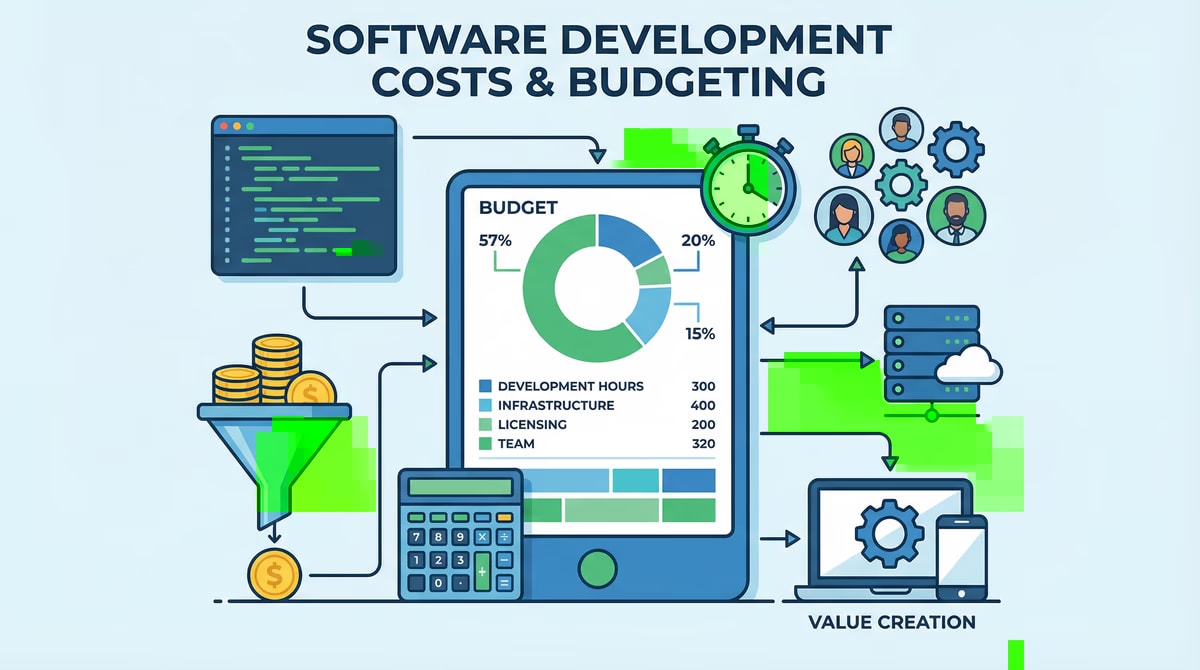
Altsystem Migration: A Guide to Costs and Budgeting
In today's fast-paced digital landscape, outdated IT systems, often referred to as old systems, are a considerable burden for companies. They're not just expensive in maintenance, sonde...
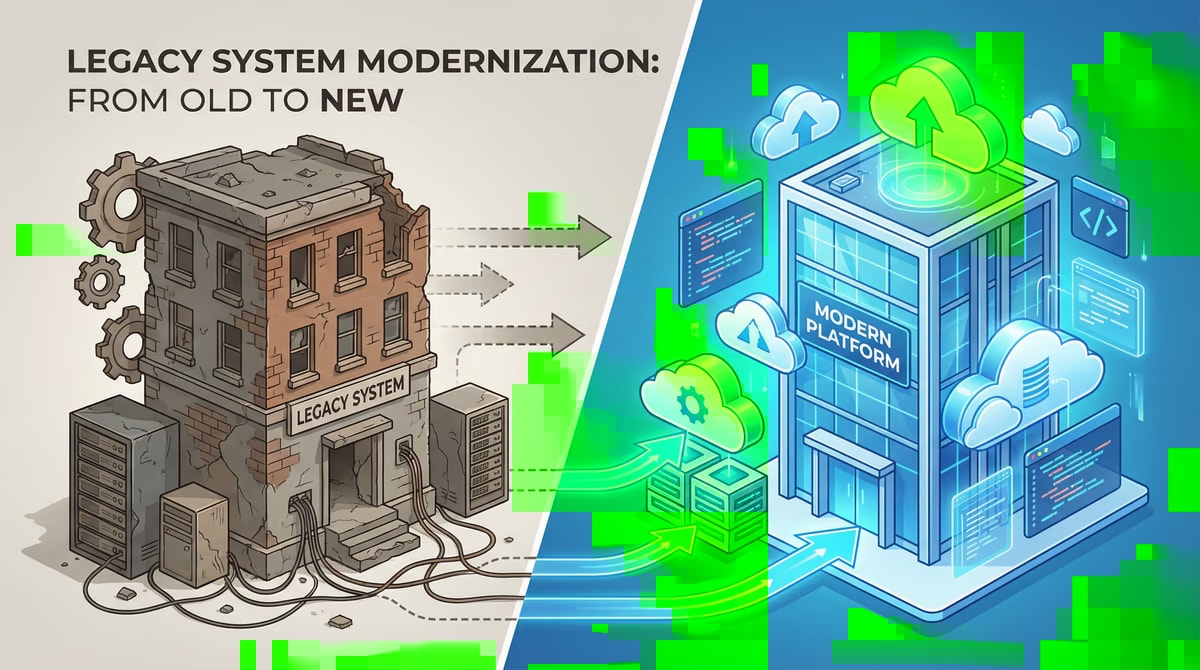
Altsystem migration: The smooth transfer of knowledge
The Altsystem migration is an unavoidable but also a great challenge for many companies. Outdated systems, often referred to as legacy systems, brake the innovative power,...
Free download
Checklist: 10 questions before software development
Key points before you start: budget, timeline, and requirements.
Get the checklist in a consultationRelevant next steps
Related services & solutions
Based on this article's topic, these pages are often the most useful next steps.
Related services
Related solutions
More on Software development and next steps
This article is in the Software development topic. In our blog overview you will find all articles; under category Software development more posts on this subject.
For topics like Software development we offer matching services – from app development and AI integration to legacy modernisation and maintenance. We describe typical use cases under solutions. Our cost calculators give initial estimates. Key terms are in the IT glossary. Books and long-form guides appear on the publications page; deeper articles live under topics.
If you have questions about this article or want a non-binding discussion about your project, you can book a consultation or reach us via contact. We usually respond within one working day.