As of: 19 June 2026 · Reading time: 4 min
Key takeaways
- Discover the top 7 trends in software development for 2026: AI-based development, DevSecOps, Platform Engineering, Low-Code, Edge Computing, PWAs and the Renaissance of Java.
Discover the top 7 trends in software development for 2026: AI-based development, DevSecOps, Platform Engineering, Low-Code, Edge Computing, PWAs and the Renaissance of Java.
“Good software is not an accident—it comes from a structured development process with clear quality standards.”
– Björn Groenewold, Managing Director, Groenewold IT Solutions
The seven most important software development trends for 2026: AI-assisted coding, platform engineering, green software, WebAssembly for performant web applications, low-code for citizen developers, API-first design, and zero-trust security as standard.
♪ Top 7 software development trends for 2026: A look into the future
The world of software development is never silent. Driven by technological breakthroughs and changing market requirements, new approaches, tools and paradigms are continuously emerging. In order to remain competitive, companies and developers need not only know the key trends, but also understand how they can use them profitably.
We have analyzed the most important developments and presented you with the top 7 software development trends that will significantly shape the year 2026 and the subsequent era.
This article is part of our complete guide: [The ultimate guide to software development 2026](link to capillary page).
Trend 1: AI-based development becomes the standard
Short: Executive answer: Discover the top 7 trends in software development for 2026: AI-based development, DevSecOps, Platform Engineering, Low-Code, Edge Computing, PWAs and the Renaissance of Java.
Executive answer: Discover the top 7 trends in software development for 2026: AI-based development, DevSecOps, Platform Engineering, Low-Code, Edge Computing, PWAs and the Renaissance of Java.
Decision-makers exploring The Top 7 Software Development Trends for 2026: A... can use View services, Cost Calculator: Software Development sowie Our Development Process as structured entry points.
Artificial intelligence (AI) is no longer just a tool for data scientists. It becomes an integral part of the daily developer workflow.
AI copilots like GitHub copilot are already widespread, but the next stage are autonomous AI agents. These agents can independently plan tasks, write code, perform tests and even create pull requests.
The result is a massive increase in productivity and a reduction in routine tasks.
- Practical application: Automated generation of boilerplate code, creation of unit tests, analysis of CI/CD logs.
Trend 2: DevSecOps – Security from the beginning
Short: In view of the increasing threat of cyber attacks on the software supply chain, the issue of security is moving into the centre of development.
In view of the increasing threat of cyber attacks on the software supply chain, the issue of security is moving into the centre of development.
The DevSecOps approach integrates security practices directly into the DevOps cycle. Instead of looking at security as a subsequent step, it is considered by the first code line (“Secure by Design”).
- Practical application: Automated security scans (SAST/DAST) in the CI/CD pipeline, creation of a Software Bill of Materials (SBOM) at each build to make all components and dependencies transparent.
Trend 3: Platform Engineering and Cloud-Native
Short: The complexity of cloud infrastructures (especially Kubernetes) can slow down development teams.
The complexity of cloud infrastructures (especially Kubernetes) can slow down development teams. Platform Engineering solves this problem by providing internal developer platforms (IDPs).
These platforms provide standardized, curated “Golden Paths” for the provision and administration of applications, so developers can concentrate on writing code instead of hitting the infrastructure.
- Practical application: Self-service portals for developers to create test environments with one click, standardized IaC modules (Infrastructure as Code).
Trend 4: Low-code platforms with governance
Short: Low-code and no-code platforms democratize software development and enable specialist departments without programming knowledge
Low-code and no-code platforms democratize software development and enable specialist departments without programming knowledge
References and further reading
Short: The following independent references complement the topics in this article:
The following independent references complement the topics in this article:
- Bitkom – German digital industry association
- German Federal Office for Information Security (BSI)
- European Commission – Digital strategy
- MDN Web Docs (Mozilla)
- W3C – World Wide Web Consortium
Frequently Asked Questions (FAQ)
What is this article about: “The Top 7 Software Development Trends for 2026: A...”?
This post explores The Top 7 Software Development Trends for 2026: A... from the perspective of requirements, typical pitfalls, and sensible next steps.
In short: Discover the top 7 trends in software development for 2026: AI-based development, DevSecOps, Platform Engineering, Low-Code, Edge Computing, PWAs and the Renaissance of Java.
Who benefits most from the content described here?
Useful for project leads and product owners in Software development who must choose between standard software, custom development, and integration.
How does this topic fit into an IT or digital strategy?
Technically and organizationally, alignment with experienced partners pays off — from requirements to operations; start with the [services overview](/en/services/software-development). For multi-system landscapes, [IT consulting and architecture](/en/services/it-consulting) helps align vendors and internal teams.
What are sensible next steps if we need support?
A practical next step: book a consultation and clarify which MVP or pilot fits your team and landscape.
About the author

Managing Director of Groenewold IT Solutions GmbH and Hyperspace GmbH
Since 2009 Björn Groenewold has been developing software solutions for the mid-market. He is Managing Director of Groenewold IT Solutions GmbH (founded 2012) and Hyperspace GmbH. As founder of Groenewold IT Solutions he has successfully supported more than 250 projects – from legacy modernisation to AI integration.
Blog recommendations
Related articles
These posts might also interest you.

Why data silos pose a serious problem
> # Resolve data silos: Change management don't forget > > In today's data-driven business world, information is the life elixir of each company. But too often are the...
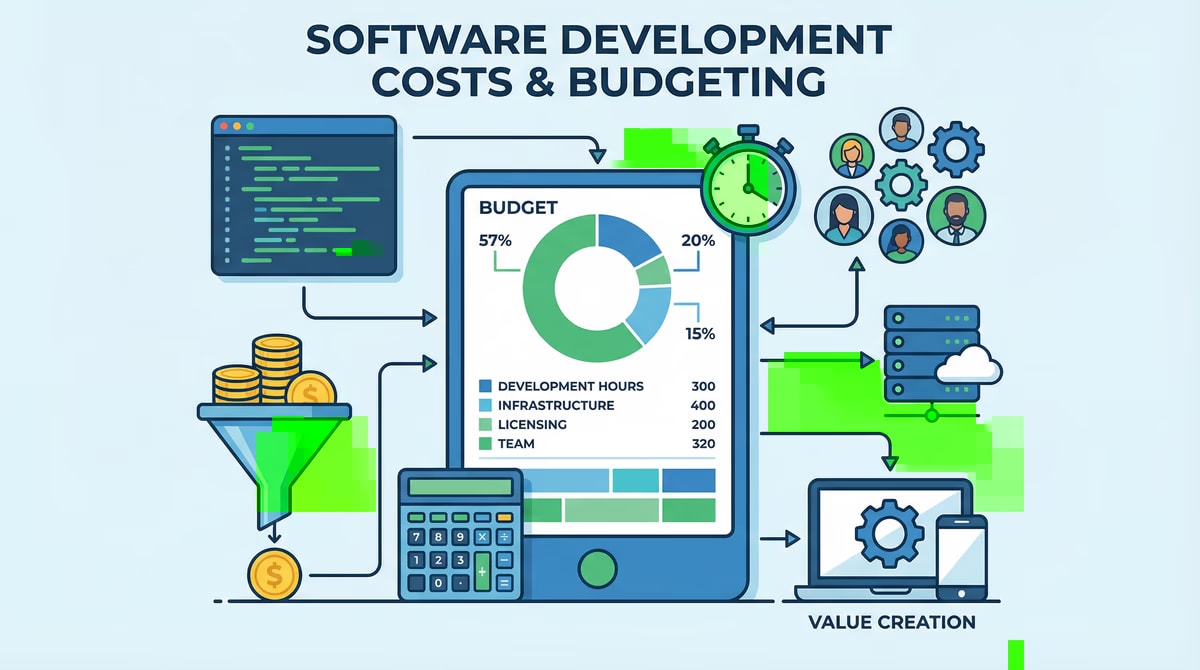
Altsystem Migration: A Guide to Costs and Budgeting
In today's fast-paced digital landscape, outdated IT systems, often referred to as old systems, are a considerable burden for companies. They're not just expensive in maintenance, sonde...
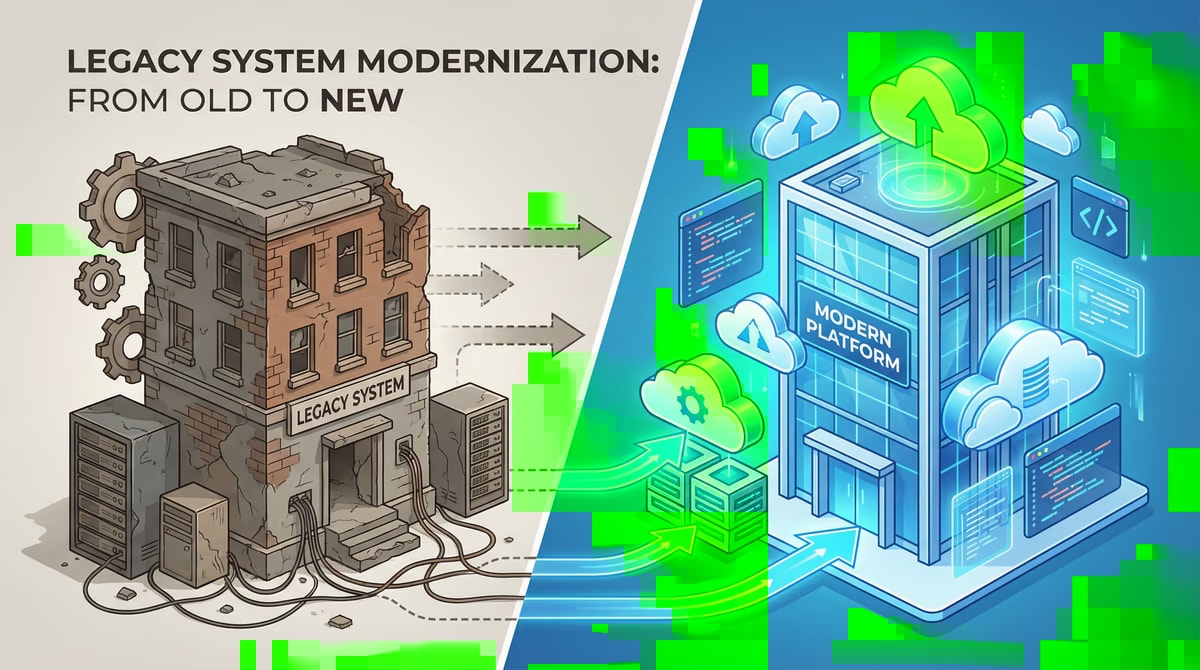
Altsystem migration: The smooth transfer of knowledge
The Altsystem migration is an unavoidable but also a great challenge for many companies. Outdated systems, often referred to as legacy systems, brake the innovative power,...
Free download
Checklist: 10 questions before software development
Key points before you start: budget, timeline, and requirements.
Get the checklist in a consultationRelevant next steps
Related services & solutions
Based on this article's topic, these pages are often the most useful next steps.
Related services
Related solutions
Cost calculators
More on Software development and next steps
This article is in the Software development topic. In our blog overview you will find all articles; under category Software development more posts on this subject.
For topics like Software development we offer matching services – from app development and AI integration to legacy modernisation and maintenance. We describe typical use cases under solutions. Our cost calculators give initial estimates. Key terms are in the IT glossary. Books and long-form guides appear on the publications page; deeper articles live under topics.
If you have questions about this article or want a non-binding discussion about your project, you can book a consultation or reach us via contact. We usually respond within one working day.