As of: 19 June 2026 · Reading time: 4 min
Key takeaways
- The development of a minimum Viable Product (MVP) is a crucial strategic step for start-ups and established companies.
- It allows for an innovative product idea...
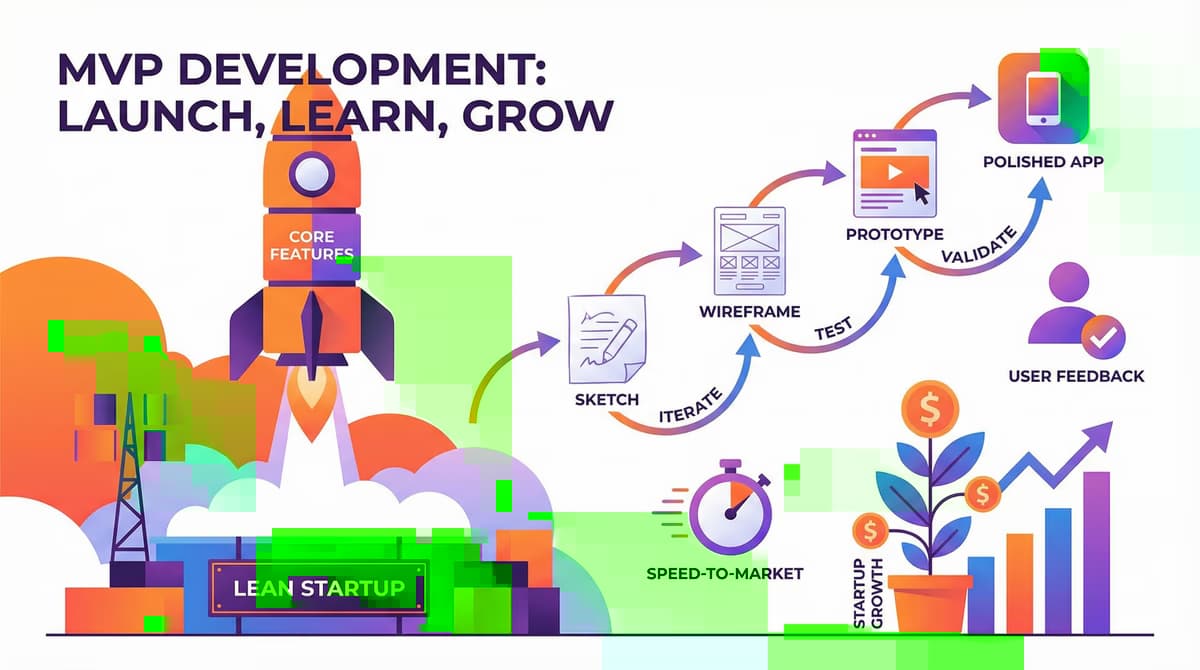
The development of a minimum Viable Product (MVP) is a crucial strategic step for start-ups and established companies. It allows for an innovative product idea...
“Good software is not an accident—it comes from a structured development process with clear quality standards.”
– Björn Groenewold, Managing Director, Groenewold IT Solutions
What Does an MVP Cost in 2026?
Short: Executive answer: The development of a minimum Viable Product (MVP) is a crucial strategic step for start-ups and established companies.
Executive answer: The development of a minimum Viable Product (MVP) is a crucial strategic step for start-ups and established companies.
For MVP Costs 2026: Detailed insights into market prices and trends, AI & Machine Learning, Cost Calculator: AI Development, Discover solutions sowie Cost Calculator: Software Development help you align implementation, scope and budget before you commit.
MVP development costs in 2026 range from EUR 15,000 to EUR 80,000 for software projects. The range is wide because costs depend on several variable factors.
Understanding these drivers is essential for accurate budget planning.
What Drives MVP Costs?
Complexity and Scope
Short: Technical complexity is the largest single cost factor.
Technical complexity is the largest single cost factor. A simple MVP with one core function costs substantially less than a multi-layered application.
Features that increase project cost:
- Integration of third-party services (payment gateways, map APIs, booking systems)
- Artificial intelligence or machine learning components
- Multi-stage security architectures for sensitive data
- Multiple user roles with differentiated permissions
- Complex interaction patterns and multi-screen flows
Keep the MVP scope narrow. Every additional feature multiplies cost and delivery time.
UI/UX Design
Short: Design quality directly affects user adoption.
Design quality directly affects user adoption. A confusing interface reduces conversion regardless of how well the backend works.
Two cost levels exist:
- Template-based design: Faster and cheaper; works for internal tools or MVP validation
- Custom design with animations and microinteractions: Higher investment; critical for consumer-facing products competing on experience
Well-executed design pays back through higher user retention and better conversion rates.
Backend Integration Depth
Short: Real-time capabilities cost more than batch processing.
Real-time capabilities cost more than batch processing. Connecting to multiple external services adds integration effort.
A standalone MVP with a simple database is far cheaper than one that synchronizes with three external APIs.
Define integration requirements precisely before requesting quotes. Vague requirements produce vague — and unreliable — cost estimates.
Technology Selection
Short: Technology choice affects both initial development cost and long-term maintenance cost.
Technology choice affects both initial development cost and long-term maintenance cost.
Established frameworks with large communities (React, Laravel, Flutter) reduce development time.
Niche technologies increase hourly rates and hiring difficulty.
Choose technology based on your team's future ability to maintain the codebase — not on what is newest.
Development Location
Hourly rates vary significantly by location:
- Germany / Western Europe: EUR 80–150/hour
- Eastern Europe (nearshore): EUR 35–75/hour
- Asia (offshore): EUR 15–40/hour
Quality and communication overhead scale with the rate differential. For complex MVPs requiring frequent alignment, nearshore or onshore teams often produce better outcomes despite higher hourly rates.
Cost Benchmarks by MVP Type
| MVP Type | Typical Range |
|---|---|
| Landing page with waitlist | EUR 2,000–8,000 |
| Simple mobile app (one platform) | EUR 15,000–35,000 |
| Web application with user accounts | EUR 20,000–50,000 |
| Multi-platform app with API integrations | EUR 40,000–80,000 |
| AI-powered application with custom backend | EUR 60,000–150,000+ |
These are market estimates for German project standards. Actual costs depend on specific requirements.
How to Control MVP Costs
- Define scope ruthlessly — include only features essential for validation
- Write detailed specifications before requesting quotes
- Use existing frameworks and components instead of custom-built solutions
- Plan for one platform first (web or mobile); add the second after validation
- Reserve 15–20% of the budget for unforeseen requirements
"Good software is not an accident — it comes from a structured development process with clear quality standards." — Björn Groenewold, Managing Director, Groenewold IT Solutions
Frequently Asked Questions (FAQ)
What is this article about: “MVP Costs 2026: Detailed insights into market prices and trends”?
This article summarizes practical aspects of MVP Costs 2026: Detailed insights into market prices and trends for decision-makers and delivery teams.
In short: The development of a minimum Viable Product (MVP) is a crucial strategic step for start-ups and established companies. It allows for an innovative product idea...
Who benefits most from the content described here?
It is especially relevant for organizations in Software development that need reliable systems, clear interfaces, and predictable delivery — from mid-market teams to specialized departments.
How does this topic fit into an IT or digital strategy?
You can map the topic to service building blocks such as custom software and delivery support: architecture reviews and iterative rollout reduce risk and rework. For multi-system landscapes, IT consulting and architecture helps align vendors and internal teams.
What are sensible next steps if we need support?
For architecture, implementation, or a second expert opinion, book a free initial consultation — including timeline and interface alignment.
References and further reading
Short: The following independent references complement the topics in this article:
The following independent references complement the topics in this article:
About the author

Managing Director of Groenewold IT Solutions GmbH and Hyperspace GmbH
Since 2009 Björn Groenewold has been developing software solutions for the mid-market. He is Managing Director of Groenewold IT Solutions GmbH (founded 2012) and Hyperspace GmbH. As founder of Groenewold IT Solutions he has successfully supported more than 250 projects – from legacy modernisation to AI integration.
Blog recommendations
Related articles
These posts might also interest you.
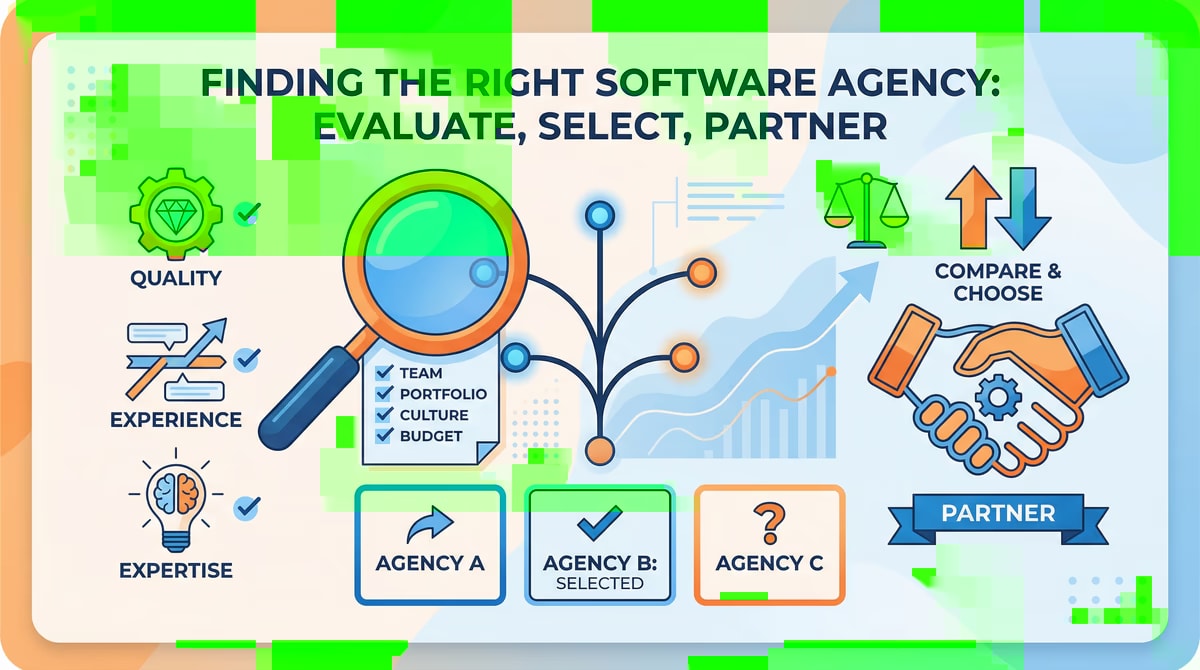
Build developer team vs. commission agency: The right choice for your software project
The decision whether a company builds an internal team for the development of its software or commissions an external agency is of strategic importance. Both models, **Inhouse vs....

Outsourcing Trends 2026: What changes for your business
The world of IT is changing rapidly, and thus also the way companies approach their software development projects. While some companies continue to rely on internal teams, discover...
Nearshore Trends 2026: New markets and developments in IT services
The global IT landscape is undergoing a steady change that forces companies to continuously adapt their business strategies to remain competitive. One of the central...
Free download
Checklist: 10 questions before software development
Key points before you start: budget, timeline, and requirements.
Get the checklist in a consultationRelevant next steps
Related services & solutions
Based on this article's topic, these pages are often the most useful next steps.
Related services
Related solutions
More on Software development and next steps
This article is in the Software development topic. In our blog overview you will find all articles; under category Software development more posts on this subject.
For topics like Software development we offer matching services – from app development and AI integration to legacy modernisation and maintenance. We describe typical use cases under solutions. Our cost calculators give initial estimates. Key terms are in the IT glossary. Books and long-form guides appear on the publications page; deeper articles live under topics.
If you have questions about this article or want a non-binding discussion about your project, you can book a consultation or reach us via contact. We usually respond within one working day.