
As of: 23 September 2026 · Reading time: 4 min
Key takeaways
- In today's fast-paced economy, efficient warehouse management is crucial for the success of a company.
- A key technology that plays a central role here...
In today's fast-paced economy, efficient warehouse management is crucial for the success of a company. A key technology that plays a central role here...
“Good software is not an accident—it comes from a structured development process with clear quality standards.”
– Björn Groenewold, Managing Director, Groenewold IT Solutions
Warehouse Management Systems (WMS) improve goods receipt/dispatch, storage location management, picking, and inventory. Selection depends on warehouse size, product variety.
And integration needs with ERP and shipping systems — thorough needs review before rollout prevents costly wrong decisions.
In today's fast-paced economy, efficient warehouse management is crucial for the success of a company.
A key technology that plays a central role here is the Warehouse Management System (WMS).
But the selection and introduction of such Software for Logistics can be a complex challenge.
This article serves as a complete guide that guides you through the process of selecting and implementing a WMS and helps you make the right decision for your company.
What is a Warehouse Management System (WMS)?
A warehouse management system, or WMS short, is a software application that serves to control, manage and improve warehouse processes.
From the moment goods arrive in the warehouse until the time they leave it, a WMS controls and monitors all processes.
These typically include receipt of goods, storage, commissioning, shipping and inventory.
The rollout of a WMS leads to a considerable increase in efficiency, an improvement in inventory accuracy and increased clarity across all storage processes.
The right selection: How to find the right WMS for your company
In today's fast-paced economy, efficient warehouse management is crucial for the success of a company.
For Warehouse Management Systems: A Guide to Selection and Successful…, see Data Analytics & Business Intelligence und Solution: Logistics on our website for rollout paths and planning.
The decision for a specific WMS is of strategic importance and should be well-considered.
A careful selection phase lays the foundation for a successful rollout and the long-term benefit of the system.
Demand analysis: The A and O of the WMS selection
Before looking for a provider, a thorough internal review is essential.
Understand your current warehouse processes, find bottlenecks and define clear goals you want to achieve with the introduction of a WMS.
Document your needs in detail in a specifications. This document serves as the basis for discussions with potential suppliers and helps to separate the sprout from wheat.
Types of Warehouse Management Systems
Short: In principle, WMS can be divided into different categories.
In principle, WMS can be divided into different categories. The most common are standalone systems that focus exclusively on warehouse management.
And WMS modules that are integrated into a senior enterprise resource planning (ERP) system. Another important distinction is between cloud-based and on-premise solutions.
| Criterion | Cloud-based WMS | On-Premise-WMS |
|---|---|---|
| Hosting | On the servers of the provider | On own servers in the company |
| Costenmodell | Subscription fee (SaaS) | Unique license costs, plus maintenance |
| Rollout | Faster and easier | Time-consuming and complex |
| Maintenance/Updates | Is taken over by the provider | Is the ownership of the company |
| Scalability Generally speaking |
References and further reading
The following separate references complement the topics in this article:
- Bitkom – German digital industry association.
- German Federal Office for Information Security (BSI).
- European Commission – Digital strategy.
- MDN Web Docs (Mozilla)
- W3C – World Wide Web Consortium.
Frequently Asked Questions (FAQ)
What is this article about: “Warehouse Management Systems: A Guide to Selection and Successful Introduction”?
This article sums up practical aspects of Warehouse Management Systems. A Guide to Selection and Successful Introduction for leaders and delivery teams. In short.
In today's fast-paced economy, efficient warehouse management is crucial for the success of a company. A key technology that plays a central role here...
Who benefits most from the content described here?
It is especially relevant for firms in Software development that need reliable systems, clear interfaces, and predictable delivery — from mid-market teams to expert departments.
How does this topic fit into an IT or digital strategy?
You can map the topic to service building blocks such as custom software and delivery support. Architecture reviews and stepwise rollout reduce risk and rework.
For multi-system landscapes, IT consulting and architecture helps align vendors and internal teams.
What are sensible next steps if we need support?
For architecture, rollout, or a second expert opinion, book a free initial consultation — including timeline and interface alignment.
About the author

Managing Director of Groenewold IT Solutions GmbH and Hyperspace GmbH
Since 2009 Björn Groenewold has been developing software solutions for the mid-market. He is Managing Director of Groenewold IT Solutions GmbH (founded 2010) and Hyperspace GmbH. As founder of Groenewold IT Solutions he has successfully supported more than 250 projects – from legacy modernisation to AI integration.
Blog recommendations
Related articles
These posts might also interest you.
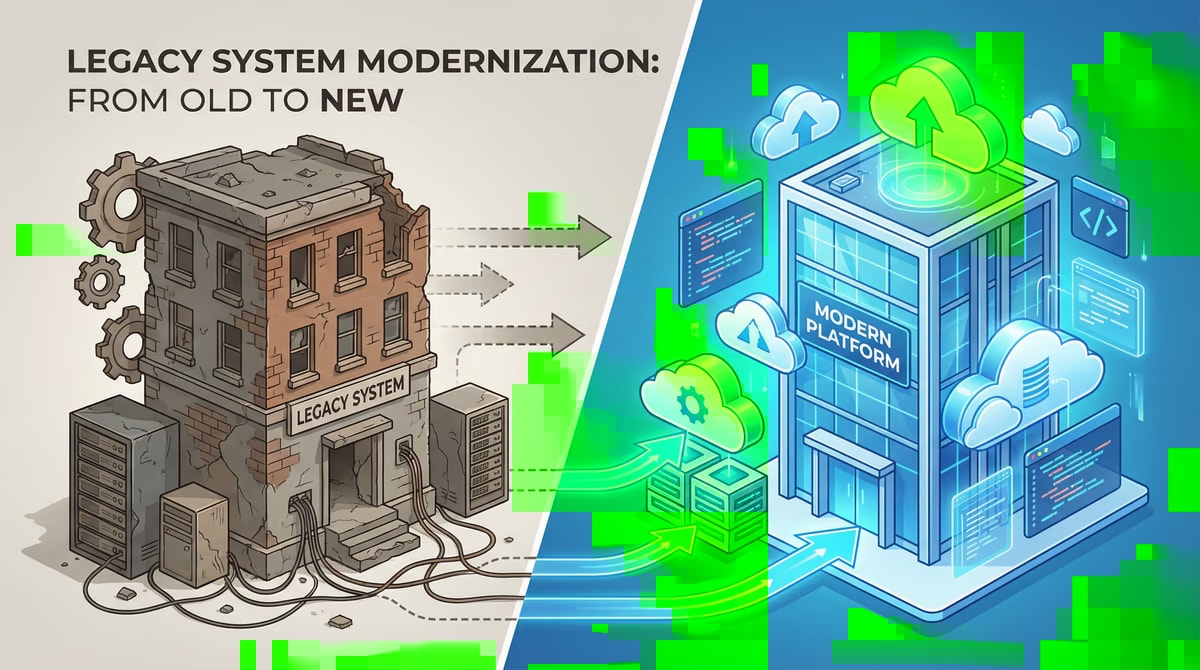
Altsystem migration: project planning and milestones for a smooth transition
In today's rapidly changing digital landscape, outdated IT systems – often referred to as old systems – are one of the biggest obstacles for companies that are competitive and innovative...
Altsystem migration: How to master stakeholder management
Modernisation of outdated IT infrastructures is an inevitable necessity for many companies to remain competitive. But the Altsystem migration holds numerous Hera...
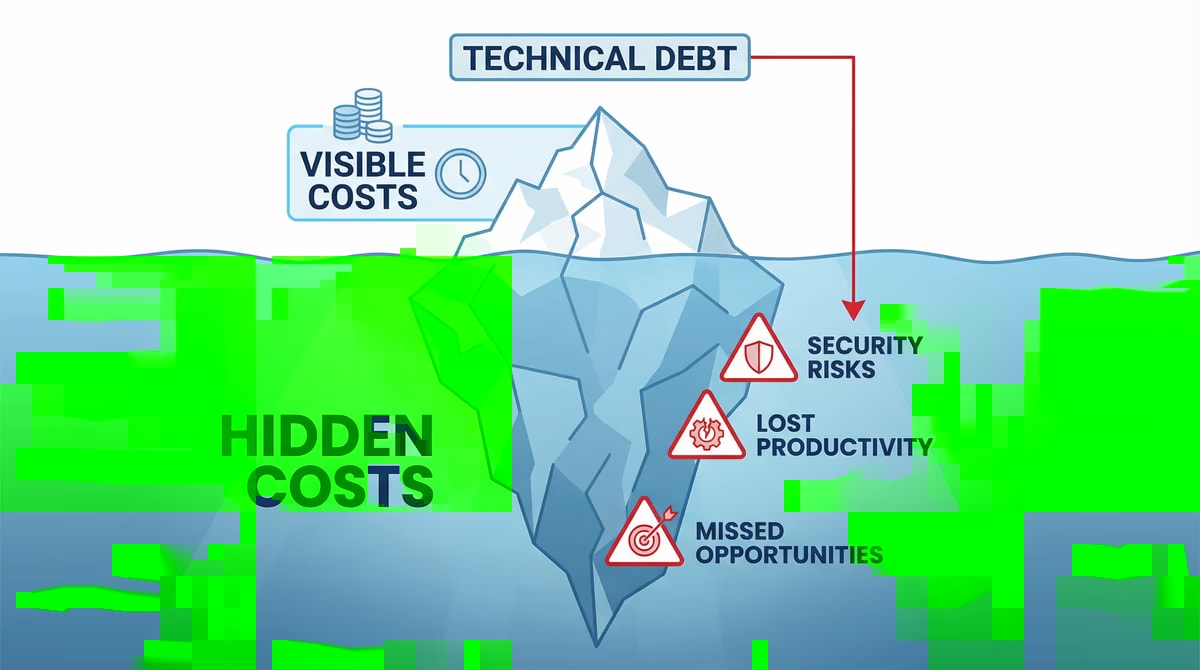
Technical Debt: Detection, Assessment and Strategic Debt
Time and resources are often scarce in the fast-paced world of software development. To comply with deadlines and bring new features to the market quickly, compromise...
Free download
Checklist: 10 questions before software development
Key points before you start: budget, timeline, and requirements.
Get the checklist in a consultationRelevant next steps
Related services & solutions
Based on this article's topic, these pages are often the most useful next steps.
Related services
Related solutions
Practical next steps after Warehouse Management Systems: A Guide to Selection and Successful Introduction
Warehouse Management Systems: A Guide to Selection and Successful Introduction addresses a practical choice for product and IT teams. Start with one clear goal: align software scope, technical risk, and business value before the next investment.
Check the current process, the data involved, and the result users need. Then record the main risks and define a small first step. This keeps the decision easy to review and gives your team a shared basis.
For implementation support, our custom software development connects the article's guidance with architecture, delivery, and stable operations. Engineering and project ownership stay with our team in Leer, Germany.
This post belongs to Software development. Browse the related Software development articles or use the English software blog for other topics.
When budget is the next question, the software cost calculators provide planning ranges. The IT glossary explains key terms, while in-depth technology guides cover wider decisions.
If the topic affects a live project, book a technical consultation or send the context through our project contact form. We usually reply within one working day.