
As of: 23 September 2026 · Reading time: 4 min
Key takeaways
- Speed and quality are not opposites in modern software development.
- This practical introduction explains the DevOps culture, shows how continuous integration and continuous deployment work and which automation steps make releases a low-risk routine.
Speed and quality are not opposites in modern software development. This practical introduction explains the DevOps culture, shows how continuous integration and continuous deployment work and which automation steps make releases a low-risk routine.
“DevOps is not a tool catalog alone—it is how you wire automation, metrics, and ownership so delivery and quality rise together.”
– Björn Groenewold, Managing Director, Groenewold IT Solutions
DevOps in practice: how to improve your development processes step by step.
In modern software development, speed and quality are no longer counters. However, two sides of the same coin. The key to this new efficiency is DevOps.
But what hides behind this keyword and how can you use it in practice to revolutionize your development processes?
This article gives you a practical introduction to the DevOps culture, explains the central concepts of Continuous Integration (CI) and Continuous Deployment (CD) and shows you how to improve your development processes sustainably.
This article is part of our complete guide: The ultimate guide to software development 2026.
What is DevOps?
DevOps is more than just a technology.
It is a corporate culture and a number of practices aimed at improving teamwork between software development (dev) and IT operations (Ops).
The traditional model in which developers throw code “over the fence” to the operating team leads to silos, long waiting times and conflicts.
DevOps breaks this silos and creates a common sense of ownership for the entire life cycle of an application.
The core goals of DevOps are:
Reduction of development cycles: Faster delivery of new features.
Increasing the delivery frequency: Smaller, more frequent releases instead of large, rare updates.
Improving reliability: Stable and more resilient systems by automation.
Strengthening teamwork: Common goals and an open communication culture.
The heart of DevOps: The CI/CD pipeline
A CI/CD pipeline automates build, test and release steps.
This means every code change is verified the same way — that is what makes frequent releases faster and safer at the same time.
For DevOps in practice, software development services and our development process show concrete rollout paths and planning steps.
Automation is the engine of DevOps.
The so-called CI/CD pipeline is a chain of automated steps running through each code change before it is provided for the end user.
Continuous Integration (CI)
Continuous integration (continuous integration) is the practice that developers regularly check their code changes – often several times a day – into a central repository (e.g. Git).
Each of these integrations automatically triggers a Build and a series of Tests.
- Advantage: Errors and integration problems are at once detected and can be quickly eliminated instead of accumulating over weeks and becoming an “integration nightmare”.
Continuous Deployment (CD)
Continuous deployment (continuous deployment) continues one step further.
Any change that successfully passes through all stages of the CI pipeline will be automatically introduced into the production environment and made available to end users.
- Advantage: New features and bug fixes reach the customer in record time. The release process becomes a risk-free routine task.
A somewhat more careful variant is continuous delivery: the release is prepared automatically, but going live remains a deliberate decision at the push of a button.
References and further reading
The following separate references complement the topics in this article:
- Bitkom – German digital industry association.
- German Federal Office for Information Security (BSI).
- European Commission – Digital strategy.
- MDN Web Docs (Mozilla)
- W3C – World Wide Web Consortium.
"DevOps is less about tools and more about shared ownership of quality and release discipline."
— Björn Groenewold, Managing Director, Groenewold IT Solutions
Frequently Asked Questions (FAQ)
What is this article about: “DevOps in practice”?
This post explores DevOps in practice from the perspective of culture, tooling and release discipline. In short.
Speed and quality are not opposites — continuous integration and continuous deployment are what let teams ship more often without losing stability.
Who benefits most from the content described here?
Useful for project leads and product owners in Software development who must choose between standard software, custom development, and integration.
How does this topic fit into an IT or digital strategy?
Technically and organizationally, alignment with experienced partners pays off — from requirements to operations; start with the [services overview](/en/services/software-development). For multi-system landscapes, [IT consulting and architecture](/en/services/it-consulting) helps align vendors and internal teams.
What are sensible next steps if we need support?
A practical next step: book a consultation and clarify which MVP or pilot fits your team and landscape.
About the author

Managing Director of Groenewold IT Solutions GmbH and Hyperspace GmbH
Since 2009 Björn Groenewold has been developing software solutions for the mid-market. He is Managing Director of Groenewold IT Solutions GmbH (founded 2010) and Hyperspace GmbH. As founder of Groenewold IT Solutions he has successfully supported more than 250 projects – from legacy modernisation to AI integration.
Blog recommendations
Related articles
These posts might also interest you.
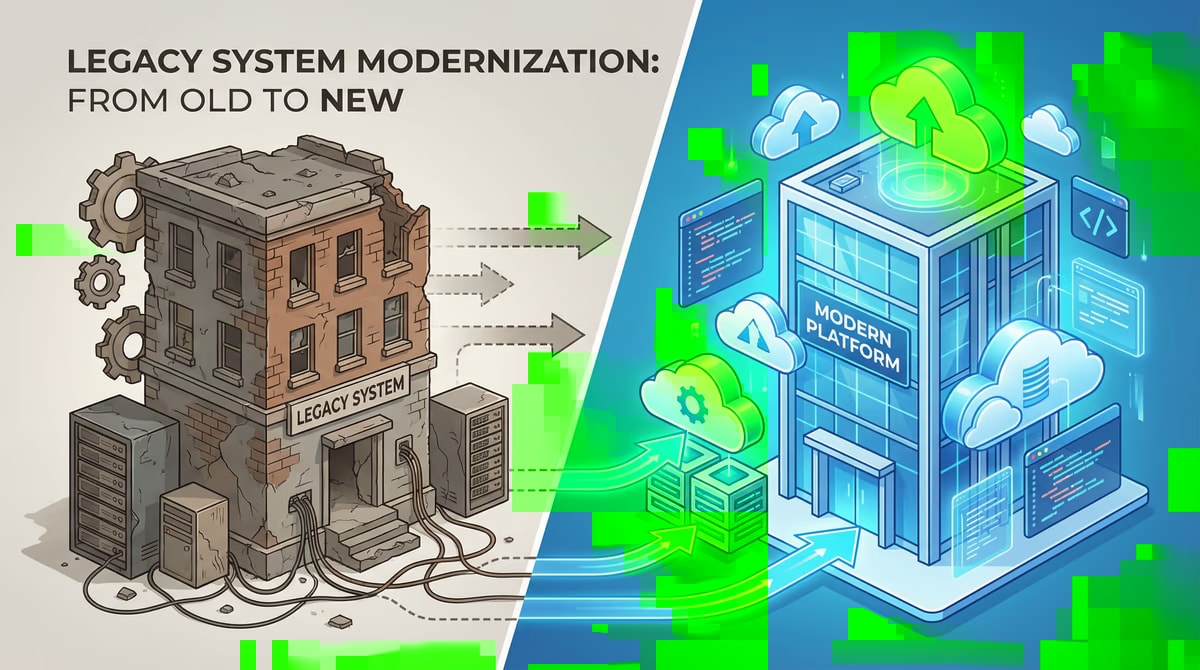
Altsystem migration: project planning and milestones for a smooth transition
In today's rapidly changing digital landscape, outdated IT systems – often referred to as old systems – are one of the biggest obstacles for companies that are competitive and innovative...
Altsystem migration: How to master stakeholder management
Modernisation of outdated IT infrastructures is an inevitable necessity for many companies to remain competitive. But the Altsystem migration holds numerous Hera...
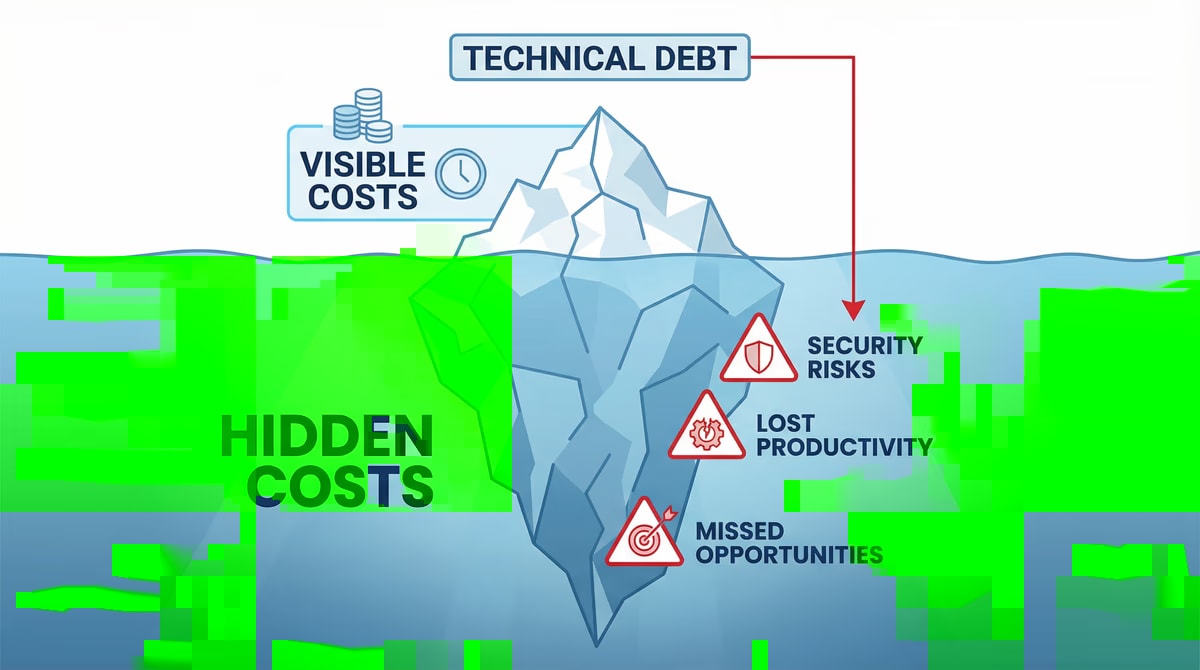
Technical Debt: Detection, Assessment and Strategic Debt
Time and resources are often scarce in the fast-paced world of software development. To comply with deadlines and bring new features to the market quickly, compromise...
Free download
Checklist: 10 questions before software development
Key points before you start: budget, timeline, and requirements.
Get the checklist in a consultationRelevant next steps
Related services & solutions
Based on this article's topic, these pages are often the most useful next steps.
Related services
Related solutions
Practical next steps after DevOps in Practice: How to Optimize Your Development Processes
DevOps in Practice: How to Optimize Your Development Processes addresses a practical choice for product and IT teams. Start with one clear goal: align software scope, technical risk, and business value before the next investment.
Check the current process, the data involved, and the result users need. Then record the main risks and define a small first step. This keeps the decision easy to review and gives your team a shared basis.
For implementation support, our custom software development connects the article's guidance with architecture, delivery, and stable operations. Engineering and project ownership stay with our team in Leer, Germany.
This post belongs to Software development. Browse the related Software development articles or use the English software blog for other topics.
When budget is the next question, the software cost calculators provide planning ranges. The IT glossary explains key terms, while in-depth technology guides cover wider decisions.
If the topic affects a live project, book a technical consultation or send the context through our project contact form. We usually reply within one working day.