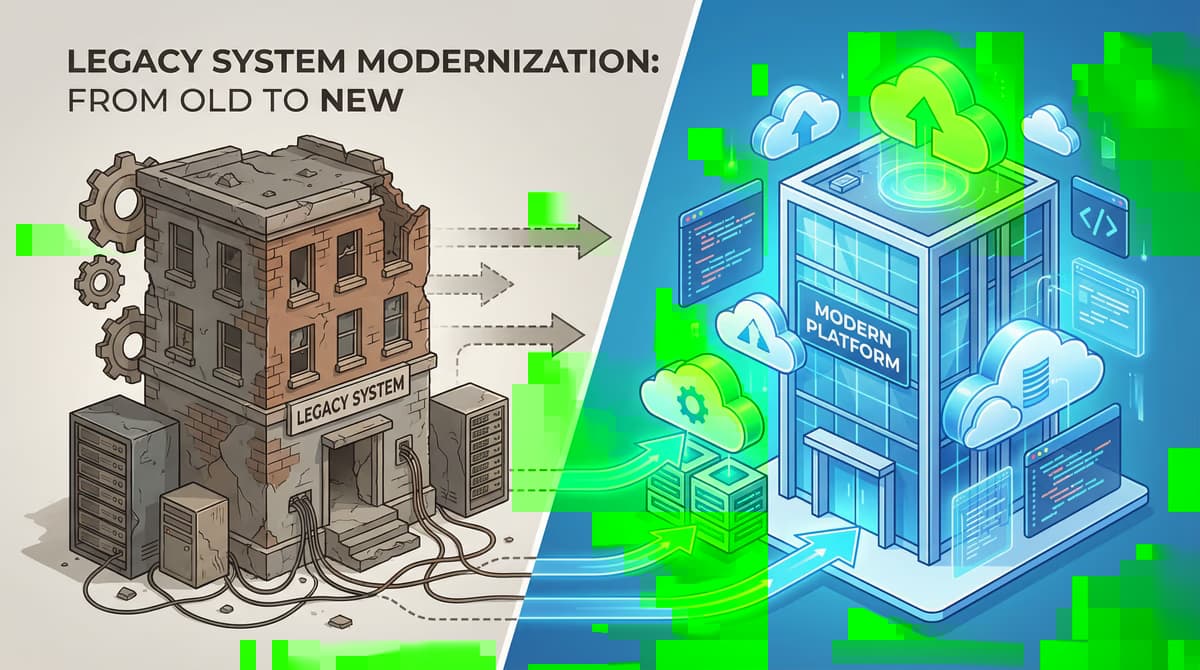
As of: 23 September 2026 · Reading time: 4 min
Key takeaways
- In today's rapidly changing digital landscape, companies are continuously required to modernise their technological base in order to remain competitive.
- One of the most common...
In today's rapidly changing digital landscape, companies are continuously required to modernise their technological base in order to remain competitive. One of the most common...
“Good software is not an accident—it comes from a structured development process with clear quality standards.”
– Björn Groenewold, Managing Director, Groenewold IT Solutions
In today's rapidly changing digital landscape, companies are steadily required to modernise their technical base. The aim is to remain competitive.
One of the most common and critical initiatives in this context is the Software migration.
Whether it is changing to a new cloud platform, updating an outdated ERP system or consolidating databases – migration is a complex undertaking whose success depends on many factors.
An often underestimated but decisive aspect for long-term success is the rollout of complete performance tests after the actual move.
Without them, companies risk that the new environment does not provide the expected performance. This can lead to dissatisfied users, business losses and high repair costs.
The multi-layered challenges of a software migration
In today's rapidly changing digital landscape, companies are steadily required to modernise their technical base in order to remain competitive.
Leaders exploring Software migration: Performance tests as key to success after moving can use Legacy Modernisation, Cost Calculator: Legacy Modernisation, Solution: Legacy Reduction sowie Monolith vs. Microservices as structured entry points.
A software migration is far more than just copying data and code from one system to another. It is a profound process that involves major risks.
The most common challenges include potential data loss, unexpected downtime during transition and compatibility problems between the new and the existing application landscape.
Careful and predictive planning is so essential to minimise these risks.
But even the most planned migration process cannot accurately predict the actual performance of the new system under real conditions.
Theoretical assumptions about performance must be validated in practice. And here the performance tests come into play.
Performance tests: The safety net after migration
Performance tests are a number of procedures aimed at evaluating the speed, scalability and stability of an application under different load conditions.
According to a Software Migration, they are of crucial importance to ensure that the new system not only meets the company's performance needs but ideally exceeds them.
They cover potential bottlenecks that have remained undetected during development and migration.
Types of performance tests
To obtain a complete picture of system performance, different types of tests should be carried out:
- Lasttests: The system is exposed to a typical, expected user load. The aim is to measure response times and resource use under normal conditions and to ensure that service level commitments (SLAs) are complied with.
- Stress tests: In these tests, the load is gradually increased beyond the normal level to find the load limit of the system. How to find out.
Clarity: Where no primary source is named in the text, figures are illustrative; compare Bitkom and Destatis. Project-related statements: Groenewold IT, 2026.
References and further reading
The following separate references complement the topics in this article:
- Bitkom – German digital industry association.
- German Federal Office for Information Security (BSI).
- European Commission – Digital strategy.
- MDN Web Docs (Mozilla)
- W3C – World Wide Web Consortium.
> "ERP programmes rarely fail on software selection; they fail on unclear process ownership."
— Björn Groenewold, Managing Director, Groenewold IT Solutions
Frequently Asked Questions (FAQ)
What is this article about: “Software migration: Performance tests as key to success after moving”?
This post explores Software migration. Performance tests as key to success after moving from the perspective of needs, typical pitfalls. And sensible next steps. In short.
In today's rapidly changing digital landscape, companies are steadily required to modernise their technical base. The aim is to remain competitive.
Who benefits most from the content described here?
Useful for project leads and product owners in Software development who must choose between standard software, custom development, and integration.
How does this topic fit into an IT or digital strategy?
Technically and organizationally, alignment with experienced partners pays off — from requirements to operations; start with the [services overview](/en/services/software-development). For multi-system landscapes, [IT consulting and architecture](/en/services/it-consulting) helps align vendors and internal teams.
What are sensible next steps if we need support?
A practical next step: book a consultation and clarify which MVP or pilot fits your team and landscape.
About the author

Managing Director of Groenewold IT Solutions GmbH and Hyperspace GmbH
Since 2009 Björn Groenewold has been developing software solutions for the mid-market. He is Managing Director of Groenewold IT Solutions GmbH (founded 2010) and Hyperspace GmbH. As founder of Groenewold IT Solutions he has successfully supported more than 250 projects – from legacy modernisation to AI integration.
Blog recommendations
Related articles
These posts might also interest you.
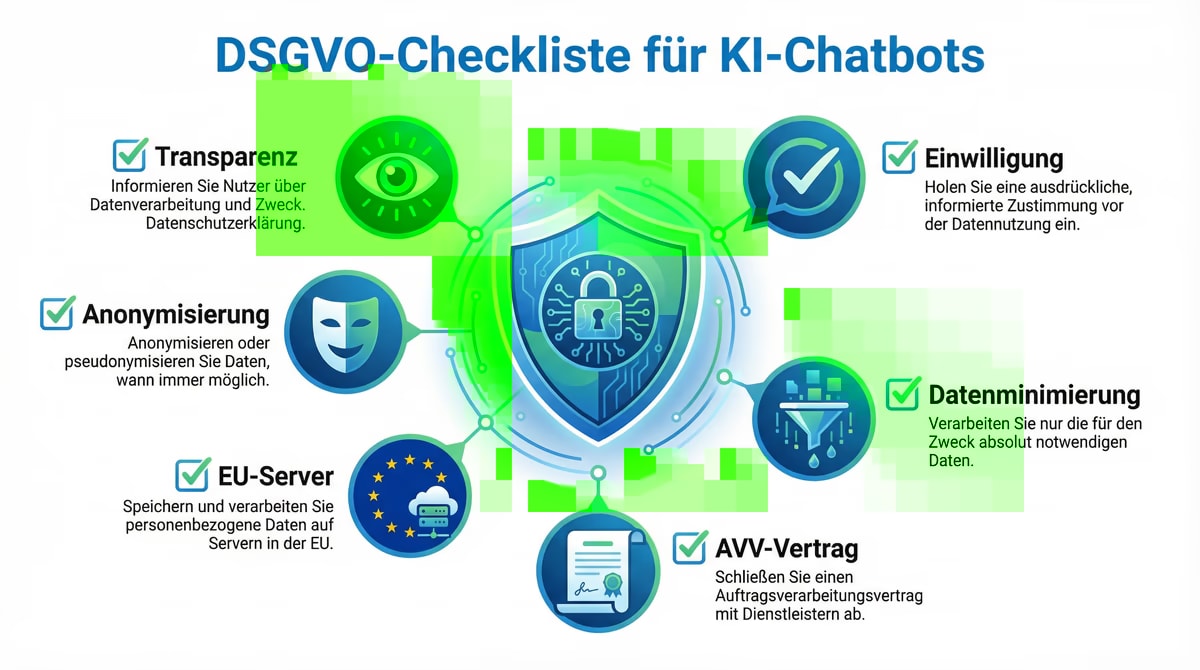
Data protection in the public sector: A comprehensive view of the specific requirements
In an increasingly digitized world, the protection of personal data is of fundamental importance. This is particularly true for the public sector, which is an immense amount ...

Open Source Software in Authorities: Opportunities and Challenges
Digitization of public administration is one of the central tasks of our time. Bund, countries and municipalities face the challenge of their services more citizen-friendly, eff...
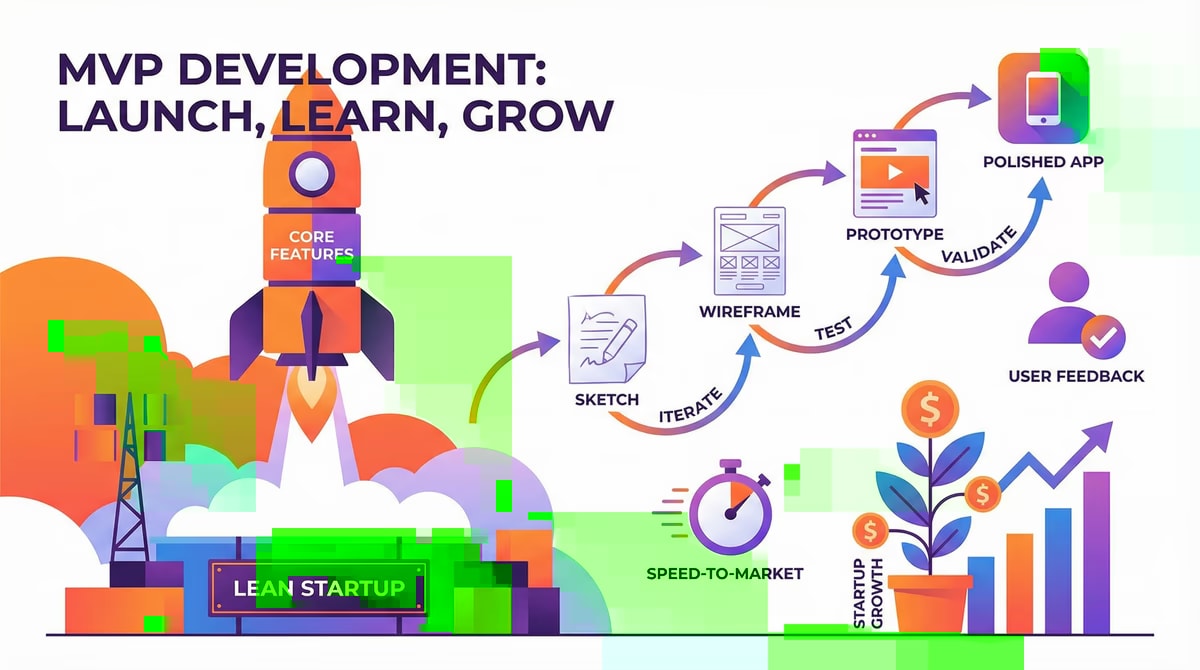
Lean MVP: Maximum value with minimum budget
In today's fast-paced digital world, many founders and companies face the same challenge: how to successfully achieve an innovative product idea with a limited budget...
Free download
Checklist: 10 questions before software development
Key points before you start: budget, timeline, and requirements.
Get the checklist in a consultationRelevant next steps
Related services & solutions
Based on this article's topic, these pages are often the most useful next steps.
Related solutions
Related comparison
Cost calculators
Practical next steps after Software migration: Performance tests as key to success after moving
Software migration: Performance tests as key to success after moving addresses a practical choice for product and IT teams. Start with one clear goal: reduce legacy risk in controlled steps while daily work and key data remain available.
Check the current process, the data involved, and the result users need. Then record the main risks and define a small first step. This keeps the decision easy to review and gives your team a shared basis.
For implementation support, our legacy software modernization connects the article's guidance with architecture, delivery, and stable operations. Engineering and project ownership stay with our team in Leer, Germany.
This post belongs to Software development. Browse the related Software development articles or use the English software blog for other topics.
When budget is the next question, the software cost calculators provide planning ranges. The IT glossary explains key terms, while in-depth technology guides cover wider decisions.
If the topic affects a live project, book a technical consultation or send the context through our project contact form. We usually reply within one working day.