🇩🇪
Database solutions – efficient data management
250+ projects · 5.0 on Google · 100% in Germany

Data warehouse & database consulting for reliable databases

For mid-sized companies: database development, DWH layers and migrations—SQL/NoSQL under control – delivery and project ownership from Germany (Leer/East Frisia), named contacts, no offshore guesswork.

  • 250+ delivered projects
  • 5.0 stars on Google
  • 100% engineering in Germany

Data warehouse and database consulting for SMEs: we consolidate ERP, CRM and production data into reliable analytics models and deliver database development with performance, high availability and backups — Made in Germany (PostgreSQL, SQL Server, MySQL, MongoDB). Performance, high availability, backups. When legacy data moves to a new target system, we estimate effort and risk transparently with our data migration cost calculator.

SQL Server & PostgreSQL·MongoDB & Redis·Migration·TuningMade in Germany

Data warehouse: context, benefits and typical use cases

A data warehouse makes distributed source data decision-ready — database consulting delivers the reliable roadmap from analysis to production operations.

A data warehouse consolidates operational data from ERP, CRM, production and external sources into a consistent analytics layer — so metrics do not depend on spreadsheet versions. We combine database consulting with pragmatic database development: from source analysis and modelling (star schema, data vault or lean reporting DB) to performant ETL pipelines and documented KPI definitions.

Typical use cases: group reporting with shared definitions, self-service BI for business teams, master data history and preparing KPI dashboards on a reliable foundation. Made in Germany from East Frisia — with measurable releases instead of multi-month big-bang projects.

When SMEs should prioritise a data warehouse

A data warehouse pays off when multiple systems deliver conflicting numbers, nightly reporting loads hurt production or finance and audit require unified definitions. Database consulting clarifies upfront whether a central layer, a lean data mart or source-system tuning is enough — depending on volume, latency and budget.

Approach: analysis, design, delivery and operations

We start with a source inventory and data-quality checks, define the target model and roll out migration and pipelines in phases. Integration uses APIs and interfaces with agreed cutover dates. Quality assurance, monitoring and ongoing optimisation keep the warehouse productive — complemented by Power BI or other BI tools when visualisation is the focus. Next step: review your data and BI potential.

From requirements to production operations

The data model decides maintainability and performance of the entire application — fixes after go-live cost more than careful schema design upfront.

Cardinalities, integrity rules and naming conventions clarified only after launch force migration under production load — with downtime risk and rising effort for every further change.

Database solutions matter for SME leaders when ERP, CRM and production share the same master data and queries stay fast — not when every team keeps its own spreadsheet island. We deliver Database Solutions with rigorous database design: entity relationships, integrity rules, naming conventions and clear ownership for master data.

Database development turns the model into PostgreSQL, SQL Server, MySQL or MongoDB — including migration scripts, QA and testing and handover to your operations team. Database optimisation kicks in when monitoring shows slow queries or lock waits: indexes, configuration, caching, and pragmatic denormalisation where needed.

Under data architecture we align the target picture, interfaces and compliance so later analytics or AI projects do not break on conflicting keys. Growing schemas without documentation, missing backup drills or outdated major versions are typical bottlenecks. We use roadmaps with measurable milestones instead of big-bang cutovers — supported by legacy modernisation where needed. Clear security-by-design rules and role models round off our Database Solutions — Made in Germany with documented handover and optional software maintenance.

Go deeper: Database & Business Intelligence for KPIs and reporting, API integration for ERP and APIs, and data analytics on the same data foundation.

Service building blocks

Database design and modelling

Tailored structures aligned with your processes — professional database design as the basis for efficient processing and analysis.

SQL and NoSQL databases

Relational or flexible stores — see SQL vs. NoSQL for technology choice.

Data migration and integration

Secure migration with integrity checks — including migration cost estimation and API integration.

Database optimisation

Indexing, query tuning and caching — see performance & scaling.

Business intelligence

Dashboards and reporting via database & BI and data analytics.

Security and backup

Protection with backup & recovery and security audit support.

Benefits of our database solutions

Scalability

Our solutions grow with your business — supported by scaling concepts and read replicas under rising load.

Performance

Optimised structures and efficient queries — with monitoring and measurable database optimisation.

Data security

Comprehensive measures aligned with security-by-design and GDPR requirements.

Data integrity

Consistency through integrity checks and transaction management — foundation for reliable system integration.

Cost efficiency

Modern architectures reduce operating cost — compare migration costs and modernisation ROI.

Adaptability

Flexible solutions that evolve with requirements — plus ongoing maintenance.

Need database expertise?

We optimise your database infrastructure

Greenfield design, migration or performance tuning — use our long-standing database experience.

Our delivery process

  1. 1

    Requirements analysis

    We analyse your business processes and data requirements — often in the project check or a workshop with business and IT stakeholders.

  2. 2

    Concept and design

    We create tailored database design — aligned with SQL vs. NoSQL and your data architecture.

  3. 3

    Implementation

    We implement the concept and integrate the database into your IT landscape and applications.

  4. 4

    Testing and optimisation

    We test and optimise performance — see performance & scaling and our modernisation ROI calculator.

  5. 5

    Training and support

    We train your team and offer ongoing maintenance with monitoring and reports.

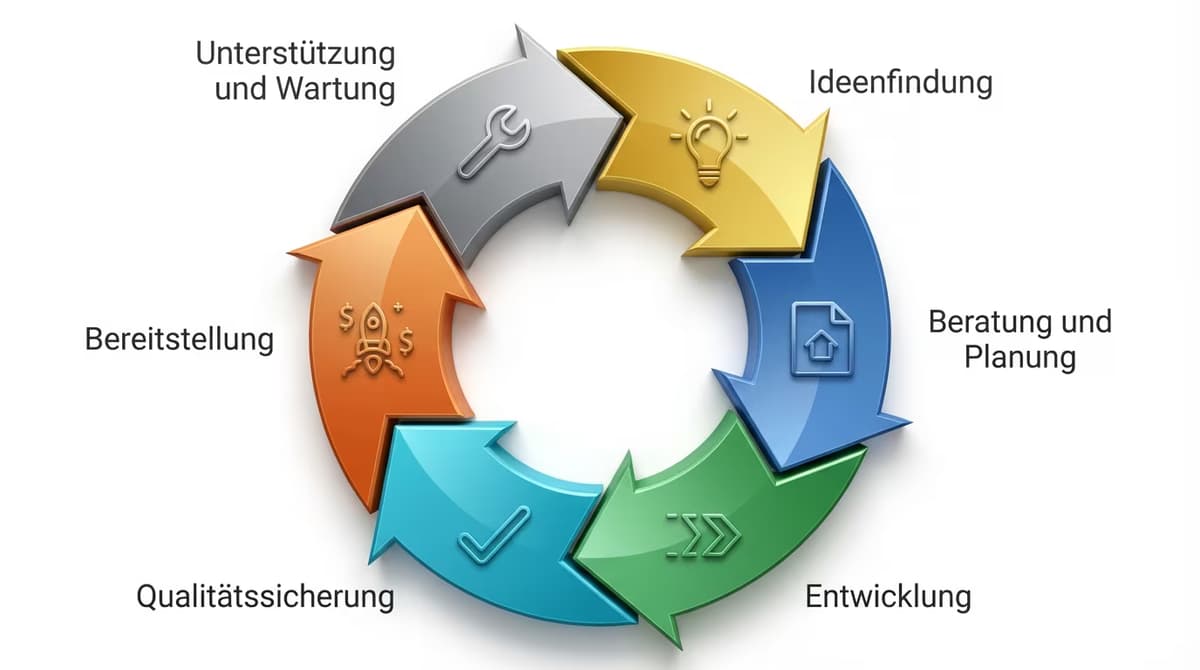
Our delivery cycle for database projects

Ready for a tailored database solution?

Book a database fit check — we assess performance, high availability and migration paths and develop a concept for your database layer.

Questions?

We advise on database projects without obligation—contact us for an initial discussion.

Consultation with software experts at Groenewold IT Solutions

Does modernising your database pay off?Calculate database modernisation ROI →

The database is the heart of every modern business application — and one of the most common causes of performance problems, outages and security gaps. Many companies struggle with historically grown database structures designed years ago without today's requirements in mind.

Slow queries, duplicates, missing backup concepts and outdated database versions are everyday issues — and they cost money through inefficient processes and frustrated teams. Use our data migration cost calculator and modernisation ROI tool to frame the business case.

At Groenewold IT Solutions we have worked with relational and document databases for more than 15 years. We know the strengths and limits of PostgreSQL, MySQL, Microsoft SQL Server, MongoDB and Redis from hundreds of projects.

Whether you build a new application, modernise an existing database or migrate from a legacy system — we support you with practical expertise focused on performance, security and maintainability.

Performance issues are a common trigger: queries that used to take milliseconds suddenly need minutes. We analyse execution plans, fix indexes, review schema normalisation and tune configuration — aligned with performance & scaling.

Another focus is data migration: from Access to SQL Server, from Oracle to PostgreSQL, or from a monolith to a microservices architecture. We map the current state, migrate with validation and cut over with minimal downtime — see our in-depth article data migration and quality.

For high availability and disaster recovery we design clusters, failover and tested restore processes — because a backup that was never restored is not a real backup.

NoSQL versus SQL is an architecture decision, not dogma. We often combine PostgreSQL for master data, Redis for caching and search engines for full-text — with cloud or on-premise setups via hosting where it fits.

Proactive monitoring and maintenance prevent small issues from becoming outages — with regular health checks and actionable reports for maintenance clients.

Vector databases: search by meaning

Normal databases search by exact keys or full text. Vector databases (Pinecone, Weaviate, pgvector) store meaning and allow similarity search. That underpins AI applications like RAG, where a model answers from your data. We help you build an AI knowledge base so documents and FAQs are searchable by meaning.

SaaS and multi-tenancy

SaaS needs databases where many customers share one system without seeing each other's data. Multi-tenancy can mean one DB with tenant columns, separate schemas, or separate DBs per customer. We design the right setup and use ORM and Infrastructure as Code so new tenants can be added in a repeatable way.

High availability and disaster recovery

Critical systems need more than one server. We design setups with primary and replicas, automatic failover and clear backup and recovery. Load balancing spreads reads across replicas. With good monitoring you spot lag and bottlenecks before outages. We test recovery so your RPO/RTO targets are met.

30-minute intro call: Database Solutions

On the scheduling page, pick a free slot for a 30-minute intro call about Database Solutions – straightforward next steps.

Free & non-binding · 30-minute intro call

Book next available slot

Database development: stable, fast and scalable

A professionally built and maintained database is the foundation of every reliable business application. It decides whether reports arrive in milliseconds or minutes, whether migrations run in a controlled way, and whether security and compliance stay achievable long term.

From initial modelling through performance tuning to migration onto modern systems, we support the full database lifecycle — with documented artefacts, measurable milestones and clear handover to your operations or managed hosting.

Frequently asked questions

Database solutions

Data warehouse & database consulting

What does a data warehouse mean for businesses?

A data warehouse is the central analytics layer where data from ERP, CRM, production and other sources is consolidated, cleansed and historised. Companies gain a shared language for metrics — regardless of which source system created a record. Database consulting clarifies upfront which model (star schema, data vault, data mart) fits volume, latency and governance.

Typical outcomes are faster month-end closes, fewer manual spreadsheet reconciliations and trustworthy dashboards. We document KPI definitions and data flows so finance, audit and business teams share the same terms — Made in Germany with pragmatic phased releases.

When does a data warehouse pay off for mid-sized companies?

A data warehouse pays off when reporting is copied manually night after night, departments report different revenue or inventory figures, or group reporting demands unified KPIs. Before larger BI rollouts (Power BI, Tableau) a DWH reduces the risk of dashboards built on inconsistent keys.

Database consulting checks whether a lean layer is enough first or whether source systems must be migrated and tuned. We control cost and risk through prioritised releases, parallel runs and measurable data-quality checks — instead of multi-month black-box projects with no visible benefit.

How does a data warehouse project run technically and organisationally?

We start with a source inventory, KPI workshops and data profiling. Database consulting defines the target model, ETL/ELT pipelines and interfaces to ERP and CRM. Technically we use proven engines (PostgreSQL, cloud-native warehouses or hybrid) depending on budget and operations. Organisationally we agree owners for master data, cutover dates and acceptance criteria with finance and business teams.

After go-live we monitor pipeline runs, runtime and consistency checks. Training and documentation ensure your team can connect new sources without calling external developers every time.

Björn Groenewold – Geschäftsführer Groenewold IT Solutions

Review data warehouse & BI potential

We align sources, KPIs and architecture in a structured intro call.

Design, delivery and operations

Must we finish database design before we start database development, or can both run in parallel?

Sound database design prevents costly rework later. Cardinalities, integrity rules and naming conventions should come before production development. This is especially true for core entities such as customers, orders or inventory. In practice we often iterate: we start with a domain model and key entities, build first tables and interfaces, then refine.

We consider performance and indexing in the schema early. This avoids surprises later. Where legacy constraints exist, we wrap old data stores and migrate in controlled steps. Under the label Database Solutions we bundle this full engineering chain rather than isolated one-off tasks.

What does database optimisation mean for you beyond quick index tips?

Database optimisation starts with measurements: execution plans, wait statistics, workload patterns and lock history. We do not make random config changes without context. From that we derive index changes, query rewrites, statistics maintenance and configuration tuning. Sometimes we add caching layers or read replicas. We revisit past design choices for practical denormalisation or materialised views.

Database development then implements changes with regression tests and rollout plans. The result is lower latency and CPU load, often without immediate hardware spend.

How do Database Solutions and a clear data architecture help SMEs without a dedicated data team?

Database Solutions means the integrated package of database design, implementation, migration and operations. It is aligned with ERP, CRM and industry logic. Data architecture names the target picture: which systems are the source of truth, how master data is owned, and where interfaces sit. For mid-sized companies we turn that into a feasible roadmap with prioritised releases and documented interfaces.

This gives executives and IT the same vocabulary. Database development and optimisation stay linked. That way, later analytics or AI projects do not break on inconsistent data keys.

Björn Groenewold – Geschäftsführer Groenewold IT Solutions

Structure your database project

We align Database Solutions, database design and database optimisation in one clear plan.

Costs, migration and security

How does database design affect later reporting and BI requirements?

Without clean database design, consistent keys and history are missing. Reporting figures diverge quickly as a result. We model timelines, currencies and multi-tenant rules early. We also document business terms alongside database development. Database optimisation ensures aggregate workloads do not slow down production overnight.

Where warehousing or data lake extensions are needed, we point to complementary Database Solutions on the analytics side. The data architecture stays extensible without overloading the operational system.

When does external support for database development pay off if our IT already knows SQL?

Internal SQL skills matter. External database development adds migration patterns, review discipline and load-testing experience. This is especially valuable for high availability, zero-downtime cutovers or multi-region setups. We relieve your team on time-critical deliveries. We also secure code through reviews and automated checks. Database design and optimisation remain strategically yours. We deliver traceable outputs and playbooks.

Typical SME IT teams face skill gaps and growth pressures at the same time. Partnering on database development is often the fastest route to stable production.

Database design: domain model, normalisation, integrity

Solid database design prevents duplicates and expensive rework. We translate business rules into consistent entities, relationships and keys — aligned with business owners and audit where needed.

Requirements and domain model

Workshops with your experts yield terms, cardinalities and mandatory fields. We produce a traceable ER model as input for database development.

Normalisation and pragmatic exceptions

We normalise where integrity would suffer. We denormalise selectively where read paths need reporting or performance — documented so database optimisation stays understandable later.

Integrity, tenants and history

Constraints, references and timelines are fixed before heavy production load hits the schema. This is the basis for credible Database Solutions and later data analytics steps.

Database development: SQL, NoSQL, migration, interfaces

Database development delivers DDL/DML scripts, stored procedures where business logic must be encapsulated, plus automated deploys via DevOps and tests — so releases stay repeatable.

Relational core systems

PostgreSQL, SQL Server and MySQL/MariaDB cover transactional workloads; technology choice follows your cloud or on-premise strategy.

NoSQL, cache and polyglot persistence

MongoDB, Redis or Elasticsearch fit flexible schemas — embedded in a clear data architecture, not as another silo without an interface concept.

Migration and integration

From legacy databases we move data with mapping and cutover planning — often after code analysis. Database optimisation of the target environment starts during testing, not only after go-live.

Database optimisation: measurably faster without blind tuning

Database optimisation starts with evidence: slow statements, missing indexes, lock contention and resource pressure. We do not make random parameter tweaks without context.

Query and index work

Execution plans, statistics maintenance and targeted indexes often reduce latency by orders of magnitude. We document all changes for regression testing.

Configuration and connections

Pools, timeouts and memory settings match workload and hardware — linked to monitoring so optimisation is not a one-off sprint.

Caching and read scaling

Redis or read replicas offload the primary when read patterns allow. Database design and database development must plan invalidation up front — see performance & scaling.

Database Solutions and data architecture: target picture for your IT landscape

Database Solutions means the coherent package of database design, development, optimisation and operations — embedded in a data architecture that reflects ERP, CRM and industry logic.

Reference architecture and ownership

We define leading systems, data flows and owners for master data. This is the basis for consistent reporting and later AI knowledge base use of the same foundation.

Cloud, on-premise and hybrid

Whether RDS, Azure SQL or managed PostgreSQL: we balance cost, latency and GDPR compliance — supported by hosting consulting.

Security, backup and compliance

Encryption, roles, backup and restore drills belong to our Database Solutions — as do monitoring and alerting. See our security audit and backup & disaster recovery guidance.

Scope: database solutions vs. BI and data analytics

Focus here: database design, migration, performance and operational architecture – not the BI main page data analytics and not Microsoft dashboard delivery on Power BI.

For warehouse, semantic layer and KPI governance: database & BI. Overview: Data, analytics & databases.

Related paths and adjacent topics

Service overview: Data, analytics & databases (overview)

More data & analytics services

Adjacent service categories

Database solutions: modeling, performance, operations

Björn Groenewold – Managing Director, Groenewold IT Solutions
Database projects are sustainable when model, performance, and backup strategy fit together—not when only the first report looks fast.
Björn GroenewoldDipl. Inf.Managing Director · Groenewold IT Solutions
Björn Groenewold

Up to 50% of your investment via BAFA/KfW

Use our funding calculator to see which government grants may apply to your project.

Björn GroenewoldManaging Director

Related topics

Complementary services from other areas

These services are frequently requested together with Database Solutions or complement it thematically.

AI and machine learning services: from pilot to production

System integration interfaces: connect APIs, ERP & legacy