Modernize legacy systems: A guide
Outdated software is a security risk and innovation brake. Strategies to tame the 'monoliths' and make your IT sustainable.
Read more
We modernise old systems step by step. Gradual migration cuts risk and keeps the transition smooth.

„Modernisation pays off when each step reduces risk: parallel run, validated data migration and a clear decommission plan beat a single big-bang cutover.“
Analysis of Existing Legacy Systems
Comprehensive analysis of your existing systems to identify modernization potential.
Modernization Strategies
Development of customized modernization strategies for your systems.
Gradual Migration
Step-by-step migration with minimal business disruption.
Frequently Asked Questions
Typical signs: Increasing maintenance costs, performance problems, lack of interfaces, security concerns, or the technology is no longer supported. We offer a free initial assessment.
Yes, we regularly take over systems where only the code exists. Through reverse engineering and structured analysis, we understand the logic and document it for the future.
Depends on the situation. Often a gradual migration makes sense: new functionality on new technology, old system runs in parallel until it's replaced. We analyze costs and risks with you.
Yes, that's usually the goal. We plan data migration carefully, validate quality, and ensure no business-critical information is lost.

Plan modernization? We analyze your system and develop a pragmatic migration strategy.
Schedule ConsultationHighly dependent on scope and complexity. A small application from 15,000 €, larger enterprise systems correspondingly more. We start with an assessment to get a realistic estimate.
Small systems: 2-4 months. Complex migrations: 6-18 months. We work in sprints and deliver usable results early, so you can see progress and give feedback.
Through gradual migration, parallel operation of old and new systems, comprehensive testing, and rollback strategies. We never switch everything at once.
Not uncommon with legacy systems. We work ourselves into the code, analyze structure and logic, and build a new knowledge base. This takes time but is feasible.

Questions about modernization? We advise honestly about possibilities, costs, and risks – from experience with many legacy projects.
Contact UsLegacy systems are often the backbone of successful businesses, running critical processes that generate revenue every day. The problem is not that they work poorly today but that they become increasingly expensive to maintain, difficult to integrate with modern tools, and vulnerable to security threats that did not exist when they were built. Our modernization practice helps companies preserve the business logic embedded in these systems while migrating to contemporary platforms that support future growth.
We have modernized applications written in Delphi, Visual Basic 6, COBOL, FoxPro, and classic ASP among many others. Each legacy technology presents unique challenges, from proprietary data formats to undocumented business rules buried in thousands of lines of code. Our reverse engineering process systematically extracts this institutional knowledge, documents it properly, and translates it into modern architectures. This means nothing valuable gets lost during the transition, even when the original developers are long gone.
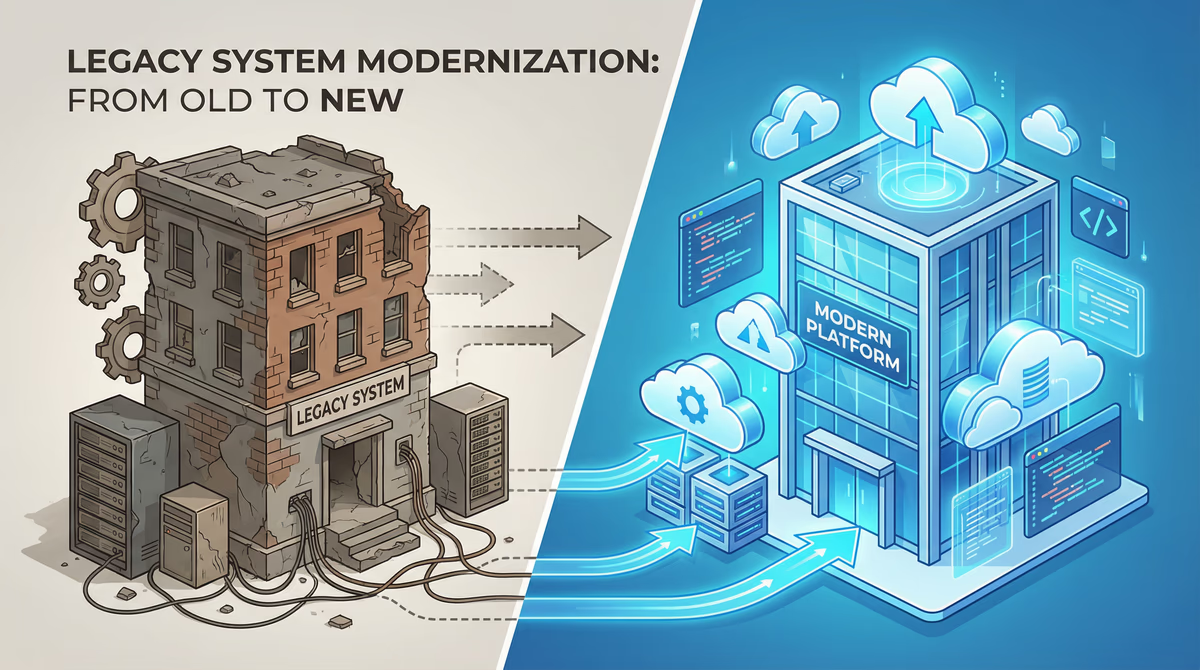
The strangler fig pattern is our preferred modernization strategy for most enterprise systems. Rather than attempting a risky big-bang rewrite, we gradually replace legacy components with modern services while keeping the old system running in parallel. New features are built exclusively on the modern platform, and existing functionality migrates module by module. This approach dramatically reduces project risk because the business never depends on an unproven system, and each migration phase delivers immediate, measurable improvements.
Data migration deserves special attention in any modernization project because legacy databases often contain decades of business history. We develop comprehensive migration strategies that include data cleansing, format transformation, and thorough validation to ensure every record transfers correctly. Our parallel-run testing methodology compares outputs from old and new systems side by side, catching discrepancies before cutover. The result is a smooth transition that preserves your data integrity and maintains business continuity throughout the entire modernization journey.
Every legacy system carries technical debt – deliberate or accidental compromises that have accumulated over the years. Before modernizing, we conduct a thorough Technical Due Diligence: we systematically evaluate code quality, architecture and dependencies and create a prioritized roadmap. This gives you clear visibility into which debts are critical and need immediate attention – and which can be addressed through gradual refactoring. This transparency is the foundation for realistic timeline and budget planning.
Many legacy systems have grown as a monolith – a single, tightly coupled application that is difficult to scale and maintain. Our approach: we gradually decompose the monolith into loosely coupled microservices, packaged in Docker containers and orchestrated with Kubernetes. We rely on the Strangler Pattern: new functionality is built as an independent service while the monolith continues running and gradually shrinks. This eliminates big-bang risk, and your team can learn the new architecture step by step.
Data migration is the step with the greatest risk potential – and therefore the one we dedicate the most attention to. Decades of business data must not only be moved but transformed, cleansed and validated. We develop automated migration scripts that are reproducible and testable. Before the production cutover, the data passes through multiple dry runs in a staging environment until every record is verified. Only when old and new systems produce identical results do we proceed with the cutover – controlled and rollback-ready at all times.
Related Topics
Complementary Services from Other Areas
These services are frequently requested together with Legacy Modernization or complement it thematically.
Software & Platforms
Operations, Support & Stabilization
Consulting & Strategy
Your Next Step
Tell us briefly what you have in mind.
We'll analyze your legacy code and develop a realistic modernization strategy – step by step.
30 min strategy call – 100% free & non-binding
Legacy Modernization is most effective when it is aligned with your business goals, existing systems, and team capabilities. At Groenewold IT Solutions we combine product thinking, clear architecture, and hands-on delivery so that every project delivers measurable value. We address operational, compliance, and performance aspects early so that later releases stay on track.
Our approach to Legacy Modernization emphasises transparent backlogs, close collaboration with your stakeholders, and incremental delivery. Whether you need a discovery workshop, an MVP, or a full-scale implementation, we define scope, effort, and success criteria up front. With over 250 completed projects we have the experience to recommend the right level of investment and the right next steps for your situation.
Explore our services overview for the full portfolio, our topic pages for in-depth articles linked to each service, and the IT Glossary for key terms. If you would like to discuss your project, we are happy to clarify scope, priorities, and a realistic timeline in a short consultation.
Decision guidance
Our topic overview links related articles and entry points alongside this service page.
Book a no-obligation call about your project – or start with our project check for a structured first assessment.
Recent articles from our blog that match this service.

Modernize legacy systems: A guide
Outdated software is a security risk and innovation brake. Strategies to tame the 'monoliths' and make your IT sustainable.
Read more
Delphi Legacymodernization: Old applications fit for...
Strategies for modernising old Delphi applications.
Read more
The 7 strategies for legacy moderation: Which fits...
A detailed overview of the 7 Gartner strategies for legacy modernisation. Find the right approach for your company, from Rehosting to Replacing.
Read more