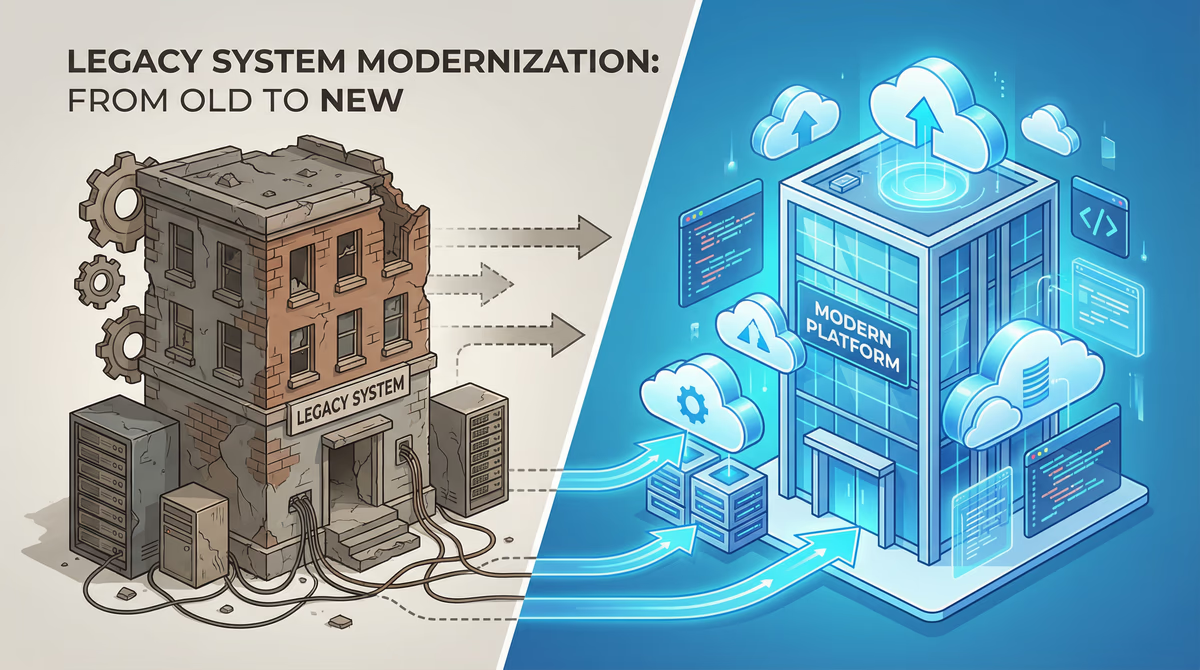
Modernizing legacy systems is often unavoidable – but expensive and risky if approached incorrectly. We show you which factors drive costs, how to keep budget and risk manageable, and why phased migration is almost always better than big bang.
Why Modernization Is Often Underestimated
The biggest effort rarely lies in the "new code", but in dependencies: interfaces, data models, implicit domain knowledge, missing tests, and operations that tolerate no downtime.
Integration & Data
Mapping, migration, synchronization, quality gates – often 40% of the effort
Testability
Missing test coverage makes changes risky and expensive
Security & Compliance
Role models, audit logs, secrets – often undocumented in legacy systems
Domain Ownership
Unclear responsibilities delay decisions and increase costs
Cost Drivers in Practice
Phased Migration Instead of Big Bang
We usually recommend the strangler pattern and decoupling: first create transparency and stability, then modernize domain by domain – with measurable quick wins. This makes budget and risk manageable.
Assess
Analyze current state, map dependencies
Stabilize
Add tests, introduce monitoring
Decouple
Introduce APIs, decouple modules
Migrate
Replace domain by domain
Avoid Common Pitfalls
Legacy Modernization with Up to 50% Funding
Modernizing legacy systems is a classic digitalization project – and is supported by many funding programs. Check your grant options.
The Fastest Way to Get Started
For running systems, we often start with an audit (findings + prioritized actions). For target vision and scope, a workshop is ideal. Both provide decision-making foundations before you commit larger budgets.