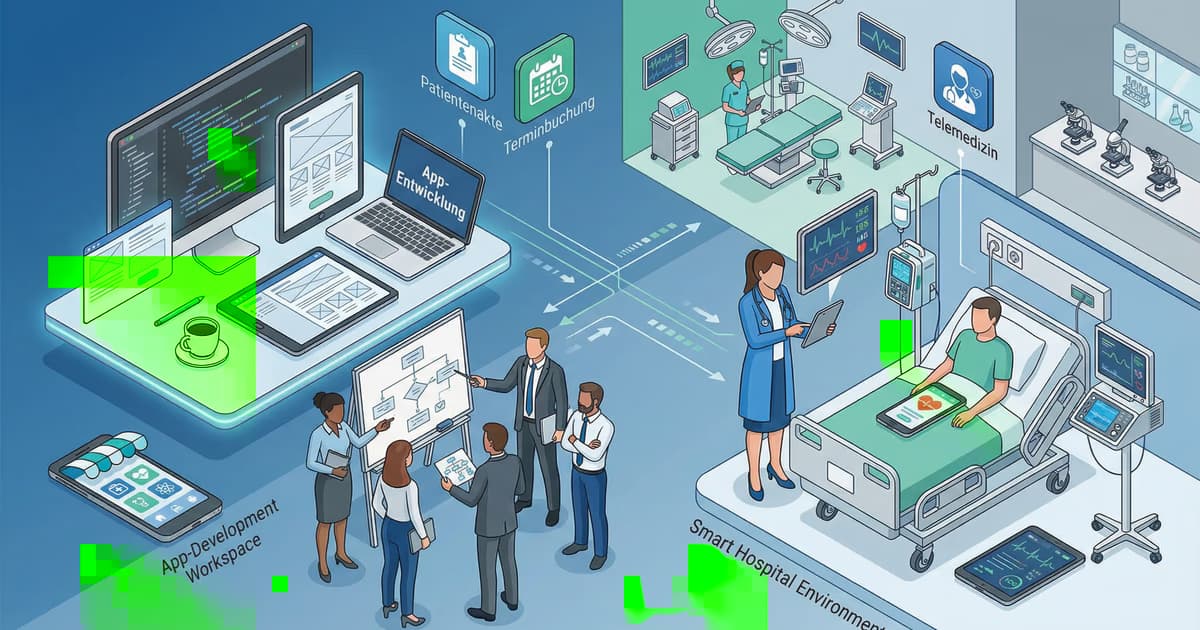
As of: 23 September 2026 · Reading time: 4 min
Key takeaways
- Digitization has captured and transformed healthcare at a rapid pace.
- One of the most important developments in this sector is the rise of health apps, also called mHealth applications.
Digitization has captured and transformed healthcare at a rapid pace. One of the most important developments in this sector is the rise of health apps, also called mHealth applications. D...
“An app’s success is decided before the first line of code—in user research and product clarity.”
– Björn Groenewold, Managing Director, Groenewold IT Solutions
Healthcare apps digitize patient portals, telemedicine consultations, medication management, and vital signs monitoring. Special needs. Medical Device Regulation (MDR), GDPR-compliant processing of sensitive health data.
And interoperability with hospital information systems via HL7 FHIR.
Digitization has captured and transformed healthcare at a rapid pace.
One of the most important developments in this sector is the rise of health apps, also called mHealth applications.
These mobile applications offer enormous potential to improve medical care, increase efficiency and integrate patients more closely into their own health care.
In this article we highlight the diverse benefits and applications of App development in healthcare and show how specialised IT solutions revolutionize the industry.
The potential of mHealth: Why apps in healthcare are indispensable
Digitization has captured and transformed healthcare at a rapid pace.
For App development in healthcare: A digital quantum leap for patients and…, View services, Cost Calculator: App Development sowie Discover solutions help you align rollout, scope and budget before you commit.
The increasing spread of smartphones and wearables has paved the way for a new era of health care.
Patients and medical staff also recognise the benefits that bring mobile applications.
According to studies, more than 50% of patients prefer the use of mobile apps for health concerns [1].
This trend is further enhanced by the growing demand for greater clarity, comfort and personalised health services.
Improved patient retention and communication
Health apps enable direct and continuous communication between patients and doctors.
Patients can ask questions via secure message functions, get findings or agree to follow-up appointments without having to search for practice. This not only strengthens the doctor-patient relationship.
However, also promotes the active participation of patients in the treatment process.
Functions such as appointment reminders, medication plans and tailored health tips help to increase therapy loyalty and improve treatment success.
Efficiency increase and cost reduction
The automation of administrative tasks by apps significantly relieves medical personnel.
Termination agreements, prescription needs and patient data management can be handled digitally, saving time and reducing susceptibility to errors.
In addition, unnecessary visits to practice can be avoided by using telemedicine apps. This means considerable cost savings both for patients and for the health system.
Experts estimate that the use of mHealth applications can lead to a major reduction in re-instruction to the hospital [2].
| Advantage | Description | Target group |
|---|---|---|
| Accessibility local and time-separate access to medical care, especially in rural areas. | Patients | |
| Data management | Continuous collection and evaluation of vital data for tight monitoring. | Doctors and patients |
| Process optimization | Automation of routine tasks such as scheduling and documentation. | Medical staff |
| Prevention Mot |
Sources: Unless cited inline, market figures and percentages are for orientation. See public sources such as Bitkom (2025) and Destatis.
Project budgets and examples: Groenewold IT Solutions, internal reporting 2026.
References and further reading
The following separate references complement the topics in this article:
- Bitkom – German digital industry association.
- German Federal Office for Information Security (BSI).
- European Commission – Digital strategy.
- MDN Web Docs (Mozilla)
- W3C – World Wide Web Consortium.
Frequently Asked Questions (FAQ)
What is this article about: “App development in healthcare: A digital quantum leap for patients and medical staff”?
This article sums up practical aspects of App development in healthcare. A digital quantum leap for patients and medical staff for leaders and delivery teams.
In short: Digitization has captured and transformed healthcare at a rapid pace.
One of the most important developments in this sector is the rise of health apps, also called mHealth applications. D...
Who benefits most from the content described here?
It is especially relevant for firms in App development that need reliable systems, clear interfaces, and predictable delivery — from mid-market teams to expert departments.
How does this topic fit into an IT or digital strategy?
You can map the topic to service building blocks such as custom software and delivery support. Architecture reviews and stepwise rollout reduce risk and rework.
For multi-system landscapes, IT consulting and architecture helps align vendors and internal teams.
What are sensible next steps if we need support?
For architecture, rollout, or a second expert opinion, book a free initial consultation — including timeline and interface alignment.
About the author

Managing Director of Groenewold IT Solutions GmbH and Hyperspace GmbH
Since 2009 Björn Groenewold has been developing software solutions for the mid-market. He is Managing Director of Groenewold IT Solutions GmbH (founded 2010) and Hyperspace GmbH. As founder of Groenewold IT Solutions he has successfully supported more than 250 projects – from legacy modernisation to AI integration.
Blog recommendations
Related articles
These posts might also interest you.

Flutter widgets vs. React Native components: A comprehensive comparison
In the world of mobile app development, cross-platform development has established itself as an efficient alternative to native development for iOS and Android. Two of the leading framewor...
Cross-Platform vs. Native: When what approach is the right in app development
In today's mobile world, companies face the strategic decision on how to develop their applications for different platforms. The choice between native and cross-platform en...
Flutter vs. React Native: A closer look at community and support
In the world of cross-platform development for mobile apps, Flutter and React Native are two of the most prominent names. Both frameworks offer developers the opportunity to use a single codeb...
Free download
Checklist: 10 questions before software development
Key points before you start: budget, timeline, and requirements.
Get the checklist in a consultationRelevant next steps
Related services & solutions
Based on this article's topic, these pages are often the most useful next steps.
Related services
Related solutions
Cost calculators
Related industries
Practical next steps after App development in healthcare: A digital quantum leap for patients and medical staff
App development in healthcare: A digital quantum leap for patients and medical staff addresses a practical choice for healthcare teams. Start with one clear goal: choose an app approach that stays secure, testable, and useful after launch.
Check the current process, the data involved, and the result users need. Then record the main risks and define a small first step. This keeps the decision easy to review and gives your team a shared basis.
For implementation support, our business app development connects the article's guidance with architecture, delivery, and stable operations. Engineering and project ownership stay with our team in Leer, Germany.
This post belongs to App development. Browse the related App development articles or use the English software blog for other topics.
When budget is the next question, the software cost calculators provide planning ranges. The IT glossary explains key terms, while in-depth technology guides cover wider decisions.
If the topic affects a live project, book a technical consultation or send the context through our project contact form. We usually reply within one working day.