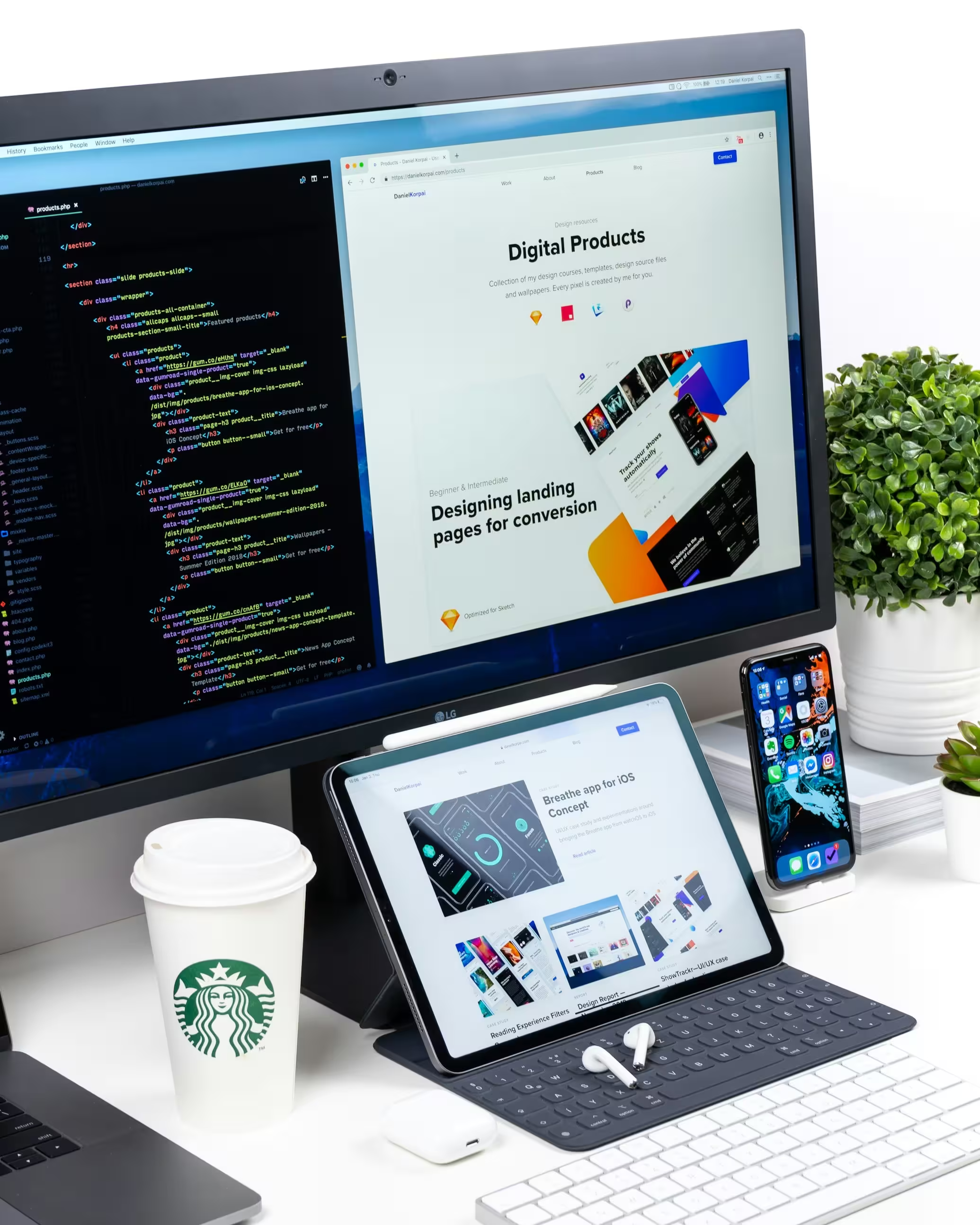
The line between web and mobile has blurred considerably, and modern users expect seamless experiences regardless of how they access your services. Our development approach embraces this reality by building applications that feel native on phones, tablets, and desktops alike. Using technologies like React, Next.js, Flutter, React Native, and .NET MAUI, we create unified experiences that share business logic while respecting the unique interaction patterns of each platform.
Progressive Web Apps represent a compelling middle ground for many business scenarios. They deliver app-like experiences through the browser, complete with offline functionality, push notifications, and home screen installation, without the friction of app store submissions or platform-specific codebases. We have built PWAs for field service teams who need reliable access in areas with spotty connectivity, and for customer-facing applications where reducing the barrier to first use directly impacts conversion rates.
Native mobile development remains the right choice when applications need deep integration with device hardware, maximum performance, or must adhere to strict platform design guidelines. Our iOS developers work with Swift and SwiftUI, while our Android team leverages Kotlin and Jetpack Compose. For projects where budget and timeline favor a shared codebase, we use Flutter or React Native to deliver polished cross-platform apps that genuinely look and feel native on both operating systems without compromise. Where your stack is already Microsoft- and C#-centric, .NET MAUI is a strong fit for cross-platform delivery across mobile and desktop.
Every web and mobile project we deliver includes responsive design as a non-negotiable foundation, not an afterthought. We follow mobile-first development principles, ensuring that interfaces work beautifully on small screens before progressively enhancing them for larger viewports. Accessibility testing follows WCAG 2.2 AA as the current standard (WCAG 2.1 is the predecessor). Whether BFSG, EAA or EN 301 549 applies is assessed for the specific digital service – not every corporate site is automatically in scope. Keyboard access, contrast and screen-reader checks sit in the pipeline, with manual spot tests before release.
From Concept to Pixel: The UX Design Process
A successful digital product doesn't start with code – it starts with a thoughtful UX design process. We begin with wireframes and mockups that make information architecture and user flows tangible before a single line of code is written. Building on that foundation, we develop a consistent design system with reusable components, color palettes, and typography rules. This system ensures visual consistency across all screens while significantly accelerating development. Through targeted A/B testing we validate design decisions with data: which button color converts better? Which layout drives more interactions? The result is interfaces that don't just look good but measurably perform.
Rendering Strategies for Performance and SEO
Choosing the right rendering strategy directly impacts load times, search engine visibility, and user experience. With Server-Side Rendering (SSR) and Static Site Generation (SSG), we deliver pages that are fully rendered on the first request – ideal for SEO and perceived speed. Combined with a Headless CMS, editors get a comfortable backend for content management while the frontend operates as a decoupled application offering maximum performance and flexibility. Next.js allows us to mix SSR, SSG, and client-side rendering on a per-route basis – giving every page exactly the rendering strategy that's optimal for its purpose.
Mobile Features That Make the Difference
Modern mobile apps thrive on features that go beyond simply displaying content. Push notifications keep users actively engaged and enable time-critical communication – from order status updates to personalized offers. For companies with an international focus, we implement comprehensive internationalization (i18n): multilingual interfaces, localized date and currency formats, and culturally adapted content. And with Progressive Web Apps, we bring app-like experiences directly to the browser – including offline capability, home screen installation, and fast load times, all without the hurdles of app store submissions.