
As of: 23 September 2026 · Reading time: 4 min
Key takeaways
- A comprehensive guide on AI in software development.
- Learn all about agile methods, MVP, Cloud, AI, legacy systems, DevOps and digital transformation.
A comprehensive guide on AI in software development. Learn all about agile methods, MVP, Cloud, AI, legacy systems, DevOps and digital transformation.
“Good software is not an accident—it comes from a structured development process with clear quality standards.”
– Björn Groenewold, Managing Director, Groenewold IT Solutions
AI in software development: Opportunities and applications 2026
The Role of AI in Modern Software Development
A complete guide on AI in software development.
For AI in software development: Options and applications 2026, AI & Machine Learning, Cost Calculator: AI Development, Our Development Process sowie Cost Calculator: App Development help you align rollout, scope and budget before you commit.
AI systems take over routine tasks. They support developers with complex problems. The goal is not replacement — it is augmentation.
Human expertise stays central; AI expands its reach.
These systems find patterns across large datasets. They make predictions and improve processes. The result: measurable gains in efficiency, quality, and delivery speed.
Top 5 AI Applications in the Software Lifecycle
Requirements Analysis
Short: AI tools parse unstructured customer input.
AI tools parse unstructured customer input. They convert it into technical specifications. Gaps and conflicts are flagged automatically. This saves hours of manual review.
Code Generation and Completion
Short: Assistants like GitHub Copilot suggest complete code blocks.
Assistants like GitHub Copilot suggest complete code blocks. They work based on developer context and comments. Rollout timelines shrink significantly.
Intelligent Testing
Short: AI generates, prioritizes, and executes test cases automatically.
AI generates, prioritizes, and executes test cases automatically. It learns which code segments are error-prone. Testing effort shifts to where it matters most.
Automated Bug Fixing
Short: AI systems detect errors and submit correction suggestions.
AI systems detect errors and submit correction suggestions. Simple issues are sometimes resolved without developer input. This reduces time-to-fix for common defects.
Optimization and Refactoring
Short: AI identifies performance bottlenecks.
AI identifies performance bottlenecks. It proposes more efficient code designs. Teams focus on architecture rather than maintenance.
AI-Based Development Tools You Should Know
These tools deliver practical value in day-to-day development:
- GitHub Copilot — Real-time code completion; acts as an AI pair programmer.
- Tabnine — Trainable code completion; adapts to your team's codebase.
- Deepcode — Vulnerability and error review with improvement suggestions.
- Snyk — Automated detection and fixing of open-source dependency vulnerabilities.
- Katalon Studio — AI-powered test automation for web, API, and mobile applications.
The Future: Generative AI in Software Projects
What Is Already Possible Today
Short: Generative AI handles more often complex tasks.
Generative AI handles more often complex tasks. Code scaffolding, documentation, and test case generation are standard use cases. These features reduce entry barriers for non-technical stakeholders.
What Comes Next
Short: Future systems will manage larger portions of the development lifecycle autonomously.
Future systems will manage larger portions of the development lifecycle autonomously. Human oversight remains essential — especially for architecture decisions, security, and compliance.
Companies that adopt AI tools now build the experience needed for this shift.
What This Means for Mid-Sized Companies
Short: You do not need a dedicated AI team to benefit.
You do not need a dedicated AI team to benefit. Many tools integrate into existing development workflows within days. The practical entry points:
- Use Copilot or Tabnine to accelerate your development team's output.
- Use Snyk to find security gaps in existing dependencies.
- Use AI-driven testing to reduce manual QA effort on regression cycles.
The critical factor is not which tool you choose. It is whether you integrate AI into a structured, quality-driven development process.
"Good software is not an accident — it comes from a structured development process with clear quality standards." — Björn Groenewold, Managing Director, Groenewold IT Solutions
Frequently Asked Questions (FAQ)
What is this article about: “AI in software development: Opportunities and applications 2026”?
Here we cover AI in software development. Options and applications 2026 — focused on architecture, process, and business outcomes.
In short: A complete guide on AI in software development. Learn all about agile methods, MVP, Cloud, AI, legacy systems, DevOps and digital transformation.
Who benefits most from the content described here?
Typical readers are business and IT leaders in Software development who want to secure quality, security, and ease of upkeep over the long term.
How does this topic fit into an IT or digital strategy?
In a digital strategy, prioritize stable core processes first, then extensions. See also professional software development and consulting.
For multi-system landscapes, IT consulting and architecture helps align vendors and internal teams.
What are sensible next steps if we need support?
If you need support with design, delivery, or modernization: schedule an appointment or outline your project via contact.
References and further reading
The following separate references complement the topics in this article:
About the author

Managing Director of Groenewold IT Solutions GmbH and Hyperspace GmbH
Since 2009 Björn Groenewold has been developing software solutions for the mid-market. He is Managing Director of Groenewold IT Solutions GmbH (founded 2010) and Hyperspace GmbH. As founder of Groenewold IT Solutions he has successfully supported more than 250 projects – from legacy modernisation to AI integration.
Blog recommendations
Related articles
These posts might also interest you.
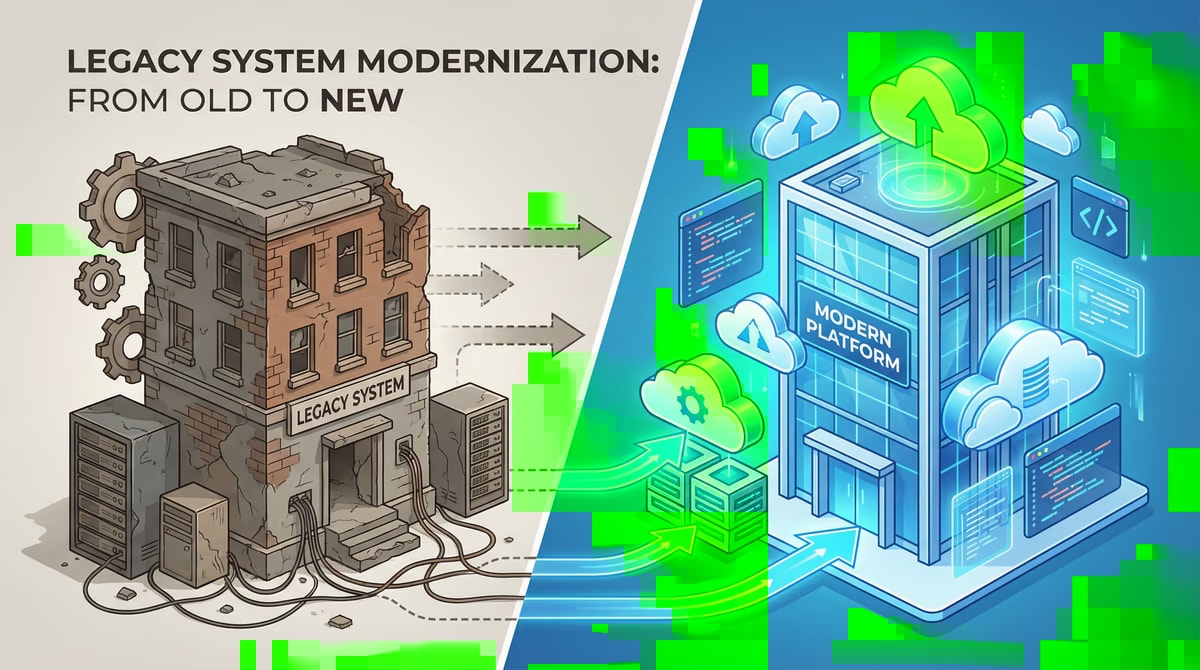
Altsystem migration: project planning and milestones for a smooth transition
In today's rapidly changing digital landscape, outdated IT systems – often referred to as old systems – are one of the biggest obstacles for companies that are competitive and innovative...
Altsystem migration: How to master stakeholder management
Modernisation of outdated IT infrastructures is an inevitable necessity for many companies to remain competitive. But the Altsystem migration holds numerous Hera...
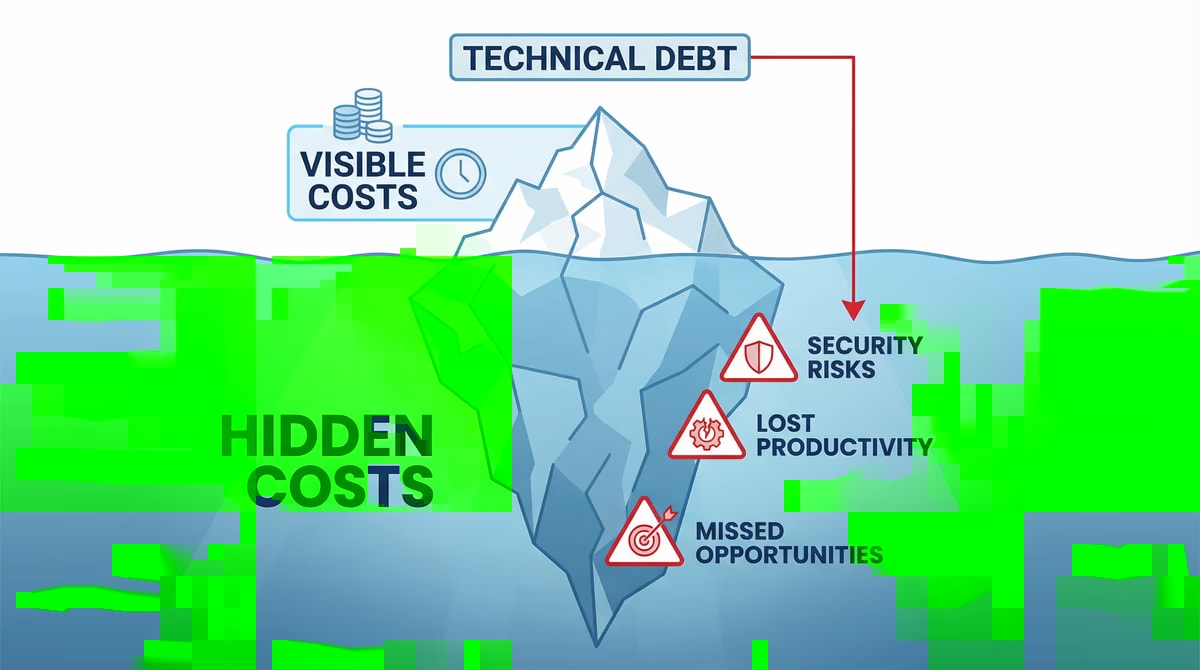
Technical Debt: Detection, Assessment and Strategic Debt
Time and resources are often scarce in the fast-paced world of software development. To comply with deadlines and bring new features to the market quickly, compromise...
Free download
Checklist: 10 questions before software development
Key points before you start: budget, timeline, and requirements.
Get the checklist in a consultationRelevant next steps
Related services & solutions
Based on this article's topic, these pages are often the most useful next steps.
Related services
Related solutions
Cost calculators
Practical next steps after AI in software development: opportunities and applications
AI in software development: opportunities and applications addresses a practical choice for product and IT teams. Start with one clear goal: choose an app approach that stays secure, testable, and useful after launch.
Check the current process, the data involved, and the result users need. Then record the main risks and define a small first step. This keeps the decision easy to review and gives your team a shared basis.
For implementation support, our business app development connects the article's guidance with architecture, delivery, and stable operations. Engineering and project ownership stay with our team in Leer, Germany.
This post belongs to Software development. Browse the related Software development articles or use the English software blog for other topics.
When budget is the next question, the software cost calculators provide planning ranges. The IT glossary explains key terms, while in-depth technology guides cover wider decisions.
If the topic affects a live project, book a technical consultation or send the context through our project contact form. We usually reply within one working day.