
As of: 19 June 2026 · Reading time: 4 min
Key takeaways
- In today's fast-paced digital world, the development of mobile applications is crucial for companies.
- One of the most important decisions that developers and companies...
In today's fast-paced digital world, the development of mobile applications is crucial for companies. One of the most important decisions that developers and companies...
“Good software is not an accident—it comes from a structured development process with clear quality standards.”
– Björn Groenewold, Managing Director, Groenewold IT Solutions
Flutter (Google) stands out with superior performance through direct UI compilation and consistent look-and-feel across all platforms.
React Native (Meta) offers access to the vast JavaScript/React ecosystem and an active community. The choice depends on team expertise: Dart skills favor Flutter, JavaScript experience favors React Native.
In today's fast-paced digital world, the development of mobile applications is crucial for companies.
One of the most important decisions that developers and businesses need to make is choosing the right technology for app development.
Cross-Platform development has proven to be an efficient method to create apps for multiple operating systems such as iOS and Android with a single code base.
Two of the leading frameworks in this area are ** butter** and React Native.
In this post we will take a detailed look at both technologies, analyze their strengths and weaknesses and help you make the best choice for your next project.
What is cross-platform development?
Short: Executive answer: In today's fast-paced digital world, the development of mobile applications is crucial for companies.
Executive answer: In today's fast-paced digital world, the development of mobile applications is crucial for companies.
Decision-makers exploring Cross-Platform Development: Flutter and React Native compared can use Mobile & Web Development, Cost Calculator: App Development, Discover solutions sowie Vergleich: Flutter vs. React Native as structured entry points.
Cross-platform development allows developers to write a single code base that can be executed on multiple platforms.
This is in contrast to native development where a separate app with the respective native programming languages (Swift/Objective-C for iOS, Kotlin/Java for Android) is developed for each platform (e.g. iOS and Android).
The main advantage of cross-platform development is the time and cost savings, as the development and maintenance effort is significantly reduced.
Flutter: Google's UI Toolkit
Short: Flutter is an open source UI toolkit developed by Google that was released in 2017.
Flutter is an open source UI toolkit developed by Google that was released in 2017. It uses the programming language Dart, which was also developed by Google.
Flutter is known for its high performance and the ability to create expressive and flexible user surfaces.
One of the main features of Flutter is that it uses its own widgets and does not rely on the native UI components of the respective platform.
This allows a consistent appearance of the app on all devices.
Advantages of floodter
- Excellent performance: Flutter apps are compiled directly in native ARM code, leading to an impressive performance that is often comparable to that of native apps.
- "Hot Reload" feature: This feature allows developers to make changes to the code and see the effects immediately in the running app without having to restart the app. This significantly accelerates the development process.
- Uniform UI on all platforms: As Flutter renders its own widgets, the user interface on all devices and platforms looks identical. This is ideal for apps where a strong branding and a uniform design are at the forefront.
- Change community and ecosystem: Although Flutter is younger than React Native, it has a rapidly growing and active community. There are a variety of packages and plugins that expand the functionality of Flutter.
Disadvantages of Flutter
References and further reading
Short: The following independent references complement the topics in this article:
The following independent references complement the topics in this article:
- Bitkom – German digital industry association
- German Federal Office for Information Security (BSI)
- European Commission – Digital strategy
- MDN Web Docs (Mozilla)
- W3C – World Wide Web Consortium
Frequently Asked Questions (FAQ)
What is this article about: “Cross-Platform Development: Flutter and React Native compared”?
This article summarizes practical aspects of Cross-Platform Development: Flutter and React Native compared for decision-makers and delivery teams.
In short: In today's fast-paced digital world, the development of mobile applications is crucial for companies. One of the most important decisions that developers and companies...
Who benefits most from the content described here?
It is especially relevant for organizations in Software development that need reliable systems, clear interfaces, and predictable delivery — from mid-market teams to specialized departments.
How does this topic fit into an IT or digital strategy?
You can map the topic to service building blocks such as custom software and delivery support: architecture reviews and iterative rollout reduce risk and rework. For multi-system landscapes, IT consulting and architecture helps align vendors and internal teams.
What are sensible next steps if we need support?
For architecture, implementation, or a second expert opinion, book a free initial consultation — including timeline and interface alignment.
About the author

Managing Director of Groenewold IT Solutions GmbH and Hyperspace GmbH
Since 2009 Björn Groenewold has been developing software solutions for the mid-market. He is Managing Director of Groenewold IT Solutions GmbH (founded 2012) and Hyperspace GmbH. As founder of Groenewold IT Solutions he has successfully supported more than 250 projects – from legacy modernisation to AI integration.
Blog recommendations
Related articles
These posts might also interest you.

Why data silos pose a serious problem
> # Resolve data silos: Change management don't forget > > In today's data-driven business world, information is the life elixir of each company. But too often are the...
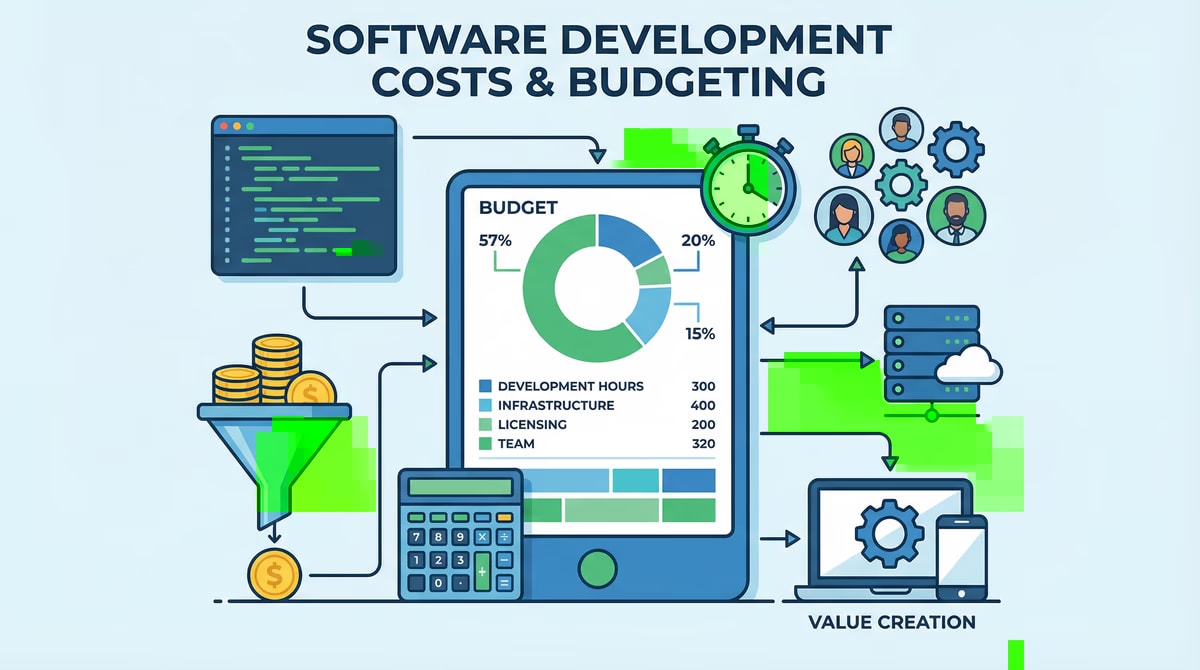
Altsystem Migration: A Guide to Costs and Budgeting
In today's fast-paced digital landscape, outdated IT systems, often referred to as old systems, are a considerable burden for companies. They're not just expensive in maintenance, sonde...
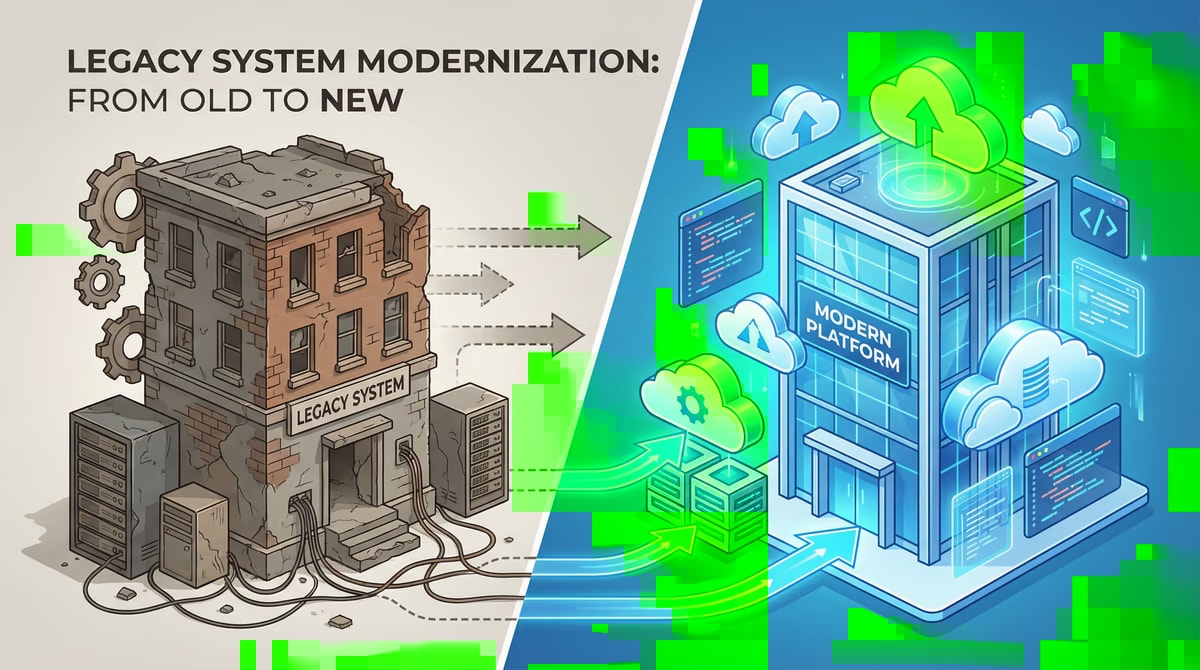
Altsystem migration: The smooth transfer of knowledge
The Altsystem migration is an unavoidable but also a great challenge for many companies. Outdated systems, often referred to as legacy systems, brake the innovative power,...
Free download
Checklist: 10 questions before software development
Key points before you start: budget, timeline, and requirements.
Get the checklist in a consultationRelevant next steps
Related services & solutions
Based on this article's topic, these pages are often the most useful next steps.
Related services
Related solutions
Related comparison
Cost calculators
More on Software development and next steps
This article is in the Software development topic. In our blog overview you will find all articles; under category Software development more posts on this subject.
For topics like Software development we offer matching services – from app development and AI integration to legacy modernisation and maintenance. We describe typical use cases under solutions. Our cost calculators give initial estimates. Key terms are in the IT glossary. Books and long-form guides appear on the publications page; deeper articles live under topics.
If you have questions about this article or want a non-binding discussion about your project, you can book a consultation or reach us via contact. We usually respond within one working day.