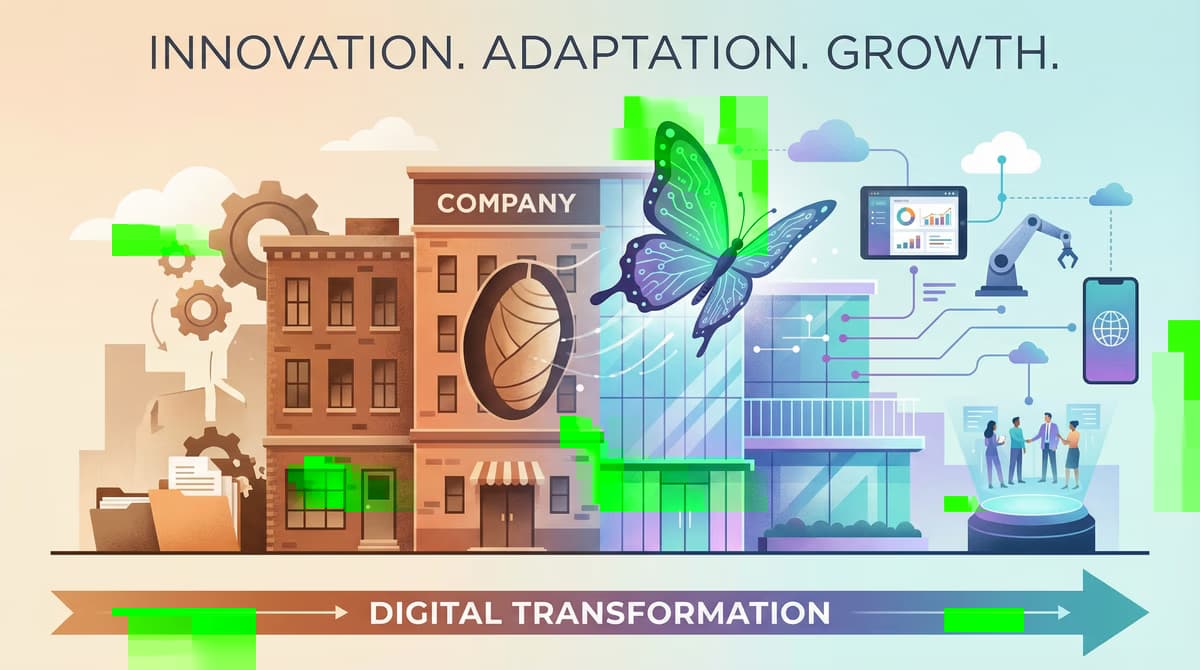
As of: 4 September 2026 · Reading time: 4 min
Key takeaways
- The digital transformation is far more than just a technological upgrade; it is a fundamental realignment of business models, processes and corporate cultures.
The digital transformation is far more than just a technological upgrade; it is a fundamental realignment of business models, processes and corporate cultures. For small and with...
“Good software is not an accident—it comes from a structured development process with clear quality standards.”
– Björn Groenewold, Managing Director, Groenewold IT Solutions
The digital transformation is far more than just a technical upgrade; it is a core realignment of business models, processes and corporate cultures.
For small and midsize companies (SMEs) in Germany, this change is both an immense opportunity and a serious challenge.
A strategic Digital Transformation SMEs is no longer an optional project.
However, a need to remain competitive in the long term and to set the course for a successful future.
The diverse opportunities of digital transformation
The digital transformation is far more than just a technical upgrade; it is a core realignment of business models, processes and corporate cultures.
For Digital transformation: risks and options for SMEs, API & Integration Projects and Cost Calculator: Software Development are practical starting points. Budget and industry context: Digitalisation for SMEs.
Digitization opens up a wealth of options for SMEs to strengthen their market position, to increase their efficiency and to explore new ways.
Anyone who seizes the chances can make a decisive advantage.
Increase efficiency and process optimization
One of the most immediate benefits of digitalization is to improve internal processes.
The automation of repetitive manual tasks releases valuable employee resources that can be used for more strategic activities.
Digital tools for project management, accounting or goods management reduce administrative effort, minimise error sources and accelerate the entire process chains.
The result is a major increase in productivity and a major reduction in operating costs.
Developing new business models and markets
Short: Digital transformation is a catalyst for innovation.
Digital transformation is a catalyst for innovation. It allows SMEs to think beyond traditional business models and unlock new sources of income. Examples of these are:
- E-Commerce: Establishing an own online shop or selling digital marketplaces opens up access to a global customer base.
- Digital services: Companies can complement their physical offering by digital services such as online consulting, webinars or digital configurators.
- Subscription models: Instead of a one-time sale, products or services can be offered as subscription, which leads to scheduled, recurring transactions.
Improved customer relationships and personalized experiences
Digital technologies enable an unprecedented proximity to the customer.
Through the use of customer relationship management systems (CRM) and the review of customer data, SMEs can clearly understand the needs and wishes of their target group.
This allows a tailored address, tailor-made offers and a proactive customer service.
A positive customer experience across all digital channels strengthens customer loyalty and promotes brand loyalty.
The risks and challenges of digital transformation
Despite the enormous potentials, the path of digital transformation with hurdles and risks
References and further reading
The following separate references complement the topics in this article:
- Bitkom – German digital industry association.
- German Federal Office for Information Security (BSI).
- European Commission – Digital strategy.
- MDN Web Docs (Mozilla)
- W3C – World Wide Web Consortium.
"Privacy by design is an architecture issue—especially when master data is personal."
— Björn Groenewold, Managing Director, Groenewold IT Solutions
Frequently Asked Questions (FAQ)
What is this article about: “Digital transformation: risks and opportunities for SMEs”?
Here we cover **Digital transformation: risks and opportunities for SMEs** — focused on architecture, process, and business outcomes. In short: The digital transformation is far more than just a technological upgrade; it is a fundamental realignment of business models, processes and corporate cultures. For small and with...
Who benefits most from the content described here?
Typical readers are business and IT leaders in Software development who want to secure quality, security, and ease of upkeep over the long term.
How does this topic fit into an IT or digital strategy?
In a digital strategy, prioritize stable core processes first, then extensions. See also professional software development and consulting.
For multi-system landscapes, IT consulting and architecture helps align vendors and internal teams.
What are sensible next steps if we need support?
If you need support with design, delivery, or modernization: schedule an appointment or outline your project via contact.
About the author

Managing Director of Groenewold IT Solutions GmbH and Hyperspace GmbH
Since 2009 Björn Groenewold has been developing software solutions for the mid-market. He is Managing Director of Groenewold IT Solutions GmbH (founded 2010) and Hyperspace GmbH. As founder of Groenewold IT Solutions he has successfully supported more than 250 projects – from legacy modernisation to AI integration.
Blog recommendations
Related articles
These posts might also interest you.

How to connect your company systems for sustainable success
In today's business world marked by digital transformation, data is the undisputed elixir of life of every company. They are the basis for innovation, efficiency and sound...

Venture Capital for Software Development: Opportunities and Risks
In the dynamic world of software development, access to capital is often the decisive factor that decides on the success or failure of an innovative start-up. One of the famous...
Software funding in the middle class: practical examples and success factors
Digitization poses major challenges to small and medium-sized enterprises (SMEs), but also offers immense opportunities. One of the central hurdles is often Software Financing. How...
Free download
Checklist: 10 questions before software development
Key points before you start: budget, timeline, and requirements.
Get the checklist in a consultationRelevant next steps
Related services & solutions
Based on this article's topic, these pages are often the most useful next steps.
Related services
Related solutions
Cost calculators
Practical next steps after Digital transformation: risks and opportunities for SMEs
Digital transformation: risks and opportunities for SMEs addresses a practical choice for product and IT teams. Start with one clear goal: align software scope, technical risk, and business value before the next investment.
Check the current process, the data involved, and the result users need. Then record the main risks and define a small first step. This keeps the decision easy to review and gives your team a shared basis.
For implementation support, our custom software development connects the article's guidance with architecture, delivery, and stable operations. Engineering and project ownership stay with our team in Leer, Germany.
This post belongs to Software development. Browse the related Software development articles or use the English software blog for other topics.
When budget is the next question, the software cost calculators provide planning ranges. The IT glossary explains key terms, while in-depth technology guides cover wider decisions.
If the topic affects a live project, book a technical consultation or send the context through our project contact form. We usually reply within one working day.