As of: 3 September 2026 · Reading time: 4 min
Key takeaways
- The digital transformation is in all mouths, but what is really behind this buzz, especially for small and medium-sized enterprises (SMEs)?
- Many understand among them...
The digital transformation is in all mouths, but what is really behind this buzz, especially for small and medium-sized enterprises (SMEs)? Many understand among them...
“Good software is not an accident—it comes from a structured development process with clear quality standards.”
– Björn Groenewold, Managing Director, Groenewold IT Solutions
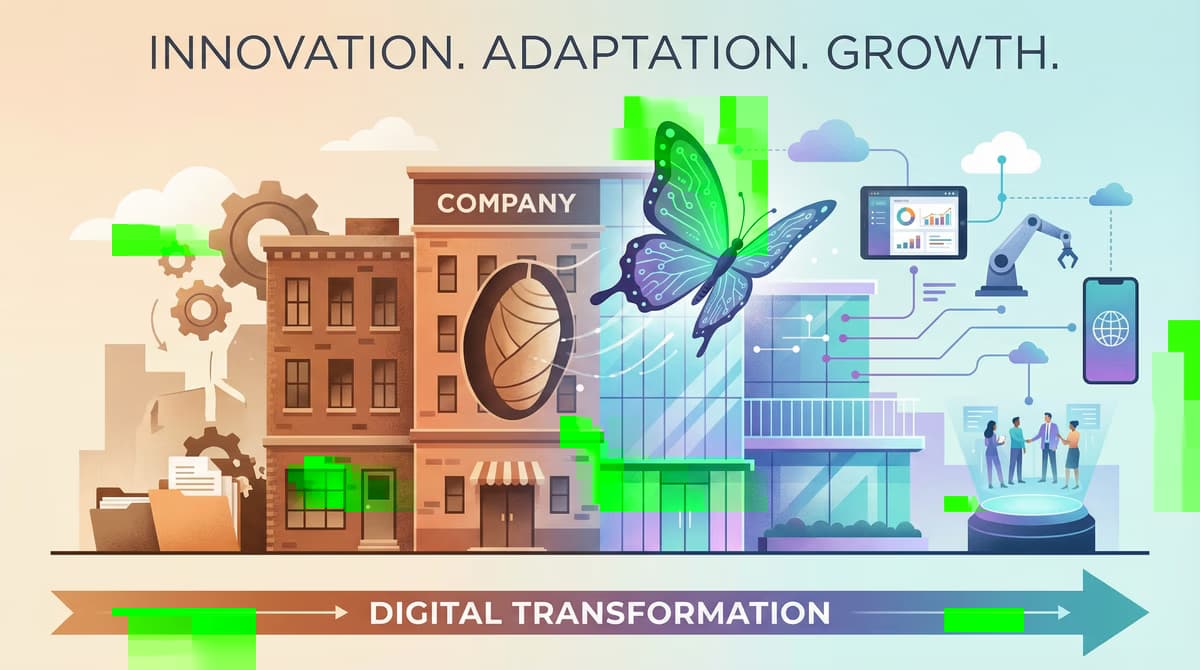
Digital transformation for SMEs means not just technology adoption but a core change in business models, processes. And corporate culture.
The best entry point is through concrete pain points in daily operations — not abstract IT strategies.
The digital transformation is in all mouths. However, what is really behind this buzz, especially for small and midsize companies (SMEs)?
Many understand only the introduction of new software or the digitization of documents. But the digital transformation for SMEs goes far beyond.
It is a core change that captures business models, processes and the entire corporate culture.
Imagine your company like a traditional sailing ship that has reliably carried you over well-known waters for years.
Pure digitalization would be the purchase of a modern sail – a single improvement that might make the ship a bit faster.
The digital transformation, on the other hand, is the installation of a state-of-the-art electric motor.
Suddenly you are no longer dependent on the wind, you can explore new routes and reach your goals in a completely new way.
This profound change is not a pure IT issue. However, a strategic realignment that affects the heart of your organization.
Why digital transformation is crucial for SMEs
The digital transformation is in all mouths, but what is really behind this buzz, especially for small and midsize companies (SMEs)?
For Digital Transformation. What does that mean for SMEs?, Pillar. Digitalisation strategy for SMEs and API &. Integration Projects are practical starting points.
Budget and industry context: Cost Calculator: Software Development.
The need for digital transformation is driven by two key drivers. Radically changing customer behavior and unstoppable technical progress.
Customers expect immediate responses, tailored experiences and smooth service across all channels. A cumbersome ordering process or an unanswered e-mail today are no longer small troubles.
However, rather hand-resistant reasons for changing to competition.
At the same time, technical progress, especially in the areas of artificial intelligence (AI), the Internet of Things (IoT) and cloud computing, opens up completely new options for SMEs.
These technologies are more accessible and more affordable than ever and enable business models to be rethinked from scratch.
For example, a craft business can control its deployment planning in real time via a cloud platform.
This leads to less idling, more efficient routes and more satisfied customers.
A local retailer can predict which products will be asked in the next season through smart data review, thus reducing storage costs.
Overview of the advantages of digital transformation
The digital transformation offers SMEs a variety of concrete benefits that directly affect business success. The following table sums up the main benefits:
| Advantage | Description |
|---|---|
| ** ** Increase efficiency and cost reduction** | Automated processes reduce manual errors and release valuable employee resources for strategic tasks. |
| Bessere, data-based decisions | The systematic collection and evaluation of data from different businessb |
References and further reading
The following separate references complement the topics in this article:
- Bitkom – German digital industry association.
- German Federal Office for Information Security (BSI).
- European Commission – Digital strategy.
- MDN Web Docs (Mozilla)
- W3C – World Wide Web Consortium.
Frequently Asked Questions (FAQ)
What is this article about: “Digital Transformation: What does that mean for SMEs?”?
This post explores Digital Transformation. What does that mean for SMEs? from the perspective of needs, typical pitfalls. And sensible next steps. In short.
The digital transformation is in all mouths. However, what is really behind this buzz, especially for small and midsize companies (SMEs)? Many understand among them...
Who benefits most from the content described here?
Useful for project leads and product owners in Software development who must choose between standard software, custom development, and integration.
How does this topic fit into an IT or digital strategy?
Technically and organizationally, alignment with experienced partners pays off — from requirements to operations; start with the [services overview](/en/services/software-development). For multi-system landscapes, [IT consulting and architecture](/en/services/it-consulting) helps align vendors and internal teams.
What are sensible next steps if we need support?
A practical next step: book a consultation and clarify which MVP or pilot fits your team and landscape.
About the author

Managing Director of Groenewold IT Solutions GmbH and Hyperspace GmbH
Since 2009 Björn Groenewold has been developing software solutions for the mid-market. He is Managing Director of Groenewold IT Solutions GmbH (founded 2010) and Hyperspace GmbH. As founder of Groenewold IT Solutions he has successfully supported more than 250 projects – from legacy modernisation to AI integration.
Blog recommendations
Related articles
These posts might also interest you.

Quality assurance in offshore projects: How to ensure the success of your software development
In today's globalised business world, the outsourcing of software development projects to external service providers, known as offshoring, is a strategic emergency for many companies...

Data integration: Strategies against data silos
In today's data-driven business world, information is the life elixir of each company. But too often these valuable data are trapped in isolated systems, so-called...

Digitalise knowledge transfer: tools and platforms for modern workplaces
In today's fast-paced business world, the effective knowledge transfer between employees is a key factor in the company's success. Companies that make it, the Wiss...
Free download
Checklist: 10 questions before software development
Key points before you start: budget, timeline, and requirements.
Get the checklist in a consultationRelevant next steps
Related services & solutions
Based on this article's topic, these pages are often the most useful next steps.
Related services
Related solutions
Cost calculators
Practical next steps after Digital Transformation: What does that mean for SMEs?
Digital Transformation: What does that mean for SMEs? addresses a practical choice for product and IT teams. Start with one clear goal: align software scope, technical risk, and business value before the next investment.
Check the current process, the data involved, and the result users need. Then record the main risks and define a small first step. This keeps the decision easy to review and gives your team a shared basis.
For implementation support, our custom software development connects the article's guidance with architecture, delivery, and stable operations. Engineering and project ownership stay with our team in Leer, Germany.
This post belongs to Software development. Browse the related Software development articles or use the English software blog for other topics.
When budget is the next question, the software cost calculators provide planning ranges. The IT glossary explains key terms, while in-depth technology guides cover wider decisions.
If the topic affects a live project, book a technical consultation or send the context through our project contact form. We usually reply within one working day.