
As of: 19 June 2026 · Reading time: 4 min
Key takeaways
- In today's digital business world, companies are constantly looking for ways to optimize their processes and reduce costs.
- **Open Source ERP** Systems (Enterprise Resource Planning) have sic...
In today's digital business world, companies are constantly looking for ways to optimize their processes and reduce costs. **Open Source ERP** Systems (Enterprise Resource Planning) have sic...
“Good software is not an accident—it comes from a structured development process with clear quality standards.”
– Björn Groenewold, Managing Director, Groenewold IT Solutions
Open-source ERP carries risks that can be actively managed: lacking enterprise support by choosing a certified partner, security vulnerabilities through regular updates and community monitoring, and migration complexity through thorough upfront analysis and pilot operation.
In today's digital business world, companies are constantly looking for ways to improve their processes and reduce costs.
Open Source ERP Systems (Enterprise Resource Planning) have established themselves as a tempting alternative to proprietary solutions. The promises of flexibility, cost savings and independence from large software providers are attractive.
But before choosing an open source solution, it is crucial to understand the risks involved and to know how to minimize them effectively.
The charm of open source ERP
Short: Executive answer: In today's digital business world, companies are constantly looking for ways to improve their processes and reduce costs.
Executive answer: In today's digital business world, companies are constantly looking for ways to improve their processes and reduce costs.
Decision-makers exploring Open source ERP: Risks and how to minimize them can use API & Integration Projects, Cost Calculator: API Development, Solution: Integration Chaos sowie RPA vs. API Integration as structured entry points.
The main advantage of Open Source ERP software is the lower license costs. Since the source code is freely available, the often high initial investments associated with commercial ERP systems are eliminated.
These cost savings can be especially attractive for small and medium-sized enterprises (SMEs). In addition, open source systems offer unmatched flexibility.
Companies can adapt the software to their specific needs and are not bound to the roadmap of a single provider.
This adaptability makes it possible to map unique business processes and achieve competitive advantages.
The lurking risks of open source ERP
Short: Despite the obvious advantages, open source ERP systems also have a number of risks that need to be carefully weighed.
Despite the obvious advantages, open source ERP systems also have a number of risks that need to be carefully weighed.
Adaptation and complexity
Short: The great flexibility of open source software can quickly prove to be a two-edged sword.
The great flexibility of open source software can quickly prove to be a two-edged sword. While the possibility of adapting is a great advantage, it can also lead to considerable complexity.
Without an experienced developer team, adjustments can be time-consuming, costly and error-prone. In addition, excessive adjustment can affect the system's update capability, which leads to further problems in the future.
Dependence on the community and developers
Short: Open source projects require support from the community and the developers who drive the project forward.
Open source projects require support from the community and the developers who drive the project forward.
If the community is small or the interest in the project leaves, the further development can stagnate.
This means that any new functions may not be developed and vulnerabilities will no longer be closed.
There is also the risk of a strong dependence on individual freelance developers or small implementation partners.
Scalability and Performance
Short: Not all open source ERP systems are designed for the requirements of large companies with high transaction volumes and many users.
Not all open source ERP systems are designed for the requirements of large companies with high transaction volumes and many users.
It is important to carefully check the scalability of the solution to ensure that it can keep pace with the growth of your company.
Performance engineering can affect productivity and lead to significant business problems.
Integration
References and further reading
Short: The following independent references complement the topics in this article:
The following independent references complement the topics in this article:
- Bitkom – German digital industry association
- German Federal Office for Information Security (BSI)
- European Commission – Digital strategy
- MDN Web Docs (Mozilla)
- W3C – World Wide Web Consortium
Frequently Asked Questions (FAQ)
What is this article about: “Open source ERP: Risks and how to minimize them”?
This post explores Open source ERP: Risks and how to minimize them from the perspective of requirements, typical pitfalls, and sensible next steps.
In short: In today's digital business world, companies are constantly looking for ways to improve their processes and reduce costs. Open Source ERP Systems (Enterprise Resource Planning) have sic...
Who benefits most from the content described here?
Useful for project leads and product owners in Software development who must choose between standard software, custom development, and integration.
How does this topic fit into an IT or digital strategy?
Technically and organizationally, alignment with experienced partners pays off — from requirements to operations; start with the [services overview](/en/services/software-development). For multi-system landscapes, [IT consulting and architecture](/en/services/it-consulting) helps align vendors and internal teams.
What are sensible next steps if we need support?
A practical next step: book a consultation and clarify which MVP or pilot fits your team and landscape.
About the author

Managing Director of Groenewold IT Solutions GmbH and Hyperspace GmbH
Since 2009 Björn Groenewold has been developing software solutions for the mid-market. He is Managing Director of Groenewold IT Solutions GmbH (founded 2012) and Hyperspace GmbH. As founder of Groenewold IT Solutions he has successfully supported more than 250 projects – from legacy modernisation to AI integration.
Blog recommendations
Related articles
These posts might also interest you.
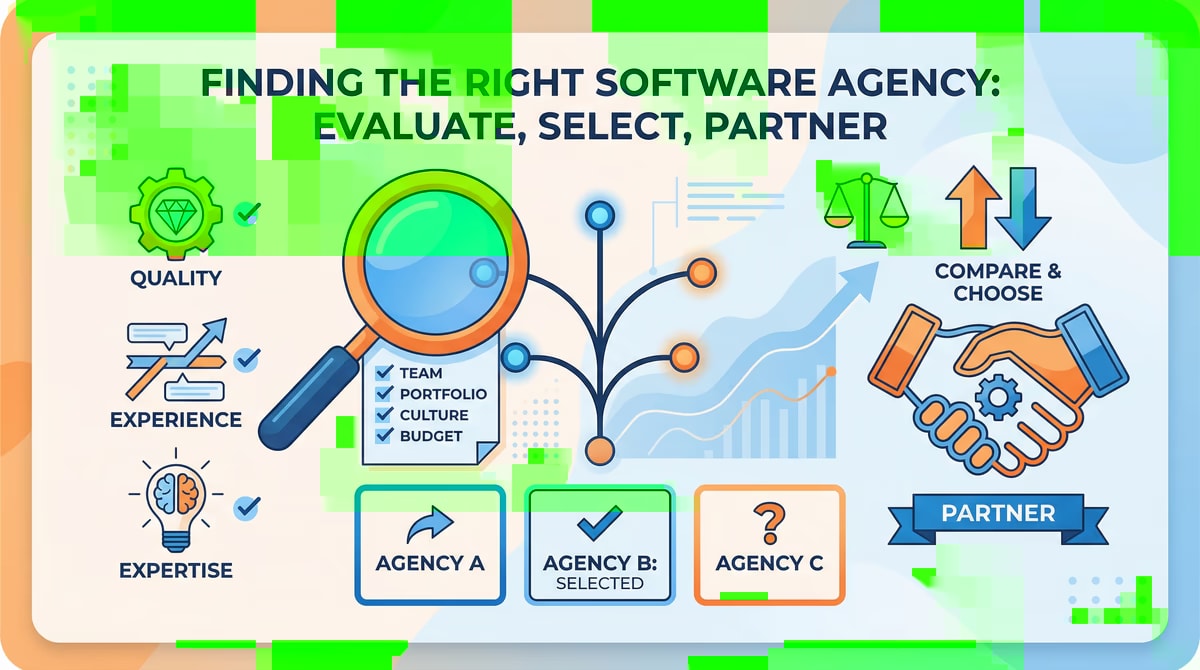
Build developer team vs. commission agency: The right choice for your software project
The decision whether a company builds an internal team for the development of its software or commissions an external agency is of strategic importance. Both models, **Inhouse vs....

Outsourcing Trends 2026: What changes for your business
The world of IT is changing rapidly, and thus also the way companies approach their software development projects. While some companies continue to rely on internal teams, discover...
Nearshore Trends 2026: New markets and developments in IT services
The global IT landscape is undergoing a steady change that forces companies to continuously adapt their business strategies to remain competitive. One of the central...
Free download
Checklist: 10 questions before software development
Key points before you start: budget, timeline, and requirements.
Get the checklist in a consultationRelevant next steps
Related services & solutions
Based on this article's topic, these pages are often the most useful next steps.
Related services
Related solutions
Related comparison
Cost calculators
More on Software development and next steps
This article is in the Software development topic. In our blog overview you will find all articles; under category Software development more posts on this subject.
For topics like Software development we offer matching services – from app development and AI integration to legacy modernisation and maintenance. We describe typical use cases under solutions. Our cost calculators give initial estimates. Key terms are in the IT glossary. Books and long-form guides appear on the publications page; deeper articles live under topics.
If you have questions about this article or want a non-binding discussion about your project, you can book a consultation or reach us via contact. We usually respond within one working day.