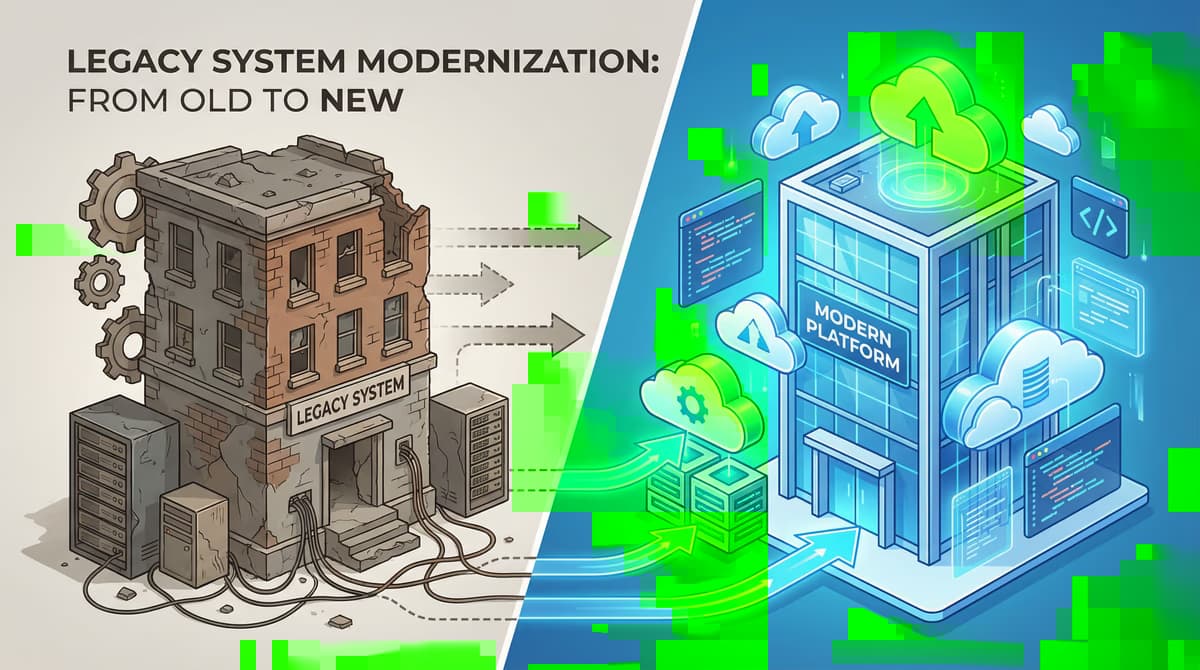
As of: 19 June 2026 · Reading time: 4 min
Key takeaways
- In today's rapidly changing digital landscape, the topicality of your software is crucial for business success.
- Outdated systems can not only impair efficiency...
In today's rapidly changing digital landscape, the topicality of your software is crucial for business success. Outdated systems can not only impair efficiency...
“Good software is not an accident—it comes from a structured development process with clear quality standards.”
– Björn Groenewold, Managing Director, Groenewold IT Solutions
In today's rapidly changing digital landscape, the topicality of your software is crucial for business success.
Outdated systems can not only impair efficiency but also represent major security risks. But how do you strategically address the release of old software?
This post provides a complete step-by-step guide that helps you to shape the transition smoothly and successfully.
Why the detachment of old software is essential
In today's rapidly changing digital landscape, the topicality of your software is crucial for business success.
For Plan software release: A step-by-step guide, see View services und Discover solutions on our website for rollout paths and planning.
Before we dive into the planning phases, it is important to understand why keeping out of date software, so-called legacy software, can be problematic for your company.
Often such systems are no longer able to interact with modern technologies. This leads to inefficiencies and compatibility problems.
In addition, security updates are no longer provided for many old systems. This makes them an easy target for cyber attacks.
The decision to replace old software is so not only a matter of modernization. However, also the safety and sustainability of your company.
Planning software release in 7 steps
Short: Careful planning is the key to a successful software migration.
Careful planning is the key to a successful software migration. The following steps will help you to make the process structured and targeted.
Step 1: Project responsibility and stakeholder involvement
Short: Resolving a central software system is not a purely technical matter, but a strategic corporate decision.
Resolving a central software system is not a purely technical matter, but a strategic corporate decision. Name a project manager and assemble a team of important stakeholders.
These include representatives from the management, the relevant departments and IT. This early integration not only ensures the needed support.
However, also ensures that all relevant perspectives are taken into account.
Step 2: Requirement analysis and target definition
Short: What is the new software?
What is the new software? What processes must be mapped and what new options should open up?
Conduct a detailed review of the existing processes and define clear needs for the new system. It is tempting to easily replicate the functions of the old software.
However, use the opportunity to improve processes and implement forward-looking functions.
Step 3: Market analysis and provider selection
Short: With a clear request profile, you can look for suitable suppliers and solutions.
With a clear request profile, you can look for suitable suppliers and solutions. Focus on a small selection of suppliers specializing in your industry and business size.
Check references and request a live demonstration of the software. A Proof of Concept (PoC) with your favorites can help the suitability for your core processes
References and further reading
The following separate references complement the topics in this article:
- Bitkom – German digital industry association.
- German Federal Office for Information Security (BSI).
- European Commission – Digital strategy.
- MDN Web Docs (Mozilla)
- W3C – World Wide Web Consortium.
"Cloud-native only pays off when operations, security, and cost model match the architecture—otherwise you ship complexity faster."
— Björn Groenewold, Managing Director, Groenewold IT Solutions
Frequently Asked Questions (FAQ)
What is this article about: “Plan software release: A step-by-step guide”?
This article sums up practical aspects of Plan software release. A step-by-step guide for leaders and delivery teams. In short.
In today's rapidly changing digital landscape, the topicality of your software is crucial for business success. Outdated systems can not only impair efficiency...
Who benefits most from the content described here?
It is especially relevant for firms in Software development that need reliable systems, clear interfaces, and predictable delivery — from mid-market teams to expert departments.
How does this topic fit into an IT or digital strategy?
You can map the topic to service building blocks such as custom software and delivery support. Architecture reviews and stepwise rollout reduce risk and rework.
For multi-system landscapes, IT consulting and architecture helps align vendors and internal teams.
What are sensible next steps if we need support?
For architecture, rollout, or a second expert opinion, book a free initial consultation — including timeline and interface alignment.
About the author

Managing Director of Groenewold IT Solutions GmbH and Hyperspace GmbH
Since 2009 Björn Groenewold has been developing software solutions for the mid-market. He is Managing Director of Groenewold IT Solutions GmbH (founded 2010) and Hyperspace GmbH. As founder of Groenewold IT Solutions he has successfully supported more than 250 projects – from legacy modernisation to AI integration.
Blog recommendations
Related articles
These posts might also interest you.

How to connect your company systems for sustainable success
In today's business world marked by digital transformation, data is the undisputed elixir of life of every company. They are the basis for innovation, efficiency and sound...

Venture Capital for Software Development: Opportunities and Risks
In the dynamic world of software development, access to capital is often the decisive factor that decides on the success or failure of an innovative start-up. One of the famous...
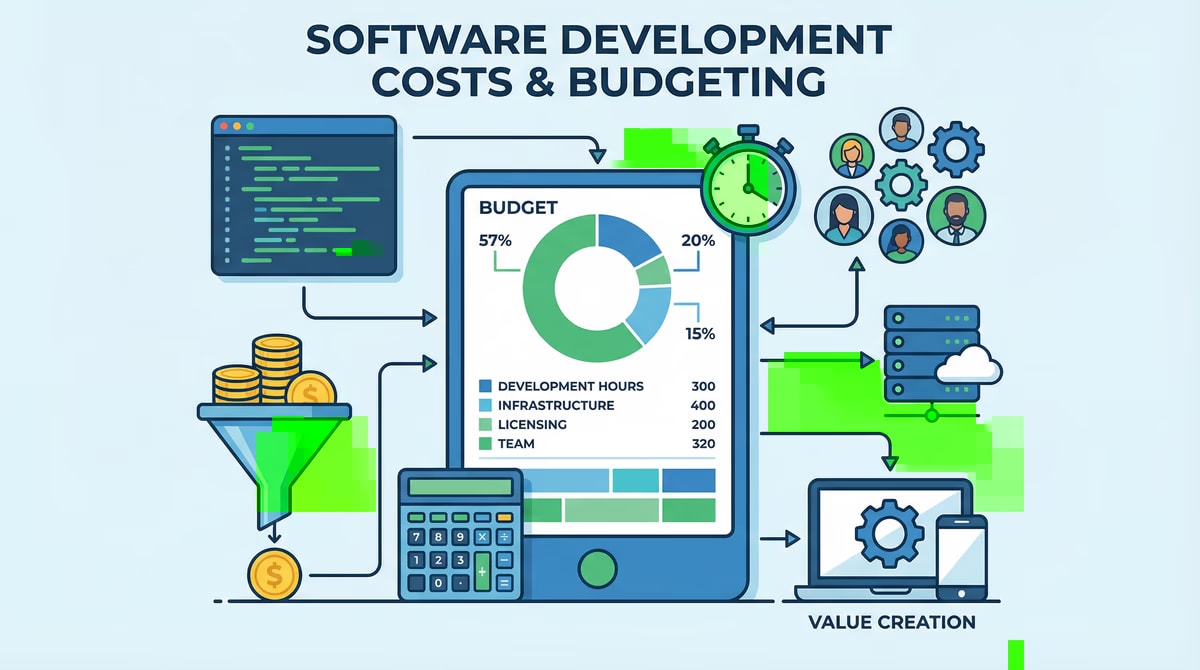
Software funding in the middle class: practical examples and success factors
Digitization poses major challenges to small and medium-sized enterprises (SMEs), but also offers immense opportunities. One of the central hurdles is often Software Financing. How...
Free download
Checklist: 10 questions before software development
Key points before you start: budget, timeline, and requirements.
Get the checklist in a consultationRelevant next steps
Related services & solutions
Based on this article's topic, these pages are often the most useful next steps.
Related services
Related solutions
Practical next steps after Plan software release: A step-by-step guide
Plan software release: A step-by-step guide addresses a practical choice for product and IT teams. Start with one clear goal: align software scope, technical risk, and business value before the next investment.
Check the current process, the data involved, and the result users need. Then record the main risks and define a small first step. This keeps the decision easy to review and gives your team a shared basis.
For implementation support, our custom software development connects the article's guidance with architecture, delivery, and stable operations. Engineering and project ownership stay with our team in Leer, Germany.
This post belongs to Software development. Browse the related Software development articles or use the English software blog for other topics.
When budget is the next question, the software cost calculators provide planning ranges. The IT glossary explains key terms, while in-depth technology guides cover wider decisions.
If the topic affects a live project, book a technical consultation or send the context through our project contact form. We usually reply within one working day.