
As of: 23 September 2026 · Reading time: 4 min
Key takeaways
- Digitisation is no longer optional for small and medium-sized enterprises.
- This article shows how SMEs get started with custom software: begin with an MVP, describe requirements precisely, choose a partner who understands your industry and plan maintenance from day one.
Digitisation is no longer optional for small and medium-sized enterprises. This article shows how SMEs get started with custom software: begin with an MVP, describe requirements precisely, choose a partner who understands your industry and plan maintenance from day one.
“For SMEs, software often drives throughput and error rates—investing in clear requirements and sound architecture pays off.”
– Björn Groenewold, Managing Director, Groenewold IT Solutions
Software development for SMEs: practical tips for getting started.
Digitization is no longer an option. However, a need – even and especially for small and midsize companies (SMEs).
A tailor-made software can be the key lever to improve processes, unlock new business areas and secure market strength.
But many SMEs hesitate to take the step into software development, often worrying about high costs and complexity.
This article demystrates software development for SMEs. We give you practical tips for entry, show you how to avoid typical common pitfalls.
And explain why an investment in custom software can also be meaningful with limited budget.
This article is part of our complete guide: The ultimate guide to software development 2026.
Why is software development so important for SMEs?
Custom software lets SMEs digitise their own proven processes instead of bending them to a rigid standard tool — that is where efficiency gains, differentiation and scalability come from.
For software development in SMEs, Cost Calculator: Software Development, Our Development Process and Digitalisation for SMEs help you align rollout, scope and budget before you commit.
While large corporations have huge IT departments, SMEs often have limited resources. Right here, custom software can play its greatest strength:
Increase efficiency: Automate repetitive manual tasks and create more time for your core business.
Process optimization: Digitally image your unique and proven workflows instead of having to adapt to a rigid standard software.
Competitive Benefits: Offer your customers unique digital services or products that do not have your competition.
Scalability: A customized solution grows with your company and adapts flexibly to new needs.
The right start: practical tips for SMEs
1. Start small: The minimum Viable Product (MVP)
You don't have to build a huge all-in-one solution from the start. The key to success is to start small.
Develop a Minimum Viable Product (MVP) – a first, slim version of your software that only contains the most important core features.
- Advantage: You quickly get a working product, can collect valuable feedback from users and minimize the risk of your investment. The costs for an MVP are manageable and the benefits are quickly visible.
2. Define your requirements clearly
Even if you act agile, a clear idea of what you want to achieve is essential.
Take the time to analyze your processes and accurately describe the needs for the software.
Answer the question: What concrete problem should the software solve? A good requirement review is the basis for a realistic effort estimate and a successful project.
3. Choose the right partner
Short: As SMEs, you rarely have your own developers.
As SMEs, you rarely have your own developers. The choice of the right external partner is so crucial. Do not look for the cheapest provider.
However, for one who understands your industry, advises you as an equal and has experience with projects of a similar size.
A good agency or an skilled freelancer guides you through the entire software development process.
References and further reading
The following separate references complement the topics in this article:
- Bitkom – German digital industry association.
- German Federal Office for Information Security (BSI).
- European Commission – Digital strategy.
- MDN Web Docs (Mozilla)
- W3C – World Wide Web Consortium.
"Mobile apps need clear offline and security models alongside UX—trust collapses without both."
— Björn Groenewold, Managing Director, Groenewold IT Solutions
Frequently Asked Questions (FAQ)
What is this article about: “Software development for SMEs”?
Here we cover software development for SMEs — from a first MVP to needs, partner selection and budget planning. In short.
Digitisation is no longer optional for small and midsize companies. And a tailor-made solution is often the fastest lever for better processes.
Who benefits most from the content described here?
Typical readers are business and IT leaders in Software development who want to secure quality, security, and ease of upkeep over the long term.
How does this topic fit into an IT or digital strategy?
In a digital strategy, prioritize stable core processes first, then extensions. See also professional software development and consulting.
For multi-system landscapes, IT consulting and architecture helps align vendors and internal teams.
What are sensible next steps if we need support?
If you need support with design, delivery, or modernization: schedule an appointment or outline your project via contact.
About the author

Managing Director of Groenewold IT Solutions GmbH and Hyperspace GmbH
Since 2009 Björn Groenewold has been developing software solutions for the mid-market. He is Managing Director of Groenewold IT Solutions GmbH (founded 2010) and Hyperspace GmbH. As founder of Groenewold IT Solutions he has successfully supported more than 250 projects – from legacy modernisation to AI integration.
Blog recommendations
Related articles
These posts might also interest you.

Secure enterprise knowledge: Methods and tools for knowledge preservation
In today's dynamic business world, the knowledge that is in the minds of your employees is one of your most valuable resources. But what happens when this knowledge blows the company...
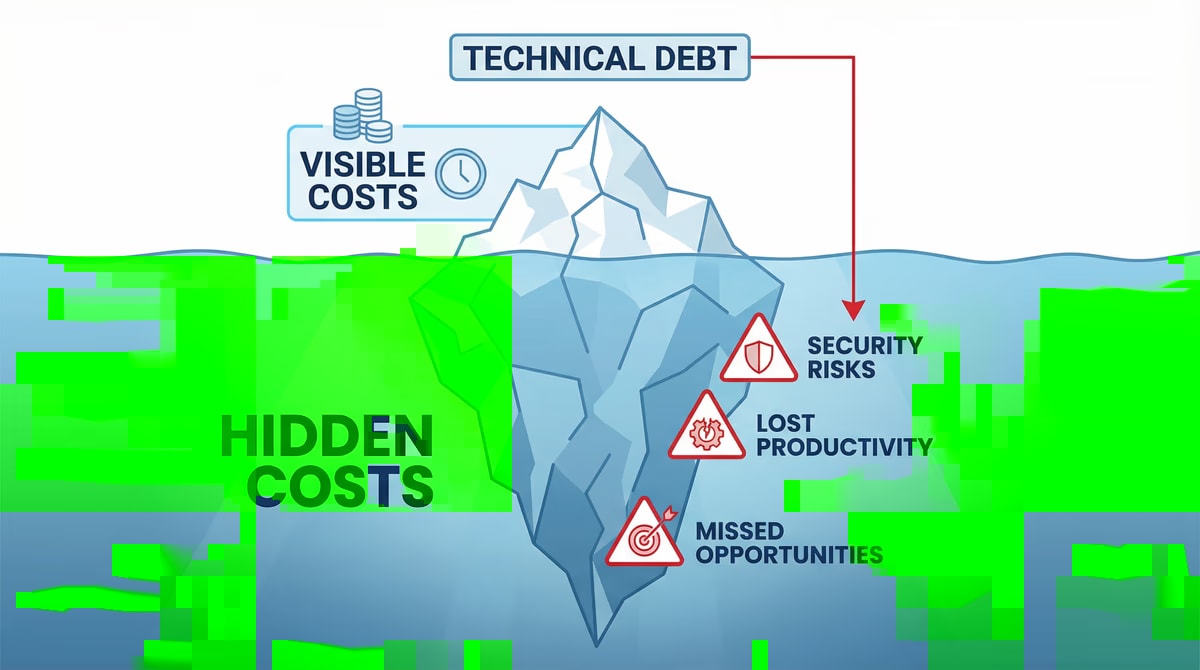
Technical debt communicating: How to convince management
Technical debt – a term that can often be heard in IT departments, but in management can provide questioning views. Similar to financial debt, technical debt can also be...

ETL processes: extract and combine data from silos
In today's data-driven business world, information is the life elixir of each company. But too often these valuable data are trapped in isolated systems, so-called...
Free download
Checklist: 10 questions before software development
Key points before you start: budget, timeline, and requirements.
Get the checklist in a consultationRelevant next steps
Related services & solutions
Based on this article's topic, these pages are often the most useful next steps.
Related solutions
Cost calculators
Practical next steps after Software Development for SMEs: Practical Tips for Getting Started
Software Development for SMEs: Practical Tips for Getting Started addresses a practical choice for product and IT teams. Start with one clear goal: align software scope, technical risk, and business value before the next investment.
Check the current process, the data involved, and the result users need. Then record the main risks and define a small first step. This keeps the decision easy to review and gives your team a shared basis.
For implementation support, our custom software development connects the article's guidance with architecture, delivery, and stable operations. Engineering and project ownership stay with our team in Leer, Germany.
This post belongs to Software development. Browse the related Software development articles or use the English software blog for other topics.
When budget is the next question, the software cost calculators provide planning ranges. The IT glossary explains key terms, while in-depth technology guides cover wider decisions.
If the topic affects a live project, book a technical consultation or send the context through our project contact form. We usually reply within one working day.