As of: 3 September 2026 · Reading time: 6 min
Key takeaways
- Cross-Platform Flutter: once developing, iOS + Android.
- Offline-First doubles the effort – it is mandatory for external service apps.
- ERP integration: €5,000–15,000 per interface.
- MVP possible in 8–14 weeks with clearly defined scope.
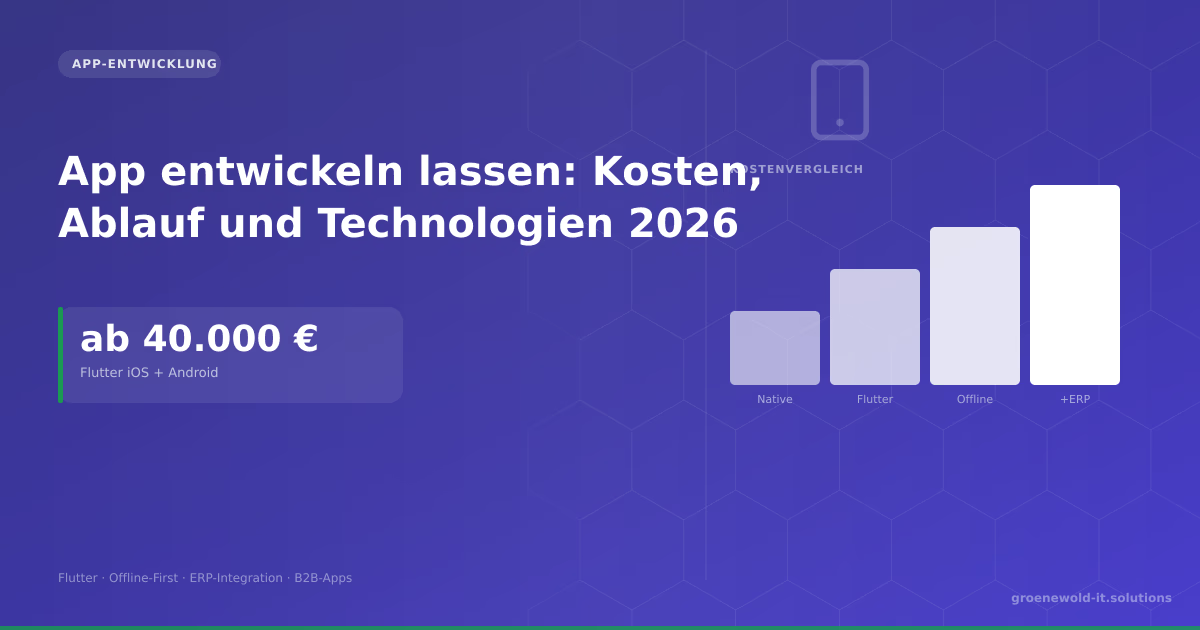
Letting app develop costs €40,000 to €120,000. This article explains cost drivers (offline capability, ERP integration), Native vs. Flutter, and gives realistic schedules – based on real B2B projects.
“An app’s success is decided before the first line of code—in user research and product clarity.”
– Björn Groenewold, Managing Director, Groenewold IT Solutions
Develop app: cost, process and technologies 2026
App Developing: Costs, Processes and Technologies 2026
Short response: Let app develop costs 40.
Develop leaders around App: Use costs, processes and technologies 2026(/services), cost calculator: app development and explore solutions as structured next steps.
An external service app that also works offline. A customer portal app for iOS and Android. A storage app with barcode scanner.
What does it cost – and what is the technology choice?
The short answer. A professional B2B app for iOS and Android costs 40.000 to 100,000 €, depending on the complexity.
Simple apps with few features are possible from €20,000 if the needs are clear and limited.
App development costs by type and platform
Groenewold IT Solutions · Experiences from 250+ projects
The most important cost drivers in apps
Offline capability: the biggest difference
An app for the field service that works in the basement of a customer without a mobile network must be built offline first.
This means that all data is stored locally, changes are synchronized when a connection exists, conflicts are detected and resolved.
Offline-First often doubles the development effort compared to a pure online app – but is not optional for external service, warehouse or production.
“Offline-First is not optional for external service apps.
If you require connectivity, an app will not work 30% of the time – just when it is needed." – Björn Groenewold, Dipl.-Inf.
ERP and Backend Integration
Any connection to an existing system (SAP, Navision, Odoo, own ERP) requires API development, authentication, data transformation and broad tests. 5,000–15,000 € per non-triviar interface.
Device Functions: Camera, GPS, Bluetooth, NFC
Barcode scanners, photo documentation, GPS tracking, NFC chip cards or BLE device connections are all possible – but each function costs development and testing time on real devices.
Native vs. cross-platform: cost and quality comparison
| Criterion < > > > > > > > > > > > > > > > < > > > > > > < > > > < > > < > < > < > < > < > < > > < > < > < > < > > < > < > < > < > < > < > < > < > < > < > < > < > < > < > > < > < > < > < > < > < > < > < > < > < > < > < > < > < > < > < > < > < > < > < > < > < > < > < > < > < > < > < > < > < > < > < > < > < > < > < > < > < > < > < > < > < > < > < > < > < > < > < > < > < > < > < > < > < > < > > < > < > < > < > < > < > < > < > < > < > < > < > < > < > < > < > < > < > < > < > < > < > < > < > < > < > < > < > < > < > | Development costs/td> | 2× higher | Performance/td> | Maximal | Very good (mostly sufficient) < |
|---|---|
| Offline capability | Full-length | FullTotal: < > > > > > < > < > < > < > < > < > < > < > < > < > < > < > < > < > < > < > < > < > < > < > < > < > < > < > < > < > < > < > < > < > < > < > < > < > < > < > < > < > < > < > < > < > < > < > < > < > < > < > < > < > < > < > < > < > < > < > < > < > < > < > < > < > < > < > < > < > < > < > < > < > < > < > < > < > < > < > < > < > < > < > < > < > < > < > < > < > < > < > < > < > < > < > < > < > < > < > < > < > < > < > < > < > < > < > < > < > < > < > < > < > < > < > < > < > < > < > < > < > < > < > < > < > < > < >Time-to-Market | Total > Maintenance expenditure | 2× higher | Recommendation for B2B | td style="padding:10px > Very specific needsFlutter: the standard for B2B apps 2026 Short: For most B2B apps we recommend Flutter. For most B2B apps we recommend Flutter. Once developing, running on iOS and Android (and web and desktop). The performance is close to native, the code cover is one third compared to two separate native apps. What Flutter can’t: Very deep integration into operating system-specific features (e.g. certain iOS security features for financial apps) and apps that require extreme performance (3D rendering, Augmented Reality). Practical example: External service app (iOS + Android)For a service provider, we have built a field service app with offline capability, barcode detection and SAP B1 connection.
What costs are incurred after the launch?Short: App development is not a one-time project. App development is not a one-time project. Recreate with running costs for:
Faustregel: Plan 15–20 % of the initial development budget per year for maintenance and development. Frequently asked questionsDo we really need native apps or do we need a web app?A progressive web app (PWA) is often the cheaper alternative – it runs in the browser, can be installed on the home screen and offers restricted offline capability. For intensive device use (camera, Bluetooth, GPS) or app store distribution, a native/feeder app is better. How long does the app development take?MVP: 8–14 weeks. Full app with all features: 4–9 months. App Store approval (Apple): 1–3 working days. Can we start with a MVP?Yes – and we almost always recommend that. A MVP with the 3-5 most important features typically costs 20–40 % of the full project and shows whether the app arrives with users before the full budget is invested. *Groenewold IT Solutions, Leer – Flutter and React Native App Development for the German mid-sized firms. Request project calculation. * Additional notesChecklist (compact, customizable)
Many teams underestimate Data quality and releases – especially when it comes to app, developing, letting cost. A slim pilot with defined KPI (time savings, error rate, throughput) strikes a “Big Bang” that wants to cover all special cases on the first day. Groenewold ITsupports architecture, rollout and integration – according to your focus: App development, Individual software development. If you are unsafe. This entry is the most risky one, start with a short architecture or discovery workshop instead of a maximum microscope. Letting app develop: cost, process and technologies 2026can be successfully introduced when technology, organization and measurability fit together – instead of insulated tool rollouts without process reference. Use the overview in this article as a basis for discussion on priorities, risks and the first loadable pilot. Intensify matching topics in category overview Blog category and check operational support via App development, Custom software development. Groenewold IT accompanies review, rollout and operation – from the first grouping to scalable releases. Technical sources and further linksThe following separate references complement the grouping on the topics of this Article:
Conclusion and next stepsAbout the author  Björn Groenewold(Dipl.-Inf.) Managing Director of Groenewold IT Solutions GmbH and Hyperspace GmbH Since 2009 Björn Groenewold has been developing software solutions for the mid-market. He is Managing Director of Groenewold IT Solutions GmbH (founded 2010) and Hyperspace GmbH. As founder of Groenewold IT Solutions he has successfully supported more than 250 projects – from legacy modernisation to AI integration. Software ArchitectureAI IntegrationLegacy ModernisationProject Management Blog recommendations Related articlesThese posts might also interest you.  App development Flutter widgets vs. React Native components: A comprehensive comparisonIn the world of mobile app development, cross-platform development has established itself as an efficient alternative to native development for iOS and Android. Two of the leading framewor... 4 min read App development Cross-Platform vs. Native: When what approach is the right in app developmentIn today's mobile world, companies face the strategic decision on how to develop their applications for different platforms. The choice between native and cross-platform en... 4 min read App development Flutter vs. React Native: A closer look at community and supportIn the world of cross-platform development for mobile apps, Flutter and React Native are two of the most prominent names. Both frameworks offer developers the opportunity to use a single codeb... 4 min read Free download Checklist: 10 questions before software developmentKey points before you start: budget, timeline, and requirements. Get the checklist in a consultationRelevant next steps Related services & solutionsBased on this article's topic, these pages are often the most useful next steps. Related servicesRelated solutionsCost calculatorsPractical next steps after Having an App Developed: Costs, Process and Technologies in 2026Having an App Developed: Costs, Process and Technologies in 2026 addresses a practical choice for product and IT teams. Start with one clear goal: choose an app approach that stays secure, testable, and useful after launch. Check the current process, the data involved, and the result users need. Then record the main risks and define a small first step. This keeps the decision easy to review and gives your team a shared basis. For implementation support, our business app development connects the article's guidance with architecture, delivery, and stable operations. Engineering and project ownership stay with our team in Leer, Germany. This post belongs to App development. Browse the related App development articles or use the English software blog for other topics. When budget is the next question, the software cost calculators provide planning ranges. The IT glossary explains key terms, while in-depth technology guides cover wider decisions. If the topic affects a live project, book a technical consultation or send the context through our project contact form. We usually reply within one working day. Next Step Want to use this technology for your project? We advise vendor-neutral on the right stack for your project. 30 min strategy call – 100% free & non-binding |