
As of: 23 September 2026 · Reading time: 4 min
Key takeaways
- A comprehensive guide to BLE-based asset tracking in logistics and production.
- Learn more about technologies such as AoA and AoD as well as ROI considerations.
A comprehensive guide to BLE-based asset tracking in logistics and production. Learn more about technologies such as AoA and AoD as well as ROI considerations.
“BLE-based asset tracking is one of the most underestimated IoT technologies—the investment typically pays back within six months.”
– Björn Groenewold, Managing Director, Groenewold IT Solutions
Read how we implement IoT solutions for manufacturing.
This article is part of our series about Bluetooth Low Energy. You can find the complete guide here: The ultimate guide to BLE App Development in Germany (2026)
Asset Tracking with BLE: Improving efficiency in logistics and production
In modern logistics and manufacturing clarity is the key to efficiency.
Knowing where tools, materials, vehicles and load carriers are in real time can make the difference between a smooth process and costly delays.
Bluetooth Low Energy (BLE) has proven itself as one of the leading technologies for the Real-Time Location System (RTLS).
Compared to alternatives such as Ultra-Wideband (UWB) or WLAN, BLE offers a convincing combination of accuracy, energy efficiency and above all low costs for infrastructure and tags.

How does BLE-based asset tracking work?
A complete guide to BLE-based asset tracking in logistics and production.
Leaders exploring Asset tracking with BLE: Improving efficiency in logistics can use AI & Machine Learning, Cost Calculator: AI Development sowie Solution: Logistics as structured entry points.
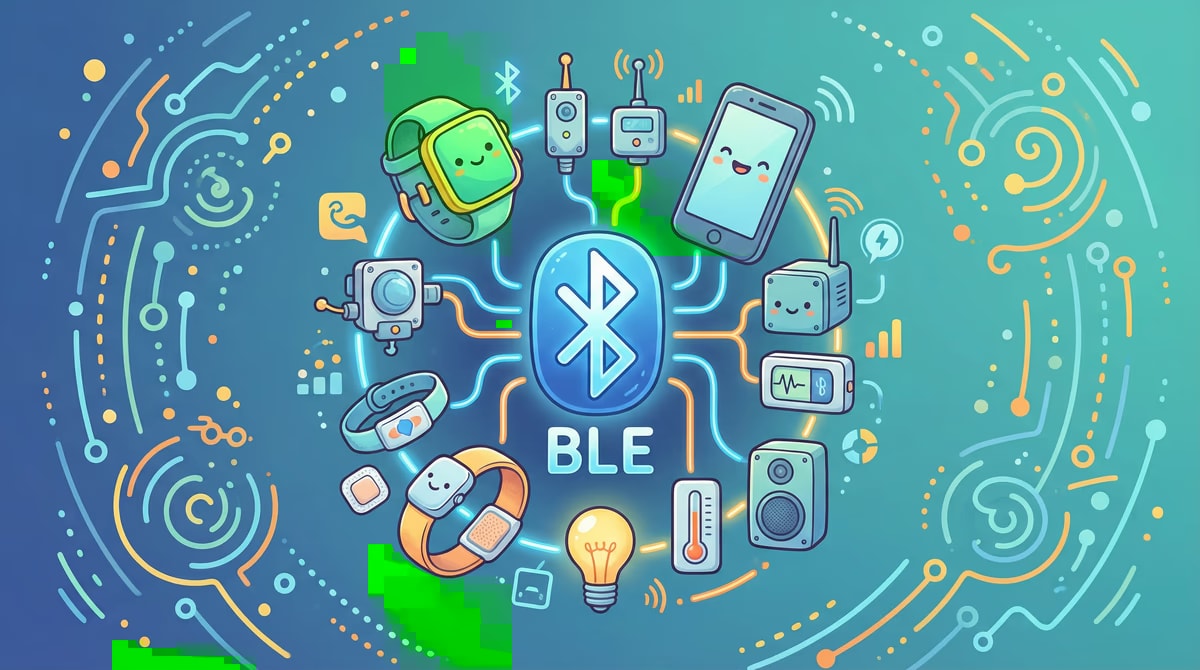
The basic principle is simple. Small, battery-operated BLE tags (also called Beacons) are attached to the assets to be tracked. These tags send a signal at regular intervals.
A network of fixedly installed receivers (gateways or locators) captures these signals.
Using the received signals, the position of the tag is calculated and visualized on a digital map or in a software system.
Technology for position determination: RSSI, AoA and AoD
The accuracy of the location depends heavily on the method used:
Method Accuracy Description
RSSI (Received Signal Strength Indicator) Space/zone level (3-8 meters) The simplest method. The position is estimated on the basis of the signal strength measured by several receivers.
Good, but inaccurate.
AoA (Angle of Arrival) Under 1 meter Receivers with special antenna arrays determine the angle from which the signal of the tag arrives.
A precise position is calculated by triangulation of several angles.
AoD (Angle of Departure) Under 1 meter The counterpart to AoA. Here the locator sends a signal.
And the day (e.g. a smartphone) calculates its position on the basis of the angle of incidence. Ideal for indoor navigation.
For most industrial applications where precise location is required, AoA and AoD are the technologies of choice. They were introduced with Bluetooth 5.1 and allow a sub-meter accuracy.
Application Cases in Practice
Tool tracking in production: Expensive special tools are provided with tags. Employees find them at once by app, search times are eliminated, and losses are reduced.
Tracking of load carriers (pallets, containers): In the logistics, the tracking of load carriers allows optimization of the goods flows and better utilization of the warehouse.
Flotting management (Gabelstapler, A
References and further reading
The following separate references complement the topics in this article:
- Bitkom – German digital industry association.
- German Federal Office for Information Security (BSI).
- European Commission – Digital strategy.
- MDN Web Docs (Mozilla)
- W3C – World Wide Web Consortium.
"AI in mid-sized companies works when processes are measurable and data is trustworthy—a pilot without a success metric is theatre."
— Björn Groenewold, Managing Director, Groenewold IT Solutions
Frequently Asked Questions (FAQ)
What is this article about: “Asset tracking with BLE: Improving efficiency in logistics”?
Here we cover Asset tracking with BLE. This improves efficiency in logistics — focused on architecture, process, and business outcomes.
In short: A complete guide to BLE-based asset tracking in logistics and production. Learn more about technologies such as AoA and AoD as well as ROI points.
Who benefits most from the content described here?
Typical readers are business and IT leaders in BLE development who want to secure quality, security, and ease of upkeep over the long term.
How does this topic fit into an IT or digital strategy?
In a digital strategy, prioritize stable core processes first, then extensions. See also professional software development and consulting.
For multi-system landscapes, IT consulting and architecture helps align vendors and internal teams.
What are sensible next steps if we need support?
If you need support with design, delivery, or modernization: schedule an appointment or outline your project via contact.
About the author

Managing Director of Groenewold IT Solutions GmbH and Hyperspace GmbH
Since 2009 Björn Groenewold has been developing software solutions for the mid-market. He is Managing Director of Groenewold IT Solutions GmbH (founded 2010) and Hyperspace GmbH. As founder of Groenewold IT Solutions he has successfully supported more than 250 projects – from legacy modernisation to AI integration.
Blog recommendations
Related articles
These posts might also interest you.
From prototype to series: The development process of a...
A step-by-step guide to the development process of a BLE application, from idea to prototype to mass production and certification.

The way to success: How to find the right BLE App...
A checklist with the most important criteria for selecting the right BLE app developer or a specialized app agency for your IoT project.

BLE in Smart Home: Trends and Potentials for the German Market
Discover the role of Bluetooth Low Energy (BLE) in Smart Home, the latest trends, applications and the importance of standards such as Matter.
Free download
Checklist: 10 questions before software development
Key points before you start: budget, timeline, and requirements.
Get the checklist in a consultationRelevant next steps
Related services & solutions
Based on this article's topic, these pages are often the most useful next steps.
Related services
Related solutions
Cost calculators
Related industries
Practical next steps after Asset tracking with BLE: Improving efficiency in logistics
Asset tracking with BLE: Improving efficiency in logistics addresses a practical choice for logistics teams. Start with one clear goal: choose an app approach that stays secure, testable, and useful after launch.
Check the current process, the data involved, and the result users need. Then record the main risks and define a small first step. This keeps the decision easy to review and gives your team a shared basis.
For implementation support, our business app development connects the article's guidance with architecture, delivery, and stable operations. Engineering and project ownership stay with our team in Leer, Germany.
This post belongs to BLE development. Browse the related BLE development articles or use the English software blog for other topics.
When budget is the next question, the software cost calculators provide planning ranges. The IT glossary explains key terms, while in-depth technology guides cover wider decisions.
If the topic affects a live project, book a technical consultation or send the context through our project contact form. We usually reply within one working day.