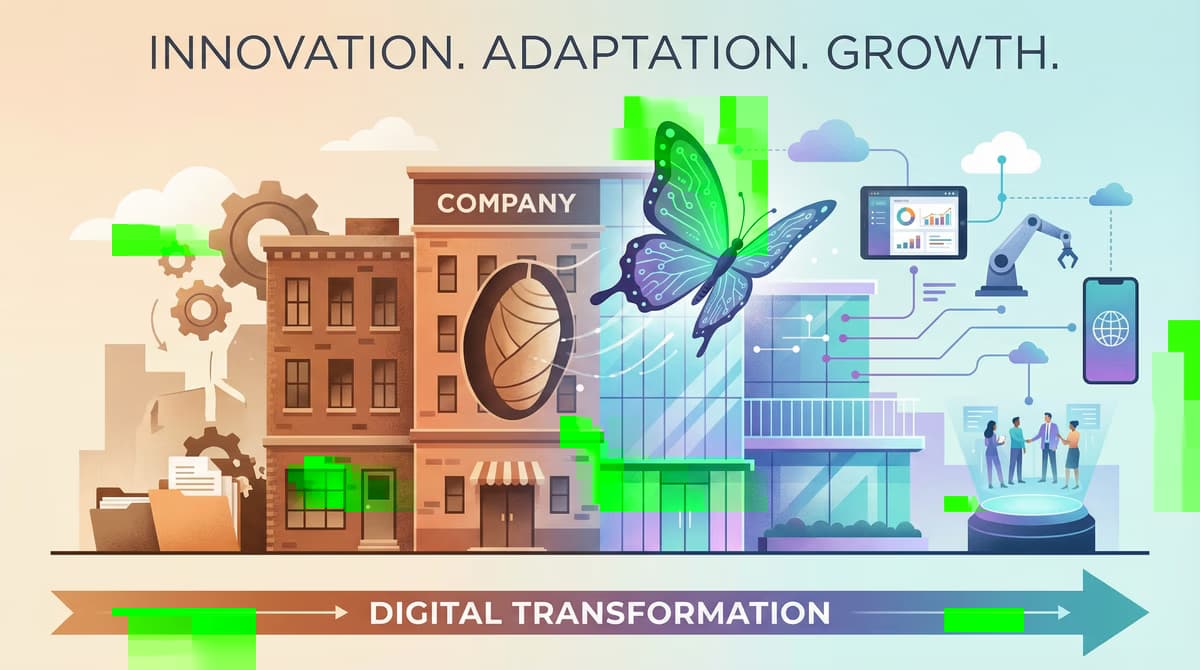
As of: 3 September 2026 · Reading time: 4 min
Key takeaways
- Digitization is no longer a pure topic of the future, but a decisive reality that confronts the German middle class with great challenges, but also enormous opportunities.
Digitization is no longer a pure topic of the future, but a decisive reality that confronts the German middle class with great challenges, but also enormous opportunities. In a...
“Good software is not an accident—it comes from a structured development process with clear quality standards.”
– Björn Groenewold, Managing Director, Groenewold IT Solutions
Digitization in the middle class: Future perspectives and how to master change
Short: Digitization is no longer a pure topic of the future.
Digitization is no longer a pure topic of the future. However, a decisive reality that confronts the German middle class with great challenges. However, also enormous options.
In a rapidly changing economic landscape, Digitalization in the middle class is not only a tool for increasing efficiency. However, the key to ensuring long-term market strength.
This article highlights the current perspectives, shows concrete benefits and gives practical tips on how your company can successfully shape digital change.
The status quo: Where does the German middle class stand?
Digitization is no longer a pure topic of the future, but a decisive reality that confronts the German middle class with great challenges, but also enormous options.
When planning Digitization in the middle class: prospects for the future and how to…, see Cost Calculator: Software Development and Digitalisation for SMEs for scope and delivery.
The middle class traditionally forms the backbone of the German economy. Almost half of all workers are employed in small and midsize companies (SMEs).
But how digital is this so important sector really? A look at current figures shows a mixed picture.
According to the KfW digitization report, 31 percent of midsize companies have successfully completed digitization projects in recent years. However, there is a clear gap.
At the same time, larger midsize companies with more than 50 employees already invest heavily, smaller companies are mainly behind them.
Although digitalisation expenditure has reached a record value of EUR 23 billion, investment is unequally distributed. This entails the risk that even smaller companies lose their connection.
The unmistakable advantages of digitalization
The hesitation of many companies is in strong contrast to the diverse benefits that a consistent digitalization strategy brings.
This is about much more than just the introduction of new software. Digitalization in the middle class is a core transformation process that affects all business areas and improves sustainably.
Increase efficiency and productivity
Short: By automating routine tasks and improving workflows, considerable resources can be released.
By automating routine tasks and improving workflows, considerable resources can be released. Whether in logistics, production or administration – digital processes reduce errors, accelerate processes and reduce costs.
Customer relationships at a new level
Modern CRM systems (Customer Relationship Management) allow a 360-degree view of the customer.
From the first contact point to the purchase to the after-sales service, all interactions can be centrally captured and analyzed.
The result is tailored offers, excellent customer service and long-term customer loyalty.
Finded decisions by data analysis
The abdominal feeling is an important guide, but data-based decisions are essential in today's business world. Modern review tools prepare huge amounts of data in real time
Sources: Unless cited inline, market figures and percentages are for orientation. See public sources such as Bitkom (2025) and Destatis.
Project budgets and examples: Groenewold IT Solutions, internal reporting 2026.
References and further reading
The following separate references complement the topics in this article:
- Bitkom – German digital industry association.
- German Federal Office for Information Security (BSI).
- European Commission – Digital strategy.
- MDN Web Docs (Mozilla)
- W3C – World Wide Web Consortium.
"DevOps is less about tools and more about shared ownership of quality and release discipline."
— Björn Groenewold, Managing Director, Groenewold IT Solutions
Frequently Asked Questions (FAQ)
What is this article about: “Digitization in the middle class: prospects for the future and how to master change”?
This post explores Digitization in the middle class. Prospects for the future and how to master change from the perspective of needs, typical pitfalls. And sensible next steps.
In short. Digitization is no longer a pure topic of the future. However, a decisive reality that confronts the German middle class with great challenges.
However, also enormous options. In a...
Who benefits most from the content described here?
Useful for project leads and product owners in Software development who must choose between standard software, custom development, and integration.
How does this topic fit into an IT or digital strategy?
Technically and organizationally, alignment with experienced partners pays off — from requirements to operations; start with the [services overview](/en/services/software-development). For multi-system landscapes, [IT consulting and architecture](/en/services/it-consulting) helps align vendors and internal teams.
What are sensible next steps if we need support?
A practical next step: book a consultation and clarify which MVP or pilot fits your team and landscape.
About the author

Managing Director of Groenewold IT Solutions GmbH and Hyperspace GmbH
Since 2009 Björn Groenewold has been developing software solutions for the mid-market. He is Managing Director of Groenewold IT Solutions GmbH (founded 2010) and Hyperspace GmbH. As founder of Groenewold IT Solutions he has successfully supported more than 250 projects – from legacy modernisation to AI integration.
Blog recommendations
Related articles
These posts might also interest you.

How to connect your company systems for sustainable success
In today's business world marked by digital transformation, data is the undisputed elixir of life of every company. They are the basis for innovation, efficiency and sound...

Venture Capital for Software Development: Opportunities and Risks
In the dynamic world of software development, access to capital is often the decisive factor that decides on the success or failure of an innovative start-up. One of the famous...
Software funding in the middle class: practical examples and success factors
Digitization poses major challenges to small and medium-sized enterprises (SMEs), but also offers immense opportunities. One of the central hurdles is often Software Financing. How...
Free download
Checklist: 10 questions before software development
Key points before you start: budget, timeline, and requirements.
Get the checklist in a consultationRelevant next steps
Related services & solutions
Based on this article's topic, these pages are often the most useful next steps.
Related services
Related solutions
Cost calculators
Practical next steps after Digitization in the middle class: prospects for the future and how to master change
Digitization in the middle class: prospects for the future and how to master change addresses a practical choice for product and IT teams. Start with one clear goal: align software scope, technical risk, and business value before the next investment.
Check the current process, the data involved, and the result users need. Then record the main risks and define a small first step. This keeps the decision easy to review and gives your team a shared basis.
For implementation support, our custom software development connects the article's guidance with architecture, delivery, and stable operations. Engineering and project ownership stay with our team in Leer, Germany.
This post belongs to Software development. Browse the related Software development articles or use the English software blog for other topics.
When budget is the next question, the software cost calculators provide planning ranges. The IT glossary explains key terms, while in-depth technology guides cover wider decisions.
If the topic affects a live project, book a technical consultation or send the context through our project contact form. We usually reply within one working day.