
As of: 23 September 2026 · Reading time: 4 min
Key takeaways
- The fourth industrial revolution, known as Industry 4.0, transforms the way goods are produced.
- Networking is at the centre of this profound change.
- But the vision of a Smart Factory in which Mas...
The fourth industrial revolution, known as Industry 4.0, transforms the way goods are produced. Networking is at the centre of this profound change. But the vision of a Smart Factory in which Mas...
“A well-designed API is the invisible bridge between systems—and often the biggest lever for efficiency.”
– Björn Groenewold, Managing Director, Groenewold IT Solutions
In the smart factory, APIs connect machines, ERP systems, MES. And IoT sensors into a networked production ecosystem.
Central use cases include real-time machine monitoring, automated quality control. And predictive maintenance — enabled by standard interfaces like OPC UA and REST APIs.
The fourth industrial revolution, known as Industry 4.0, transforms the way goods are produced. Networking is at the centre of this profound change.
But the vision of a Smart Factory, where machines, systems and people work seamlessly, can only be realized by powerful and flexible communication.
Interfaces and APIs (Application Programming Interfaces) come into play here.
They are the digital interpreters and bridge builders that allow different software applications and physical devices to exchange data and control processes in real time.
For companies in Production and Manufacturing, mastery of this technology is no longer an option. However, a need to compete in global competition.
Manual data input, isolated island solutions and delayed information lead to inefficiencies, errors and ultimately to lower margins.
This detailed blog post highlights how a strategic API integration in the manufacturing industry revolutionizes productivity, what concrete benefits it offers and how companies can successfully walk the path to full digital networking.
The role of APIs in Industry 4.0
The fourth industrial revolution, known as Industry 4.
Leaders exploring Interfaces and APIs in Production and Manufacturing: The Key to Smart… can use API & Integration Projects, Cost Calculator: API Development, Solution: Integration Chaos sowie RPA vs. API Integration as structured entry points.
Industry 4.0 is based on horizontal and vertical integration of systems. Horizontal means networking across the entire value chain – from the supplier to the end customer.
Vertical means integration from the shopfloor level (machines and sensors) to the company level (ERP systems).
APIs are the technical foundation that makes this integration possible.
What are APIs and why are they indispensable in manufacturing?
An API is basically a set of definitions and protocols that allows software applications to communicate with each other.
One can imagine an API as a kind of waiter in a restaurant.
It accepts the order (request), forwards it to the kitchen (the system that holds the data or performs the function) and returns the result (response).
APIs are vital in manufacturing because they:
Providing standardization: They define clear rules for data exchange, regardless of the underlying technology of systems.
Abstraction: They hide the complexity of the internal system. An ERP system does not need to know how a machine works in detail.
However, only what API needs to call it to query the current status.
Real-time communication Ensure: Modern, often RESTful APIs, allow the fast and synchronous exchange of data, which is essential for controlling dynamic production processes.
Without standardised Smart Factory interfaces, companies would need an custom, expensive and error-prone point-to-point connection for each system combination
References and further reading
The following separate references complement the topics in this article:
- Bitkom – German digital industry association.
- German Federal Office for Information Security (BSI).
- European Commission – Digital strategy.
- MDN Web Docs (Mozilla)
- W3C – World Wide Web Consortium.
Frequently Asked Questions (FAQ)
What is this article about: “Interfaces and APIs in Production and Manufacturing: The Key to Smart Factory”?
This post explores Interfaces and APIs in Production and Manufacturing. The Key to Smart Factory from the perspective of needs, typical pitfalls, and sensible next steps.
In short: The fourth industrial revolution, known as Industry 4.0, transforms the way goods are produced. Networking is at the centre of this profound change.
But the vision of a Smart Factory in which Mas...
Who benefits most from the content described here?
Useful for project leads and product owners in Schnittstellen & APIs who must choose between standard software, custom development, and integration.
How does this topic fit into an IT or digital strategy?
Technically and organizationally, alignment with experienced partners pays off — from requirements to operations; start with the [services overview](/en/services/software-development). For multi-system landscapes, [IT consulting and architecture](/en/services/it-consulting) helps align vendors and internal teams.
What are sensible next steps if we need support?
A practical next step: book a consultation and clarify which MVP or pilot fits your team and landscape.
About the author

Managing Director of Groenewold IT Solutions GmbH and Hyperspace GmbH
Since 2009 Björn Groenewold has been developing software solutions for the mid-market. He is Managing Director of Groenewold IT Solutions GmbH (founded 2010) and Hyperspace GmbH. As founder of Groenewold IT Solutions he has successfully supported more than 250 projects – from legacy modernisation to AI integration.
Blog recommendations
Related articles
These posts might also interest you.
Interfaces & APIs for Education & Research: The key to digital excellence
In recent years, digital transformation has penetrated all areas of society, and the education and research sector is no exception. Universities, research institutions and educational technology…
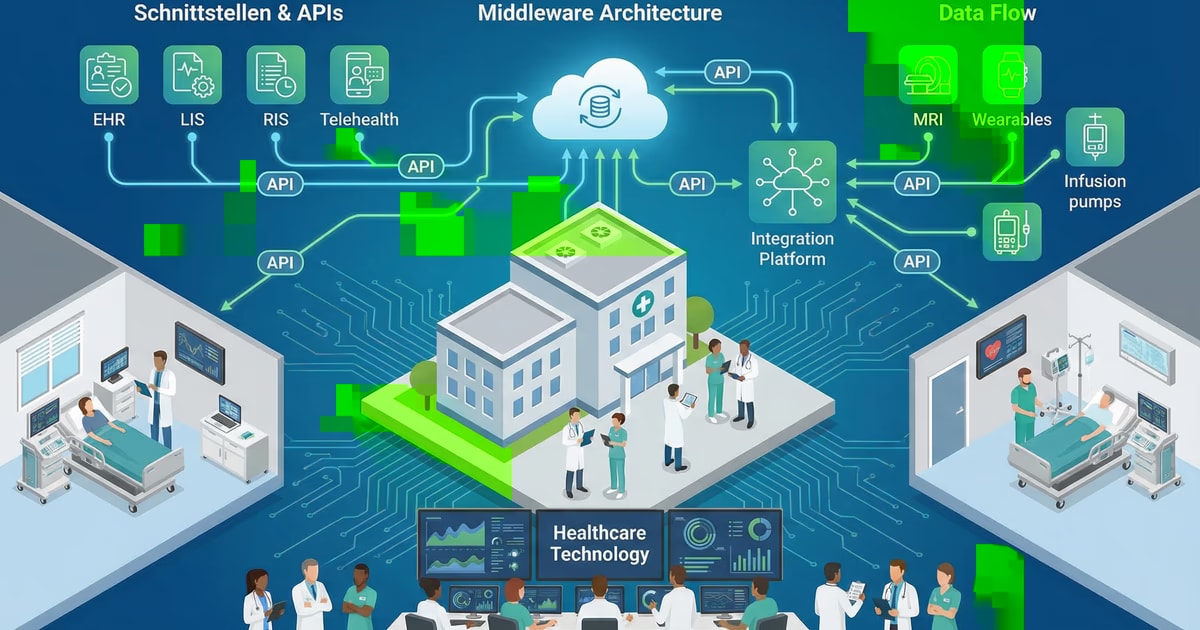
Interfaces & APIs for healthcare: The key to digital interoperability
Digital transformation in healthcare is no longer a distant future scenario, but an urgent need. In view of increasing patient numbers, complex treatment paths and the demand for more efficient and…
The invisible power: How interfaces and APIs revolutionize trade and e-commerce
In the dynamic world of trade and e-commerce, the ability to react quickly to market changes and to seamlessly shape customer experiences is crucial for success. Act behind the scenes of this digital…
Free download
Checklist: 10 questions before software development
Key points before you start: budget, timeline, and requirements.
Get the checklist in a consultationRelevant next steps
Related services & solutions
Based on this article's topic, these pages are often the most useful next steps.
Related services
Related solutions
Related comparison
Cost calculators
Related industries
Practical next steps after Interfaces and APIs in Production and Manufacturing: The Key to Smart Factory
Interfaces and APIs in Production and Manufacturing: The Key to Smart Factory addresses a practical choice for manufacturers. Start with one clear goal: connect systems without losing control of data, ownership, or later changes.
Check the current process, the data involved, and the result users need. Then record the main risks and define a small first step. This keeps the decision easy to review and gives your team a shared basis.
For implementation support, our API and integration engineering connects the article's guidance with architecture, delivery, and stable operations. Engineering and project ownership stay with our team in Leer, Germany.
This post belongs to Schnittstellen & APIs. Browse the related Schnittstellen & APIs articles or use the English software blog for other topics.
When budget is the next question, the software cost calculators provide planning ranges. The IT glossary explains key terms, while in-depth technology guides cover wider decisions.
If the topic affects a live project, book a technical consultation or send the context through our project contact form. We usually reply within one working day.