As of: 23 September 2026 · Reading time: 4 min
Key takeaways
- In today's globalised business world, outsourcing is a key factor for many companies to remain competitive.
- The outsourcing of software development projects can ...
In today's globalised business world, outsourcing is a key factor for many companies to remain competitive. The outsourcing of software development projects can ...
“Good software is not an accident—it comes from a structured development process with clear quality standards.”
– Björn Groenewold, Managing Director, Groenewold IT Solutions
Introduction: Choosing the Right Outsourcing Model
In today's globalised business world, outsourcing is a key factor for many companies to remain competitive.
The outsourcing of software development projects can reduce costs, allow access to a larger talent pool and increase efficiency.
But choosing the right outsourcing model is crucial for success. Basically, companies are ahead of choice between two main models: offshore and nearshore development.
While both approaches have their own benefits and disadvantages, there is a growing trend towards nearshoring.
But when does a change from an offshore to a nearshore model really make sense? This article highlights the most important differences and gives you a decision-making aid.
What is offshore development?
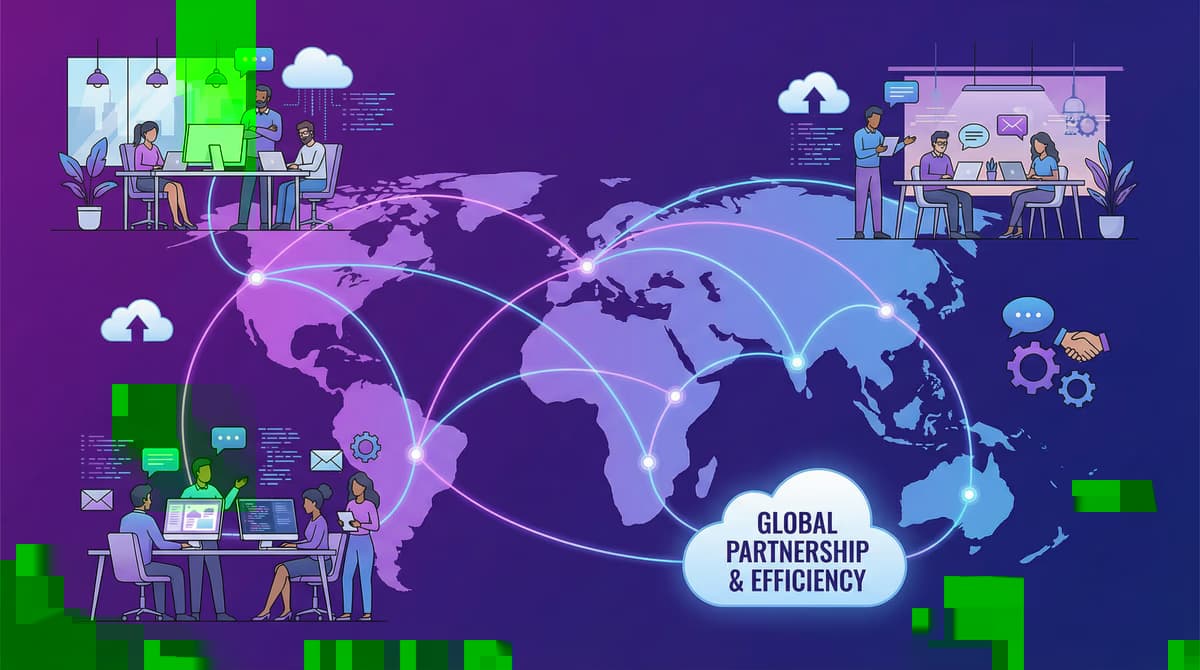
Offshore development refers to the outsourcing of IT services and software development to companies in faraway countries.
Typical offshore destinations for European companies are, for example, India, the Philippines or other countries in Asia.
The main reason for choosing an offshore partner is usually the significantly lower costs. However, this model is often accompanied by considerable challenges in communication and teamwork.
This arise through large time shifts and cultural differences.
What is Nearshore development?
In today's globalised business world, outsourcing is a key factor for many companies to remain competitive.
For From Offshore to Nearshore: When a change makes sense, Our Development Process outlines how we support rollout and delivery.
In contrast, nearshore development is where companies award their projects to service providers in geographically close countries.
For companies in Germany, this means teamwork with partners in countries such as Poland, Romania, Ukraine or other Eastern European countries.
The Nearshore model offers an attractive balance of cost savings, high quality and smooth teamwork.
The low time differences and cultural proximity help communication and promote closer and more agile teamwork.
Nearshore vs. Offshore Development: The main differences
To help the decision between nearshore and offshore development, it is important to understand the central differences. The following table compares the two models:
| Factor | Nearshore Development | Offshore Development |
|---|---|---|
| Geographical proximity & time zones | Low distance, minimal time shift (often only 1-2 hours) | Large distance, major time shift (5-12 hours) |
| Cultural affinity & communication | Similar working culture and business practices, which helps communication | Major cultural differences that can lead to misunderstandings |
| Cost | Cost cheaper than onshore, but tends to be slightly more expensive than offshore | Usually the most cost-effective option, a |
References and further reading
The following separate references complement the topics in this article:
- Bitkom – German digital industry association.
- German Federal Office for Information Security (BSI).
- European Commission – Digital strategy.
- MDN Web Docs (Mozilla)
- W3C – World Wide Web Consortium.
"Cloud-native only pays off when operations, security, and cost model match the architecture—otherwise you ship complexity faster."
— Björn Groenewold, Managing Director, Groenewold IT Solutions
Frequently Asked Questions (FAQ)
What is this article about: “From Offshore to Nearshore: When a change makes sense”?
Here we cover From Offshore to Nearshore. When a change makes sense — focused on architecture, process, and business outcomes. In short.
In today's globalised business world, outsourcing is a key factor for many companies to remain competitive. The outsourcing of software development projects can ...
Who benefits most from the content described here?
Typical readers are business and IT leaders in Software development who want to secure quality, security, and ease of upkeep over the long term.
How does this topic fit into an IT or digital strategy?
In a digital strategy, prioritize stable core processes first, then extensions. See also professional software development and consulting.
For multi-system landscapes, IT consulting and architecture helps align vendors and internal teams.
What are sensible next steps if we need support?
If you need support with design, delivery, or modernization: schedule an appointment or outline your project via contact.
About the author

Managing Director of Groenewold IT Solutions GmbH and Hyperspace GmbH
Since 2009 Björn Groenewold has been developing software solutions for the mid-market. He is Managing Director of Groenewold IT Solutions GmbH (founded 2010) and Hyperspace GmbH. As founder of Groenewold IT Solutions he has successfully supported more than 250 projects – from legacy modernisation to AI integration.
Blog recommendations
Related articles
These posts might also interest you.

How to connect your company systems for sustainable success
In today's business world marked by digital transformation, data is the undisputed elixir of life of every company. They are the basis for innovation, efficiency and sound...

Venture Capital for Software Development: Opportunities and Risks
In the dynamic world of software development, access to capital is often the decisive factor that decides on the success or failure of an innovative start-up. One of the famous...
Software funding in the middle class: practical examples and success factors
Digitization poses major challenges to small and medium-sized enterprises (SMEs), but also offers immense opportunities. One of the central hurdles is often Software Financing. How...
Free download
Checklist: 10 questions before software development
Key points before you start: budget, timeline, and requirements.
Get the checklist in a consultationRelevant next steps
Related services & solutions
Based on this article's topic, these pages are often the most useful next steps.
Related services
Related solutions
Practical next steps after From Offshore to Nearshore: When a change makes sense
From Offshore to Nearshore: When a change makes sense addresses a practical choice for product and IT teams. Start with one clear goal: align software scope, technical risk, and business value before the next investment.
Check the current process, the data involved, and the result users need. Then record the main risks and define a small first step. This keeps the decision easy to review and gives your team a shared basis.
For implementation support, our custom software development connects the article's guidance with architecture, delivery, and stable operations. Engineering and project ownership stay with our team in Leer, Germany.
This post belongs to Software development. Browse the related Software development articles or use the English software blog for other topics.
When budget is the next question, the software cost calculators provide planning ranges. The IT glossary explains key terms, while in-depth technology guides cover wider decisions.
If the topic affects a live project, book a technical consultation or send the context through our project contact form. We usually reply within one working day.