As of: 23 September 2026 · Reading time: 7 min
Key takeaways
- In a globalised and digitized world where customers expect fast and reliable deliveries, highly efficient logistics has become a decisive competitive factor.
In a globalised and digitized world where customers expect fast and reliable deliveries, highly efficient logistics has become a decisive competitive factor. The K...
“Good software is not an accident—it comes from a structured development process with clear quality standards.”
– Björn Groenewold, Managing Director, Groenewold IT Solutions
The most important thing in short: Modern logistics software uses AI for three core areas.
Demand forecasts for warehouse optimization, dynamic route planning in real time and predictive maintenance of the vehicle fleet.
Automation of warehouse processes, order processing and customs processing reduces manual errors and accelerates the entire supply chain.
In international language use you often encounter Custom Software Development, Software Engineering and Proof of Concept.
We use it here as a precise addition to the existing specialist language.
In a globalised and digitized world where customers expect fast and reliable deliveries, highly efficient logistics has become a decisive competitive factor.
The complexity of the supply chains is steadily increasing while the pressure increases at cost and speed.
To meet these demanding needs, companies need to rethink their logistics processes. The solution is located in modern Software for Logistics.
Which enables not only increases in efficiency through the smart use of automation and artificial intelligence (AI). But transforms the entire supply chain.
The new era of logistics: Intelligent, proactive and data-driven
In a globalised and digitized world where customers expect fast and reliable deliveries, highly efficient logistics has become a decisive competitive factor.
For Logistics Software. How Automation and AI Revolutionize the Supply Chain, AI & Machine Learning, Cost Calculator. AI Development, Our Development Process sowie [Cost Calculator.
Software Development](/en/costs/software-development) help you align rollout, scope and budget before you commit.
The days in which logistics software was used only to manage stocks and transports are counted. Modern systems are the brain of a connected, agile and proactive logistics.
They collect and analyze huge amounts of data in real time to not only control processes but to optimise them foresight.
The integration of artificial intelligence and machine learning is the key to this new generation of Software for Logistics.
It makes it possible to transition from a reactive to a predictive logistics model that anticipates future events and reacts proactively to them.
Artificial Intelligence: The heart of intelligent logistics
Short: Artificial intelligence is the driving force behind the revolution in logistics.
Artificial intelligence is the driving force behind the revolution in logistics. It gives logistics software the ability to learn from experiences, understand complex relationships and make smart decisions.
The application areas are diverse and lead to major improvements in the entire supply chain.
## Precise demand forecasts by predictive analytics
One of the biggest challenges in logistics is the exact prediction of future demand.
AI-based predictive analytics models analyze historical sales data, consider seasonal fluctuations, current market trends, weather forecasts and even social media activities to create extremely precise demand forecasts.
This allows optimised inventory planning, which minimizes expensive overstocks and loss of waste (out-of-stocks). Companies can so use their resources much more efficiently.
## Intelligent route and transport optimization
The optimization of transport routes is a classic logistics problem that is raised to a new level by AI.
Modern Software for Logistics not only calculates the shortest, but the overall best route.
Dynamic factors such as the current traffic situation, construction sites, delivery time windows, vehicle capacities and even the avoidance of emission-intensive route sections in real time are taken into account.
The result is major savings in fuel costs, a reduction in transport times and a major reduction in CO2 footprint.
Automation: The engine for maximum efficiency
Short: Parallel to artificial intelligence, automation is the second key lever for optimising logistics.
Parallel to artificial intelligence, automation is the second key lever for optimising logistics. Automation of repetitive, manual processes not only reduces costs, but also increases speed and accuracy.
The Software for Logistics functions as a central control element that orchestrates the different automated components and ensures smooth operation.
The advantages of automation in detail
The rollout of automation technologies in logistics offers a wealth of benefits that can be summarized in a clear table:
| Area | Automation Technologies | Concrete benefits |
|---|---|---|
| Restoration | Autonomous mobile robots (AMRs), automatic shelf systems, drones for inventory | 24/7 operation, best space use, reduction of picking errors to almost zero, increased work safety |
| Commissioning Pick-by-Light, Pick-by-Voice, collaborative robots (Cobots) | Significantly faster order processing, higher accuracy, relief of employees from physically strenuous activities | |
| Transport & Shipping | Automated packaging systems, driverless transport systems (FTS), sorting systems | acceleration of the shipping process, reduction of transport damage, improved truck load |
The vision of the future: A completely autonomous and sustainable supply chain
The development in the field of Software for Logistics is rapid and the future promises even more far-reaching changes.
The vision is a completely autonomous, self-improving and sustainable supply chain.
- Digital twins: A virtual image of the entire warehouse or even the complete supply chain makes it possible to simulate processes, find bottlenecks and expose optimization potentials before real changes are made.
- Internet of Things (IoT): billions of connected sensors in vehicles, containers and directly on products will create an unprecedented flood of data. AI systems will use these data to ensure complete traceability and to monitor the state of the goods in real time.
- Blockchain technology: It has the potential to dramatically increase security and clarity in the supply chain. Through the decentralized and counterfeit-proof storage of transaction data, contracts and delivery conditions can be handled automatically and comprehensible.
Conclusion: With Groenewold IT Solutions set the course for the future
Short: The digital transformation of logistics is in full swing.
The digital transformation of logistics is in full swing. Companies that do not act now risk losing the connection.
A powerful and smart software for logistics is no longer just a 'Nice-to-have'. However, a strategic need.
It is the basis for a future-oriented, resilient and customer-oriented supply chain.
Groenewold IT Solutions is your skilled partner on this path. We not only develop software, but holistic solutions tailored to your custom needs.
With our broad expertise in the development of Software for Logistics.
This also covers in the areas of automation and AI, we support you in raising your logistics processes to the next level.
Secure your competitive advantage now and design the logistics of the future with us.
Contact us for a non-binding advice.
Find out our Individual software development and how we can support your company.
Next consultation appointment →
Frequently Asked Questions (FAQ)
What is this article about: “Logistics Software: How Automation and AI Revolutionize the Supply Chain”?
This article sums up practical aspects of Logistics Software. How Automation and AI Revolutionize the Supply Chain for leaders and delivery teams. In short.
In a globalised and digitized world where customers expect fast and reliable deliveries, highly efficient logistics has become a decisive competitive factor. The K...
Who benefits most from the content described here?
It is especially relevant for firms in Softwareentwicklung that need reliable systems, clear interfaces, and predictable delivery — from mid-market teams to expert departments.
How does this topic fit into an IT or digital strategy?
You can map the topic to service building blocks such as custom software and delivery support. Architecture reviews and stepwise rollout reduce risk and rework.
For multi-system landscapes, IT consulting and architecture helps align vendors and internal teams.
What are sensible next steps if we need support?
For architecture, rollout, or a second expert opinion, book a free initial consultation — including timeline and interface alignment.
References and further reading
The following separate references complement the topics in this article:
About the author

Managing Director of Groenewold IT Solutions GmbH and Hyperspace GmbH
Since 2009 Björn Groenewold has been developing software solutions for the mid-market. He is Managing Director of Groenewold IT Solutions GmbH (founded 2010) and Hyperspace GmbH. As founder of Groenewold IT Solutions he has successfully supported more than 250 projects – from legacy modernisation to AI integration.
Blog recommendations
Related articles
These posts might also interest you.

Having Software Developed: Costs and a Realistic Price Overview (2026)
A clear guide to what drives custom software budgets, typical net price bands from MVP to ERP integration, in-house vs. agency – plus your next step to the software development cost calculator.

Implicites make explicit knowledge: techniques and tools for a successful knowledge transfer
In today's knowledge-based working environment, the effective knowledge transfer between employees is a decisive competitive advantage. Companies that create the valuable implicit...
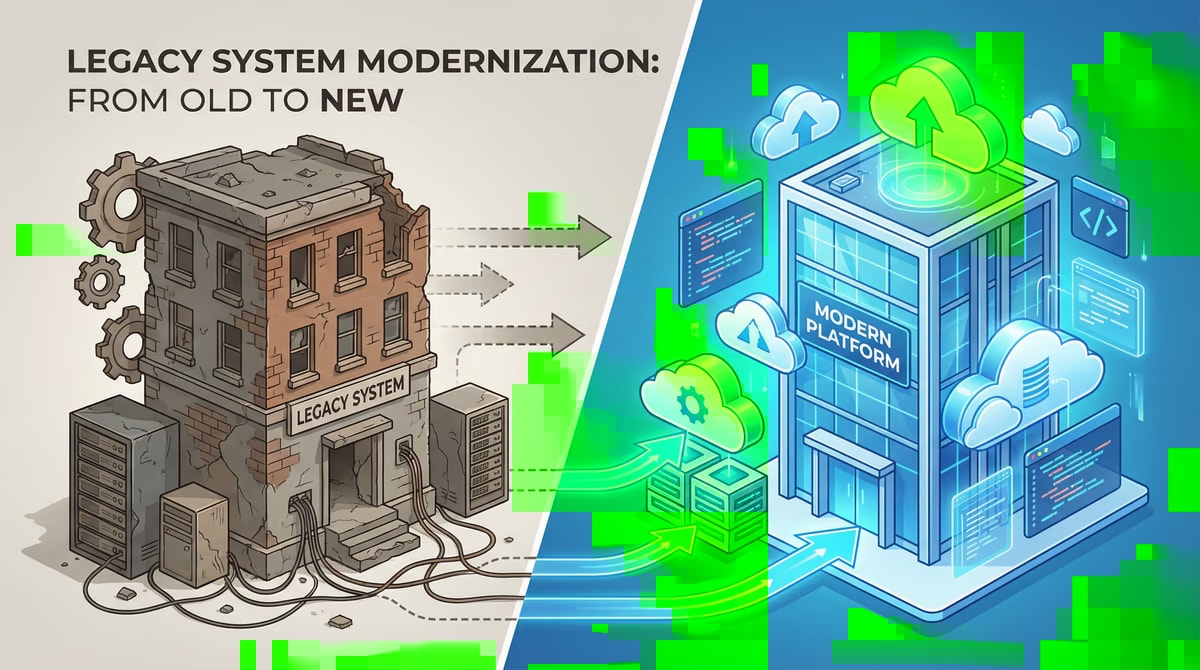
Altsystem migration: Avoid frequent errors
The digital transformation is in full swing and forces companies to continually modernise their IT infrastructure. A central component here is the Altsystem migration, so the...
Free download
Checklist: 10 questions before software development
Key points before you start: budget, timeline, and requirements.
Get the checklist in a consultationRelevant next steps
Related services & solutions
Based on this article's topic, these pages are often the most useful next steps.
Related services
Related solutions
Related industries
Practical next steps after Logistics Software: How Automation and AI Revolutionize the Supply Chain
Logistics Software: How Automation and AI Revolutionize the Supply Chain addresses a practical choice for energy providers. Start with one clear goal: turn a useful AI idea into a governed process with clear data and risk boundaries.
Check the current process, the data involved, and the result users need. Then record the main risks and define a small first step. This keeps the decision easy to review and gives your team a shared basis.
For implementation support, our AI development for business connects the article's guidance with architecture, delivery, and stable operations. Engineering and project ownership stay with our team in Leer, Germany.
This post belongs to Softwareentwicklung. Browse the related Softwareentwicklung articles or use the English software blog for other topics.
When budget is the next question, the software cost calculators provide planning ranges. The IT glossary explains key terms, while in-depth technology guides cover wider decisions.
If the topic affects a live project, book a technical consultation or send the context through our project contact form. We usually reply within one working day.