
As of: 4 September 2026 · Reading time: 7 min
Key takeaways
- In today's knowledge-based working environment, the effective knowledge transfer between employees is a decisive competitive advantage.
- Companies that create the valuable implicit...
In today's knowledge-based working environment, the effective knowledge transfer between employees is a decisive competitive advantage. Companies that create the valuable implicit...
“Good software is not an accident—it comes from a structured development process with clear quality standards.”
– Björn Groenewold, Managing Director, Groenewold IT Solutions
The most important thing in the short term: Implicit knowledge – i.e. knowledge that is difficult to understand – can be systematically secured by techniques such as storytelling, mentoring and after-action reviews.
Supported by tools such as wikis, collaboration platforms and expert knowledge transfer software, this know-how is accessible to the entire organization.
Implizites make knowledge explicit: techniques and tools for a successful knowledge transfer
In today's knowledge-based working environment, the effective ** knowledge transfer between employees** is a decisive competitive advantage.
Companies that create the valuable implicit knowledge of their experts and make them accessible to all are more new, agile and resilient.
But how does it succeed in explicating this often unconscious and difficult to grasp knowledge? This article highlights proven techniques and modern tools that support companies.
What is implicit knowledge and why is it so valuable?
In today's knowledge-based working environment, the effective knowledge transfer between employees is a decisive competitive advantage.
When planning Implicites make explicit knowledge.
Techniques and tools for a… from idea to delivery, AI & Machine Learning, Cost Calculator.
Software Development, Our Development Process sowie [Cost Calculator.
AI Knowledge Base](/en/costs/ai-knowledge-base) offer practical next steps on our site.
Implicit knowledge, often referred to as "stilles" or "experience knowledge", is based on personal experiences, intuitions and learned skills.
It is the "know-how" that is difficult to put into words or to write down in a manual.
Think of the skilled sales representative who instinctively knows how to respond to a difficult customer, or the programmer who has a "smooth feeling".
For the most elegant solution to a complex problem.
This knowledge is deeply rooted in the ways of acting and thinking of people and makes up a large part of the true competence of an employee.
The loss of this knowledge, for example through the exit of employees, can have devastating effects for companies.
A structured ** knowledge transfer for employees** is so essential to secure and develop this valuable capital.
Techniques for converting implicit to explicit knowledge
Short: The process of converting implicit to explicit knowledge is called externalization.
The process of converting implicit to explicit knowledge is called externalization. There are different methods that have proven themselves in practice.
Communicative methods
The direct exchange between people is often the most effective way to share implicit knowledge. The following formats are especially suitable:
- Storytelling: Skilled employees tell stories from their working day. The narrative form not only conveys facts, but also emotions and context, which promotes understanding and anchoring of knowledge.* Interviews and debriefing: Targeted interviews by experts after completion of a project or an important task help to understand and document their procedures, decisions and learning processes.
- Mentoring and Shadowing: Younger employees accompany skilled colleagues ("Shadowing") or are supervised by them over a longer period (Mentoring). This direct insight into the way of working allows intensive knowledge transfer.
Observing and Analytical Methods
Sometimes it is easier to explicate knowledge through observation and review instead of talking about it.
- After action reviews (AAR): A team discusses what went well and what can be improved after an action or project. The focus is on learning together from experience.
- Lessons Learned Workshops: Similar to AARs, but often with a wider focus on strategic findings from projects.
Collaborative Methods
Working together and solving problems naturally promotes the exchange of implicit knowledge.
- Communities of Practice (CoP): Groups of employees with similar interests or tasks meet regularly to exchange experiences and learn from each other.
- Wissenslandkarten: The visualization of knowledge domains and experts in the company makes transparent who has knowledge and promotes targeted exchange.
Tools to support knowledge transfer
Short: Modern software solutions can make the process of knowledge transfer considerably easier and scalable.
Modern software solutions can make the process of knowledge transfer considerably easier and scalable. The choice of the right tool depends on the specific needs of the company.
| Tool category | Examples | Scope |
|---|---|---|
| Wikis & Knowledge Bases | Confluence, Notion, SharePoint | Centrally depositing and structuring explicit knowledge, documentation of processes and instructions. |
- ** ** Collaboration Platforms** | Slack, Microsoft Teams | Fast team exchange, discussions, ad hoc questions and responses. | | Social Intranets | Jive, LumApps | Promoting company-wide communication and exchange, similar to an internal social network. |.
- ** ** Lernmanagementsysteme (LMS)** | Moodle, Cornerstone | Providing structured learning content, e-learning courses and certifications. | | Expert knowledge transfer tools | AmberSearch, Guru | Smart search functions that bundle relevant information from different sources and proactively suggest. |.
Conclusion: Using knowledge as a strategic resource
Short: The transformation of implicit to explicit knowledge is not a unique project.
The transformation of implicit to explicit knowledge is not a unique project. However, a continuous process that requires an open and collaborative corporate culture.
The targeted use of methods such as storytelling, mentoring and after-action reviews, supported by modern technologies, sets the foundation for a successful ** knowledge transfer of employees**.
Companies that master this process not only ensure valuable know-how. However, also promote the learning ability and new power of their entire organization.
Groenewold IT Solutions understands the challenges of knowledge management in digital transformation.
With our expertise, we help you implement the appropriate strategies and technologies to systematically capture, share and make your company knowledge useful.
Contact us to learn how we can support you on the way to a learning organization.
**Find out our Individual software development and how we can support your company.
Next consultation appointment →
Deepening: Requirements and stakeholders
Projects around implicites rarely fail in missing features – more often in unclear decision makers and changing priorities.
Document assumptions explicitly (what we know, what we guess) and link them to review appointments.
techniques and tools should not only be addressed ‘sometimes’: specify measurable intermediate results that show whether the selected direction is in place.
This increases internal acceptance and makes external communication more credible – for example towards management, supervisory board or public bodies.
Practice impulse on the topic
What has proven itself: small, reviewed increments with real users or internal key users.
So learn early on whether assumptions to implicites, know, explicitly, make voting – and can steer budget into the right building blocks instead of subsequent error correction.
Groenewold IT supports architecture, rollout and integration – according to your focus: Software development, IT consulting.
If you are unsafe, which entry is the most risky one, start with a short architecture or discovery workshop instead of a maximum microscope.
Frequently Asked Questions (FAQ)
What is this article about: “Implicites make explicit knowledge: techniques and tools for a successful knowledge tra…”?
This article sums up practical aspects of Implicites make explicit knowledge. Techniques and tools for a successful knowledge tra… for leaders and delivery teams. In short.
In today's knowledge-based working environment, the effective ** knowledge transfer between employees** is a decisive competitive advantage. Companies that create the valuable implicit...
Who benefits most from the content described here?
It is especially relevant for firms in Softwareentwicklung that need reliable systems, clear interfaces, and predictable delivery — from mid-market teams to expert departments.
How does this topic fit into an IT or digital strategy?
You can map the topic to service building blocks such as custom software and delivery support. Architecture reviews and stepwise rollout reduce risk and rework.
For multi-system landscapes, IT consulting and architecture helps align vendors and internal teams.
What are sensible next steps if we need support?
For architecture, rollout, or a second expert opinion, book a free initial consultation — including timeline and interface alignment.
Conclusion and next steps
Implicit knowledge makes explicit: Techniques and tools for a successful knowledge transfer can then be successfully introduced if technology, organization and measurability match – instead of isolated tool rollouts without process reference.
Use the overview in this article as a basis for discussion on priorities, risks and the first loadable pilot.
Intensify matching topics in category overview Blog category and check operational support via software development, IT consulting.
Groenewold IT accompanies review, rollout and operation – from the first grouping to scalable releases.
References and further reading
The following separate references complement the topics in this article:
About the author

Managing Director of Groenewold IT Solutions GmbH and Hyperspace GmbH
Since 2009 Björn Groenewold has been developing software solutions for the mid-market. He is Managing Director of Groenewold IT Solutions GmbH (founded 2010) and Hyperspace GmbH. As founder of Groenewold IT Solutions he has successfully supported more than 250 projects – from legacy modernisation to AI integration.
Blog recommendations
Related articles
These posts might also interest you.

Having Software Developed: Costs and a Realistic Price Overview (2026)
A clear guide to what drives custom software budgets, typical net price bands from MVP to ERP integration, in-house vs. agency – plus your next step to the software development cost calculator.
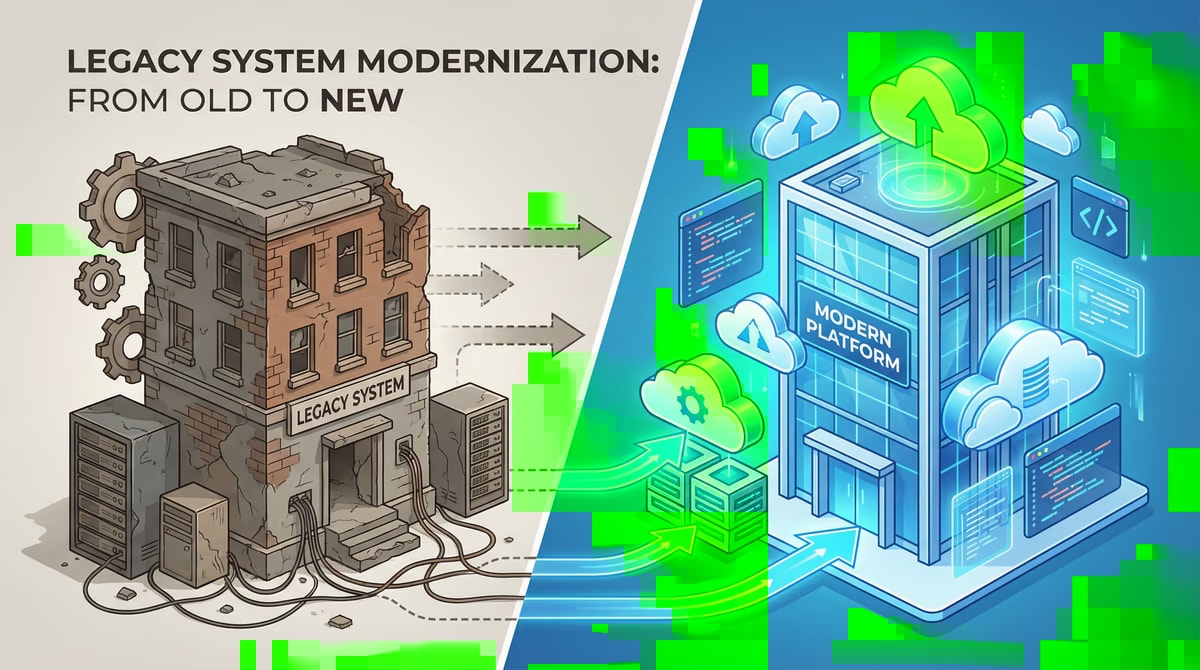
Altsystem migration: Avoid frequent errors
The digital transformation is in full swing and forces companies to continually modernise their IT infrastructure. A central component here is the Altsystem migration, so the...
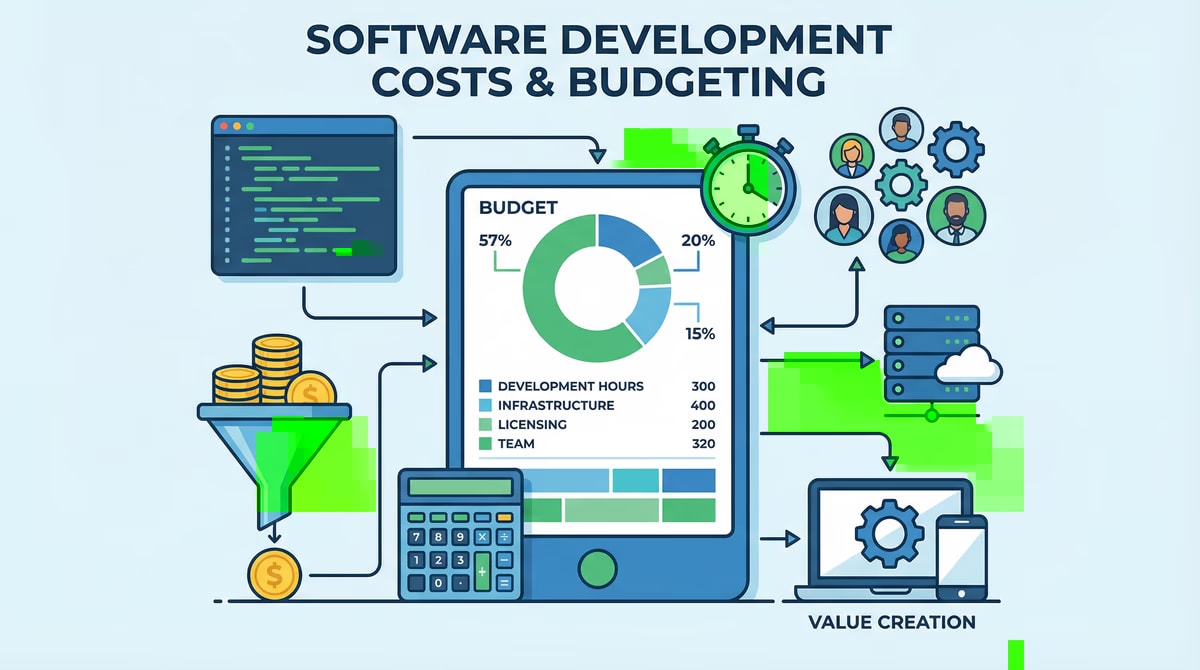
Financing models for software projects: A comprehensive comparison
The decision for the right Software Financing is a critical success factor for every digitization project. Whether startup or established company, choosing the right Fina...
Free download
Checklist: 10 questions before software development
Key points before you start: budget, timeline, and requirements.
Get the checklist in a consultationRelevant next steps
Related services & solutions
Based on this article's topic, these pages are often the most useful next steps.
Related services
Related solutions
Practical next steps after Implicites make explicit knowledge: techniques and tools for a successful knowledge transfer
Implicites make explicit knowledge: techniques and tools for a successful knowledge transfer addresses a practical choice for product and IT teams. Start with one clear goal: align software scope, technical risk, and business value before the next investment.
Check the current process, the data involved, and the result users need. Then record the main risks and define a small first step. This keeps the decision easy to review and gives your team a shared basis.
For implementation support, our custom software development connects the article's guidance with architecture, delivery, and stable operations. Engineering and project ownership stay with our team in Leer, Germany.
This post belongs to Softwareentwicklung. Browse the related Softwareentwicklung articles or use the English software blog for other topics.
When budget is the next question, the software cost calculators provide planning ranges. The IT glossary explains key terms, while in-depth technology guides cover wider decisions.
If the topic affects a live project, book a technical consultation or send the context through our project contact form. We usually reply within one working day.