As of: 23 September 2026 · Reading time: 7 min
Key takeaways
- The digital transformation is in full swing and forces companies to continually modernise their IT infrastructure.
- A central component here is the Altsystem migration, so the...
The digital transformation is in full swing and forces companies to continually modernise their IT infrastructure. A central component here is the Altsystem migration, so the...
“Good software is not an accident—it comes from a structured development process with clear quality standards.”
– Björn Groenewold, Managing Director, Groenewold IT Solutions
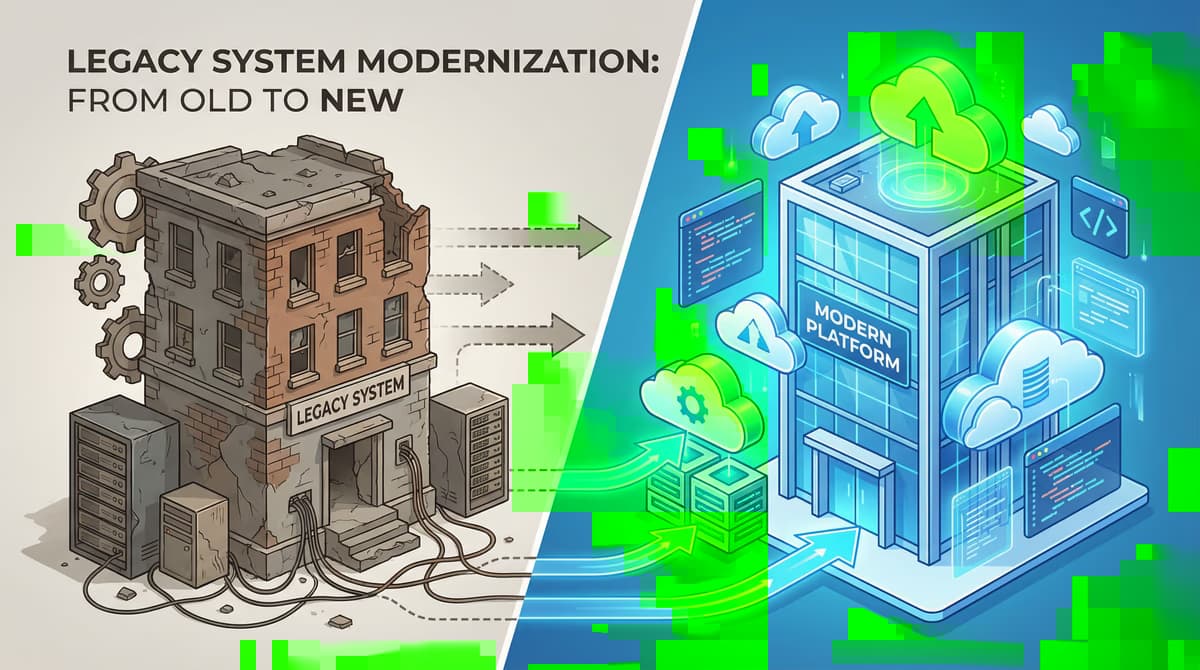
The most important thing in short: The five most common mistakes in the old system migration are. Lack of planning, underestimated data migration, the "Lift and Shift".
Trap, neglected change management and lack of parallel operation strategy.
Anyone who knows these traps and controls them with a clear roadmap, dedicated data migration subprojects and early integration of users significantly increases the success rate.
The digital transformation is in full swing and forces companies to continually modernise their IT infrastructure.
A central component here is the Altsystem migration, i.e. the process, to replace outdated software and systems with modern, more powerful solutions.
But this transition is complex and holds many falling knits. Many migration projects fail or overtake their budget because typical mistakes are not avoided.
In this post, we highlight the most common mistakes in the migration of old systems and show you how you can reship them to lead your project to success.
Why the modernization of old systems is crucial
The digital transformation is in full swing and forces companies to continually modernise their IT infrastructure.
For Altsystem migration: Avoid frequent errors, Legacy Modernisation, Cost Calculator: Legacy Modernisation, Solution: Legacy Reduction sowie Monolith vs. Microservices help you align rollout, scope and budget before you commit.
Altsysteme, often referred to as legacy systems, are the backbone of critical business processes in many companies.
They have grown for years or even decades and are deeply rooted in the organization. But with time they become a brake pad for innovation and growth.
Rigid architectures, high maintenance costs, lack of scalability and security risks are just some of the problems that outdated systems bring.
A successful Altsystem migration is so not a pure IT project. However, a strategic decision that ensures the future viability of the entire company.
The 5 most common mistakes in the old system migration – and how to avoid them
Based on experiences from many projects, recurring patterns have emerged that decide on success or failure. Who knows them can proactively counteract them.
Error 1: Lack of planning and unclear goals
One of the most common causes of the failure of migration projects is an inadequate planning phase.
Often the scope of the project is underestimated and no clear, measurable targets are defined.
Without a detailed roadmap that takes into account both technical and business needs, the project navigates in the blind flight. . Solution: Start with a complete review of the old system and the underlying business processes.
Define clear goals: What should be achieved with migration? Is it about cost reduction, more agility, better scalability or the development of new business areas?
Create a detailed project plan with realistic milestones and budgets.
Error 2: Underestimation of data migration
Short: The data is the most valuable asset of a company.
The data is the most valuable asset of a company. During migration, they must be extracted, transformed and loaded into the new system (ETL process).
This step is often seriously neglected.
Data losses, inconsistencies or poor data quality in the new system can be the result and severely endanger the acceptance of the new solution.
Solution: Plan data migration as an separate subproject. Perform a thorough data review and purification before starting the actual migration.
Automated testing and validation loops are essential to ensure the integrity and quality of the data in the target system.
Error 3: The “Lift and Shift” trap
The approach to simply lifting an old system into a new environment, such as the cloud (“Lift and Shift”), seems to be tempting at first glance, as it seems fast and easy to implement.
But this approach is deceptive. You just shift the problem instead of solving it.
The inherent weaknesses of the old system, such as monolithic architecture and technical debt, remain and prevent the benefits of the new environment from being fully exploited.
Solution: Instead of a pure “Lift and Shift” you should consider real modernisation. This means rethinking the application architecture and converting it to microservices, for example.
Although this approach is more complicated, it makes it possible to fully exploit the potentials of the cloud, such as scalability, elasticity and cost efficiency.
Error 4: Reliability of Change Management
A new software always means a change for employees.
If users are not included in the process at an early stage and are prepared for the new processes, the new solution quickly strikes resistance.
The best technique does not use anything if it is not accepted.
Solution: Accompany technical migration with professional change management. Communicate the benefits of the new solution transparently, offer complete training and actively pick up the feedback from end users.
This is how you make people involved.
Error 5: Inappropriate tests and quality assurance
Under time and cost pressure is often saved in the wrong place: in tests.
An inadequately tested system can lead to serious errors, system failures and high follow-up costs in live operation.
The features, performance, safety and integration of the new system must be fully tested.
Solution: Create a consistent test strategy from the start.
Plan enough time and resources for all test phases – from module tests to integration tests to load and acceptance tests.
Automated test methods can help increase efficiency and test coverage.
Typical risks and solutions
The following table clearly sums up the greatest challenges and the appropriate countermeasures:
| Risk | Description | Solution approach |
|---|---|---|
| Budget overrun | The costs run out of the row because the effort was underestimated. | Detailed preanalysis, buffer plan, agile procedure. |
| Data loss/inconsistency Important data are lost or are faulty in the new system. | Dedicated data migration project, intensive testing, data purification. | |
| Slow user acceptance Staff refuse to use the new system. | Early integration of users, change management, training. | |
| Performance problems | The new system is slow and does not meet the needs. | Realistic load tests, scalability analyses, architecture optimization. |
| Vendor-Lock-in | Strong dependency on a specific manufacturer or technology. | Use of open standards, modular architecture, multi-cloud strategies. |
Conclusion: Successful old system migration with the right partner
Migration of old systems is a complex challenge, but not an insurmountable obstacle.
With careful planning, a clear strategy and awareness of typical case knitting, the risk can be minimized and the project can be successful.
The modernisation of your IT landscape is an investment in the future.
This pays off through more efficiency, room to adapt and market strength. .However, a successful Altsystem migration requires not only technical know-how but also complete experience in managing complex projects.
If you are looking for a competent partner that accompanies you from review to rollout to operation, Groenewold IT Solutions is the right partner.
With our expertise and a proven approach model, we ensure that your migration runs smoothly and you can exploit the full potential of your new IT landscape.
Contact us for a non-binding initial advice!
Find out our Individual software development and how we can support your company.
Next consultation appointment →
Frequently Asked Questions (FAQ)
What is this article about: “Altsystem migration: Avoid frequent errors”?
Here we cover Altsystem migration: Avoid frequent errors — focused on architecture, process, and business outcomes. In short.
The digital transformation is in full swing and forces companies to continually modernise their IT infrastructure. A central component here is the Altsystem migration, so the...
Who benefits most from the content described here?
Typical readers are business and IT leaders in Softwareentwicklung who want to secure quality, security, and ease of upkeep over the long term.
How does this topic fit into an IT or digital strategy?
In a digital strategy, prioritize stable core processes first, then extensions. See also professional software development and consulting.
For multi-system landscapes, IT consulting and architecture helps align vendors and internal teams.
What are sensible next steps if we need support?
If you need support with design, delivery, or modernization: schedule an appointment or outline your project via contact.
References and further reading
The following separate references complement the topics in this article:
About the author

Managing Director of Groenewold IT Solutions GmbH and Hyperspace GmbH
Since 2009 Björn Groenewold has been developing software solutions for the mid-market. He is Managing Director of Groenewold IT Solutions GmbH (founded 2010) and Hyperspace GmbH. As founder of Groenewold IT Solutions he has successfully supported more than 250 projects – from legacy modernisation to AI integration.
Blog recommendations
Related articles
These posts might also interest you.

Having Software Developed: Costs and a Realistic Price Overview (2026)
A clear guide to what drives custom software budgets, typical net price bands from MVP to ERP integration, in-house vs. agency – plus your next step to the software development cost calculator.
Implicites make explicit knowledge: techniques and tools for a successful knowledge transfer
In today's knowledge-based working environment, the effective knowledge transfer between employees is a decisive competitive advantage. Companies that create the valuable implicit...
Financing models for software projects: A comprehensive comparison
The decision for the right Software Financing is a critical success factor for every digitization project. Whether startup or established company, choosing the right Fina...
Free download
Checklist: 10 questions before software development
Key points before you start: budget, timeline, and requirements.
Get the checklist in a consultationRelevant next steps
Related services & solutions
Based on this article's topic, these pages are often the most useful next steps.
Related solutions
Related comparison
Practical next steps after Altsystem migration: Avoid frequent errors
Altsystem migration: Avoid frequent errors addresses a practical choice for product and IT teams. Start with one clear goal: reduce legacy risk in controlled steps while daily work and key data remain available.
Check the current process, the data involved, and the result users need. Then record the main risks and define a small first step. This keeps the decision easy to review and gives your team a shared basis.
For implementation support, our legacy software modernization connects the article's guidance with architecture, delivery, and stable operations. Engineering and project ownership stay with our team in Leer, Germany.
This post belongs to Softwareentwicklung. Browse the related Softwareentwicklung articles or use the English software blog for other topics.
When budget is the next question, the software cost calculators provide planning ranges. The IT glossary explains key terms, while in-depth technology guides cover wider decisions.
If the topic affects a live project, book a technical consultation or send the context through our project contact form. We usually reply within one working day.