
As of: 19 June 2026 · Reading time: 4 min
Key takeaways
- The logistics industry is undergoing rapid change.
- What was still considered to be a future music yesterday is already a reality today or is about to break.
- For companies it is decided...
The logistics industry is undergoing rapid change. What was still considered to be a future music yesterday is already a reality today or is about to break. For companies it is decided...
“Good software is not an accident—it comes from a structured development process with clear quality standards.”
– Björn Groenewold, Managing Director, Groenewold IT Solutions
The defining trends for logistics software in 2026 are AI-powered demand forecasting, autonomous warehouse management through robotics, real-time shipment tracking via IoT, and blockchain-based supply chain transparency.
Companies investing in these technologies now secure decisive competitive advantages in speed and reliability.
The logistics industry is undergoing rapid change. What was still considered to be a future music yesterday is already a reality today or is about to break.
For companies it is crucial to keep an eye on technological developments in order to remain competitive.
A modern Software for Logistics is the key to setting the course for a successful future. In this article, we highlight the most important trends that will shape logistics software in 2026.
The future of logistics is digital
Short: Executive answer: The logistics industry is undergoing rapid change.
Executive answer: The logistics industry is undergoing rapid change.
For Logistics software: The defining trends for 2026, see View services und Solution: Logistics on our website for implementation paths and planning.
The times in which logistics processes were mainly influenced by manual activities and paperwork are finally over. Digitization has captured and transformed the industry from scratch.
Faster delivery times, increasing customer expectations and global competition require efficient, transparent and flexible supply chains. A powerful logistics software is the heart of these modern supply chains.
It allows to control complex processes, analyze data in real time and make informed decisions.
Top Trends for Logistics Software 2026 Overview
Short: Technological development is continuing.
Technological development is continuing. For 2026, some clear trends are emerging that will significantly influence logistics software.
1. Artificial Intelligence (AI) as an indispensable tool
Short: Artificial intelligence is no longer an optional extra, but develops into an indispensable component of modern logistics solutions.
Artificial intelligence is no longer an optional extra, but develops into an indispensable component of modern logistics solutions.
AI systems are able to analyze huge amounts of data in no time, identify patterns and make precise predictions.
This allows intelligent automation of routine tasks, improved route planning and predictive maintenance of vehicles and machines. KI will thus become the decisive factor for greater efficiency and competitiveness.
2. Scenario planning with digital twins
Short: The volatility of global markets requires proactive and flexible planning.
The volatility of global markets requires proactive and flexible planning. Digital twins come into play here.
A digital twin is a virtual image of a real object, process or even an entire supply chain.
With the help of this technology, companies can play through different scenarios that simulate the effects of disturbances and develop emergency plans before a problem actually occurs.
This minimizes risks and ensures a more solid supply chain.
3. Data centralisation as a strategic asset
Short: Data is the new gold – especially for logistics.
Data is the new gold – especially for logistics. However, they only develop their true value when they are centralized, prepared and accessible to all relevant actors.
Creating a uniform data base, for example in a Data Lake or a data warehouse, is the prerequisite for continuous transparency in the supply chain. S
References and further reading
Short: The following independent references complement the topics in this article:
The following independent references complement the topics in this article:
- Bitkom – German digital industry association
- German Federal Office for Information Security (BSI)
- European Commission – Digital strategy
- MDN Web Docs (Mozilla)
- W3C – World Wide Web Consortium
Frequently Asked Questions (FAQ)
What is this article about: “Logistics software: The defining trends for 2026”?
This article summarizes practical aspects of Logistics software: The defining trends for 2026 for decision-makers and delivery teams. In short: The logistics industry is undergoing rapid change.
What was still considered to be a future music yesterday is already a reality today or is about to break. For companies it is decided...
Who benefits most from the content described here?
It is especially relevant for organizations in Software development that need reliable systems, clear interfaces, and predictable delivery — from mid-market teams to specialized departments.
How does this topic fit into an IT or digital strategy?
You can map the topic to service building blocks such as custom software and delivery support: architecture reviews and iterative rollout reduce risk and rework. For multi-system landscapes, IT consulting and architecture helps align vendors and internal teams.
What are sensible next steps if we need support?
For architecture, implementation, or a second expert opinion, book a free initial consultation — including timeline and interface alignment.
About the author

Managing Director of Groenewold IT Solutions GmbH and Hyperspace GmbH
Since 2009 Björn Groenewold has been developing software solutions for the mid-market. He is Managing Director of Groenewold IT Solutions GmbH (founded 2012) and Hyperspace GmbH. As founder of Groenewold IT Solutions he has successfully supported more than 250 projects – from legacy modernisation to AI integration.
Blog recommendations
Related articles
These posts might also interest you.

Nearshore Trends 2026: New markets and developments in IT services
The global IT landscape is undergoing a steady change that forces companies to continuously adapt their business strategies to remain competitive. One of the central...
From Offshore to Nearshore: When a change makes sense
In today's globalised business world, outsourcing is a key factor for many companies to remain competitive. The outsourcing of software development projects can ...
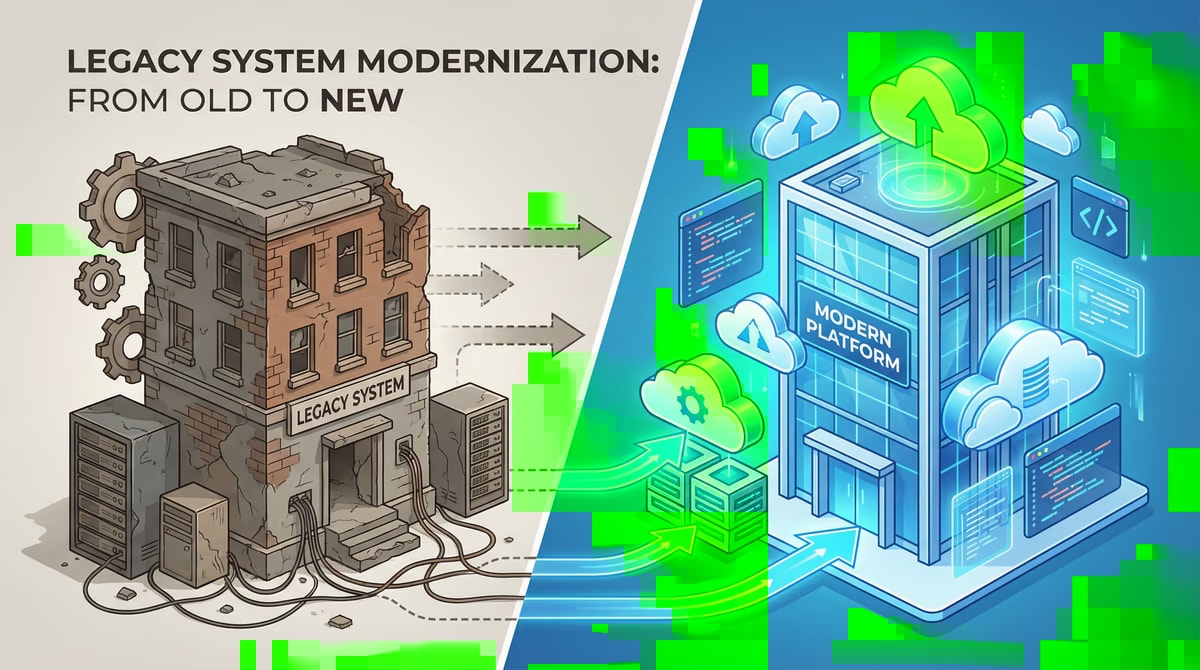
Software Migration: Planning, implementation and frequent errors
In today's fast-paced digital landscape, modernization of IT systems is essential for companies to remain competitive. A Software migration is often a...
Free download
Checklist: 10 questions before software development
Key points before you start: budget, timeline, and requirements.
Get the checklist in a consultationRelevant next steps
Related services & solutions
Based on this article's topic, these pages are often the most useful next steps.
Related services
Related solutions
More on Software development and next steps
This article is in the Software development topic. In our blog overview you will find all articles; under category Software development more posts on this subject.
For topics like Software development we offer matching services – from app development and AI integration to legacy modernisation and maintenance. We describe typical use cases under solutions. Our cost calculators give initial estimates. Key terms are in the IT glossary. Books and long-form guides appear on the publications page; deeper articles live under topics.
If you have questions about this article or want a non-binding discussion about your project, you can book a consultation or reach us via contact. We usually respond within one working day.