What Groenewold IT Solutions means by ERP for SMEs
For us, ERP for SMEs means: we support you from the first process and system selection (e.g. Odoo, SAP Business One or other suitable platforms) through technical and organisational rollout to interfaces, training and operations. Reliable master data, clear roles and a delivery plan matter – not a vendor slogan. Regardless of brand, we deliver architecture, customising and integration from one team so sales, purchasing, warehouse and finance work as one system.
Why SMEs need an ERP system
A single ERP system brings together sales, purchasing, warehouse, production, finance and HR. You get one source of truth, less duplicate entry and better control. For SMEs with limited resources, a well-planned ERP project pays off quickly through efficiency, transparency and scalability.
“ERP go-lives are data integration programmes with an ERP UI—master-data cleanup is not a phase; it is the precondition.”
Björn Groenewold, CEO, Groenewold IT Solutions
ERP systems compared: Odoo, SAP B1, Dynamics 365, Haufe X360, weclapp
| System | Target audience | Strengths | Limitations | Cost model |
|---|---|---|---|---|
| Odoo | SMEs, growing companies | CRM, sales, purchasing, warehouse, production, finance, HR; highly extensible, large community | Some enterprise features paid; complex edge cases need customising | Community free; Enterprise per module/user; hosting and customising variable |
| SAP Business One | SMEs, established standard | Strong finance and warehouse logic, SAP ecosystem, professional support | Higher cost; implementation often heavier | Licences, implementation partners; mid to high total cost |
| Microsoft Dynamics 365 | Microsoft-heavy organisations | CRM and ERP together; Office 365, Azure, Power Platform | Complexity and licence cost with many modules | Subscription per user/module; mid to higher ongoing cost |
| Haufe X360 | SMEs, tax and accounting focus | Strong tax and accounting integration, German compliance, industry packages | Less flexible for heavy deviations from standard | Mid-range cost, often package pricing |
| weclapp | SMEs, cloud ERP | E-commerce, warehouse, finance; cloud-native; interfaces to shops and accounting | Suited to standard processes; deep customising limited | Subscription, predictable entry cost |
We advise neutrally and recommend the right fit – often Odoo for SMEs because of scalability and cost. See also Odoo customising, Odoo migration. More detail in our ERP systems comparison. To avoid SAP licence and implementation costs, consider a custom SAP alternative.
What does an ERP implementation cost? (by company size)
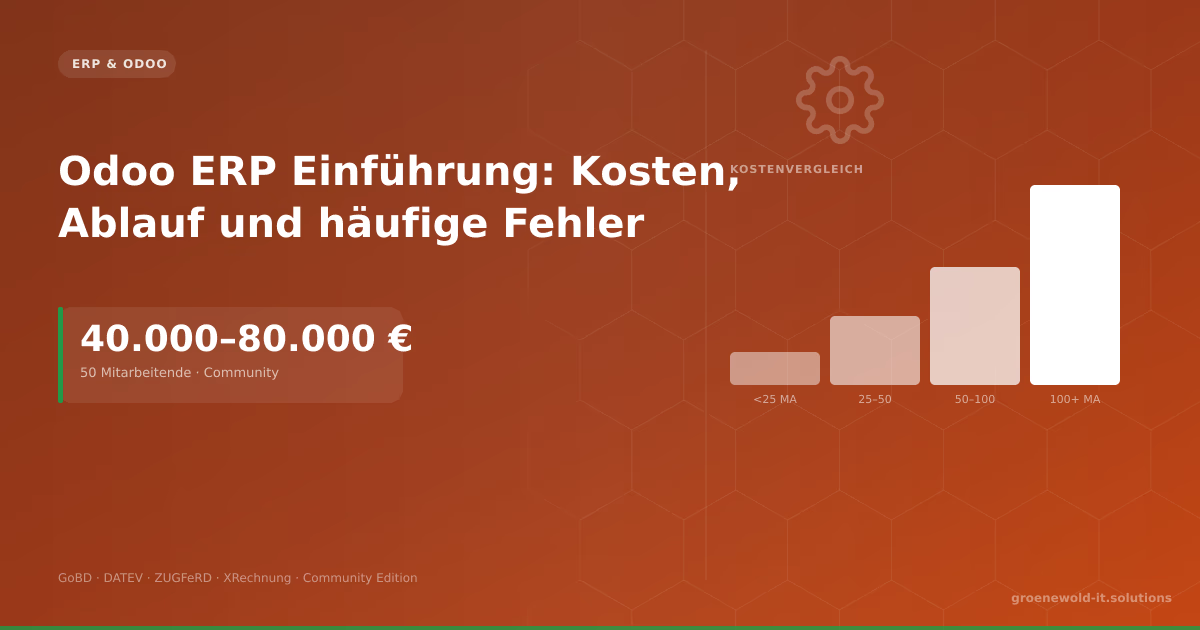
| Company size | Indicative cost (implementation incl. consulting, configuration, training) |
|---|---|
| Small (up to ~20 FTE) | Odoo often €20k–50k; weclapp/Haufe often €15k–40k |
| Medium (~20–100 FTE) | Odoo €50k–150k; SAP B1 / Dynamics often €80k–250k |
| Larger SME (100+ FTE) | Depending on modules and customising, from €150k upward |
Actual cost depends on system, scope, data migration and customising. We provide a transparent quote after a free initial consultation.
Our ERP implementation process in six phases
Together we capture processes, interfaces, reports and goals. Which departments are in scope? Which data must migrate? Which KPIs and reports do you need? That forms a solid base for system selection and the project plan.
From the requirements we build a shortlist, organise demos and references and support the decision. You choose a system that fits your processes and budget – without surprises later.
Roles, milestones, data migration and customising are planned in detail. Who leads the project? When does each area go live? Everyone knows what happens when.
Configuration, custom modules or adjustments, interfaces to existing systems, migration of master and transaction data. We work in agile cycles with fixed reviews so you see progress and can prioritise.
Acceptance in test, user training and documentation so your team can go live with confidence.
Production cutover, support in the first weeks and tuning after launch so the transition is smooth.
That keeps the project manageable and risk under control.
Typical ERP challenges and how we address them
Every ERP project hits familiar issues – unclear requirements, resistance in the team, messy data or scope creep. We know them and tackle them systematically.
Unclear or shifting requirements: Departments often do not know everything upfront, or needs change. We start with structured workshops and prioritise together. During build we work iteratively – you see results early and can adjust without restarting the whole project.
Resistance and low adoption: If people see the new system as extra work, usage suffers. We involve key users early, train well and document processes clearly. Where it helps, we adapt the ERP to familiar flows (customising) instead of forcing generic "best practice" only.
Data quality and migration: Legacy data is often incomplete, duplicated or inconsistent. We analyse sources early, clean duplicates and define mapping rules. Migration runs in test first and is validated before go-live so you start clean.
Scope creep and timelines: New wishes appear throughout the project. Without control, scope grows and go-live slips. We use a prioritised backlog and clear milestones. New requests are captured and scheduled – what fits the current release ships; the rest follows in the next phase.
With these practices we reduce typical ERP risk and steer your project to a successful go-live.
Why we often recommend Odoo for SMEs
Strong scalability – from a few users to several hundred; predictable licence cost (Community free, Enterprise optional); large community and broad modules (CRM, sales, purchasing, warehouse, production, finance, HR). Targeted Odoo customising tailors Odoo to your processes without the cost and complexity of many large suite ERPs. For migrations from legacy systems: Odoo migration.
Source note: The price ranges and cost tables reflect typical project and licence patterns from Groenewold IT Solutions delivery practice and common vendor and partner information for Odoo, SAP Business One, Microsoft Dynamics, Haufe and weclapp (subscription/user models, implementation scope). Actual quotes vary with data migration, customising and interfaces; the table is for orientation only, not a binding offer.
Topics and services in the ERP/CRM cluster
Further reading: ERP system and CRM system overview, CRM software for B2B sales, SAP alternative for SMEs and Odoo ERP & CRM.
Review your ERP and CRM processes
Project check or initial call – clarify scope, costs and system selection in a structured way.
Related topics in the IT glossary
Frequently asked questions
ERP for SMEs
Duration, migration and selection
What does ERP for SMEs mean for your business?
ERP for SMEs covers systems and rollout models that fit mid-market structures: manageable modules, predictable budgets, integration with CRM, DATEV and shops, and growth without suite lock-in.
What matters is process fit, data migration and a partner who advises neutrally between Odoo, SAP Business One, Dynamics and custom software.
How long does an ERP implementation take?
Often 3–12 months, depending on scope, data migration and training.
Can we bring our old data?
Yes.
We plan data migration and cleansing from the start.
Odoo or SAP/Dynamics – what fits us?
We clarify that in the requirements phase.
Odoo is often the more cost-effective, flexible choice for SMEs; SAP/Dynamics can suit specific compliance or group requirements.
What happens to our existing processes?
We adapt the ERP to your processes (customising) where it makes sense – and suggest improvements where standard features add clear value.
What is the difference between Odoo and SAP for SMEs?
SAP Business One is an established ERP with strong finance and warehouse logic and wide adoption in manufacturing, but higher licence and implementation cost.
Odoo is open-source and modular, flexible to customise and often lower total cost – especially for companies with 20–500 employees.
How do SMEs find the right ERP vendor?
Choosing the right ERP vendor starts with structured requirements analysis.
Next comes a system comparison – SME-suitable options such as Odoo, SAP Business One or Microsoft Dynamics are assessed on scalability, cost and support quality. A neutral advisor without vendor lock-in helps you decide objectively.
Discuss your ERP project
Use our free project check to clarify requirements.