As of: 23 September 2026 · Reading time: 4 min
Key takeaways
- In the fast-paced world of software development, the pressure to quickly deliver results is ubiquitous.
- This pressure often leads to compromises in the quality of the code, which is long-term...
In the fast-paced world of software development, the pressure to quickly deliver results is ubiquitous. This pressure often leads to compromises in the quality of the code, which is long-term...
“Good software is not an accident—it comes from a structured development process with clear quality standards.”
– Björn Groenewold, Managing Director, Groenewold IT Solutions
Technical debt arises from deliberate shortcuts and unconscious quality deficiencies in code. Preventive measures.
Code reviews as a fixed part of every pull request, automated quality checks in the CI pipeline, regular refactoring sprints.
And a definition of done that includes code quality.
Avoid technical debt: A guide for preventive measures
In the fast-paced world of software development, the pressure to deliver quickly results is ubiquitous. This pressure often leads to compromises in code quality.
This prove to be costly in the long term.
These compromises are referred to as technical debt – a metaphor that describes the long-term negative effects of short-term short-term abbreviations.
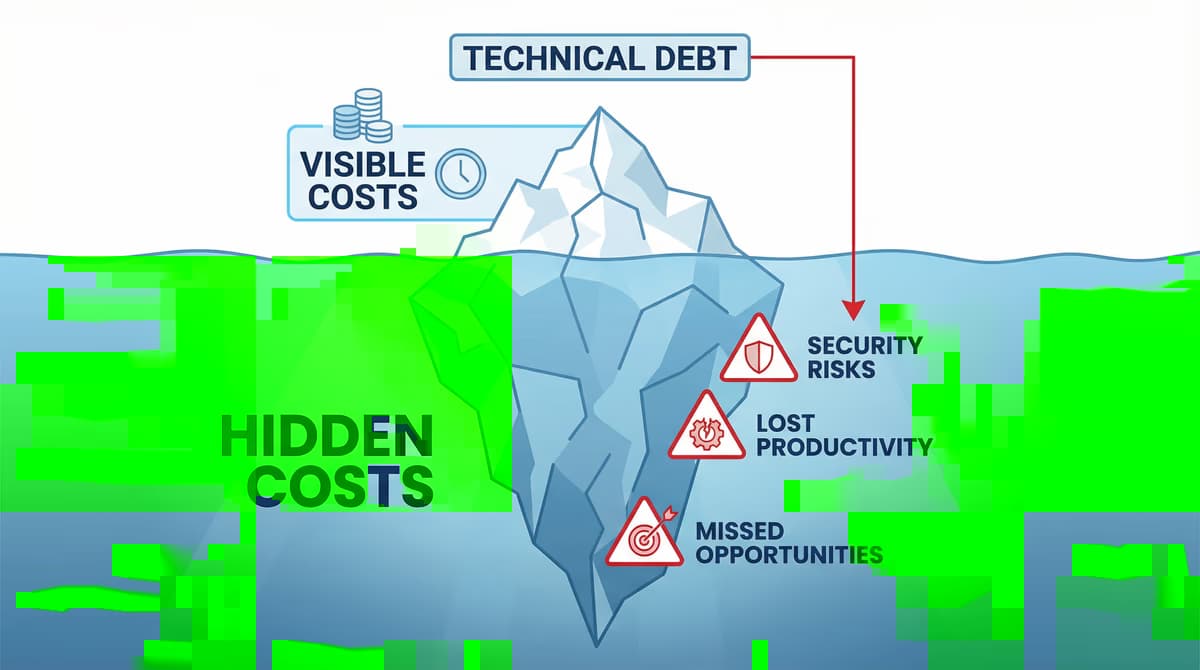
Similarly to financial debt, interest is also incurred in the case of technical debts which, in the form of increased maintenance costs, slowed development and rising costs, are charged.
But how can we avoid this debt trap from the outset?
This article highlights the causes of technical guilt and introduces preventive measures to ensure sustainable and high-quality software development.
Understanding the causes of technical guilt
In the fast-paced world of software development, the pressure to quickly deliver results is ubiquitous.
When planning Avoid technical debt: a guide to preventive measures from idea to delivery, API & Integration Projects, Cost Calculator: API Development, Solution: Integration Chaos sowie RPA vs. API Integration offer practical next steps on our site.
To effectively avoid technical debt, it is crucial to know their causes. Rarely they arise from evil intentions, but are usually the result of balanced decisions under pressure.
A profound understanding of these factors is the first step to be able to proactively counteract.
Time pressure and unrealistic deadlines
The most common driver for technical debt is the pressure to close projects quickly.
Close schedules and unrealistic deadlines often force development teams to take shortcuts and to renounce good practices. Instead of writing clean and well-structured code, fast.
However, suboptimal solutions are introduced that work short-term but lead to problems in the long term. These "Quick and Dirty".
Solutions are often difficult to wait and develop, making future adjustments more difficult and expensive.
Lack of documentation and knowledge transfer
An inadequate or outdated documentation is another important source of technical debt.
If the knowledge of architecture, design and features of a software exists only in the minds of custom developers, it is lost as soon as they leave the team.
New team members have to work hard into the code. This leads to errors and inefficient development.
Without a clear documentation, it is also difficult to keep an overview of decisions taken and their backgrounds. This makes the Technical debt even more difficult.
Outdated technologies and lack of modernization
Short: The technology landscape is rapidly developing.
The technology landscape is rapidly developing. If outdated technologies, frameworks or libraries are not regularly updated, vulnerabilities and compatibility problems arise.
Modernization is becoming more and more complex and riskier with time, as the gap to the current technology is growing steadily. Keeping on obsolete Sy
References and further reading
The following separate references complement the topics in this article:
- Bitkom – German digital industry association.
- German Federal Office for Information Security (BSI).
- European Commission – Digital strategy.
- MDN Web Docs (Mozilla)
- W3C – World Wide Web Consortium.
Frequently Asked Questions (FAQ)
What is this article about: “Avoid technical debt: a guide to preventive measures”?
Here we cover Avoid technical debt. A guide to preventive measures — focused on architecture, process, and business outcomes. In short.
In the fast-paced world of software development, the pressure to quickly deliver results is ubiquitous.
This pressure often leads to compromises in the quality of the code, which is long-term...
Who benefits most from the content described here?
Typical readers are business and IT leaders in Software development who want to secure quality, security, and ease of upkeep over the long term.
How does this topic fit into an IT or digital strategy?
In a digital strategy, prioritize stable core processes first, then extensions. See also professional software development and consulting.
For multi-system landscapes, IT consulting and architecture helps align vendors and internal teams.
What are sensible next steps if we need support?
If you need support with design, delivery, or modernization: schedule an appointment or outline your project via contact.
About the author

Managing Director of Groenewold IT Solutions GmbH and Hyperspace GmbH
Since 2009 Björn Groenewold has been developing software solutions for the mid-market. He is Managing Director of Groenewold IT Solutions GmbH (founded 2010) and Hyperspace GmbH. As founder of Groenewold IT Solutions he has successfully supported more than 250 projects – from legacy modernisation to AI integration.
Blog recommendations
Related articles
These posts might also interest you.

Digitization in the middle class: How to measure your success
Digitization is no longer a trend for medium-sized enterprises, but a need to remain competitive. But how to measure the success of Digitalisie...
Digital Transformation: Leadership and Change Management as key to success
Digital transformation is more than just the introduction of new technologies. It is a profound change process that affects companies of all sizes. Especially for small and...
Digital Transformation: The Power of Partnerships and Ecosystems
Digital transformation is no longer an option for small and medium-sized enterprises (SMEs), but a need to remain competitive. But the way to the digital future...
Free download
Checklist: 10 questions before software development
Key points before you start: budget, timeline, and requirements.
Get the checklist in a consultationRelevant next steps
Related services & solutions
Based on this article's topic, these pages are often the most useful next steps.
Related services
Related solutions
Related comparison
Cost calculators
Practical next steps after Avoid technical debt: a guide to preventive measures
Avoid technical debt: a guide to preventive measures addresses a practical choice for product and IT teams. Start with one clear goal: align software scope, technical risk, and business value before the next investment.
Check the current process, the data involved, and the result users need. Then record the main risks and define a small first step. This keeps the decision easy to review and gives your team a shared basis.
For implementation support, our custom software development connects the article's guidance with architecture, delivery, and stable operations. Engineering and project ownership stay with our team in Leer, Germany.
This post belongs to Software development. Browse the related Software development articles or use the English software blog for other topics.
When budget is the next question, the software cost calculators provide planning ranges. The IT glossary explains key terms, while in-depth technology guides cover wider decisions.
If the topic affects a live project, book a technical consultation or send the context through our project contact form. We usually reply within one working day.