As of: 4 September 2026 · Reading time: 4 min
Key takeaways
- The logistics and transport industry is the critical foundation of the modern global economy.
- From procurement to production to delivery to the end customers – the smooth movement of goods is a complex combination...
The logistics and transport industry is the critical foundation of the modern global economy. From procurement to production to delivery to the end customers – the smooth movement of goods is a complex combination...
“A well-designed API is the invisible bridge between systems—and often the biggest lever for efficiency.”
– Björn Groenewold, Managing Director, Groenewold IT Solutions
Why Logistics Cannot Function With Disconnected Systems
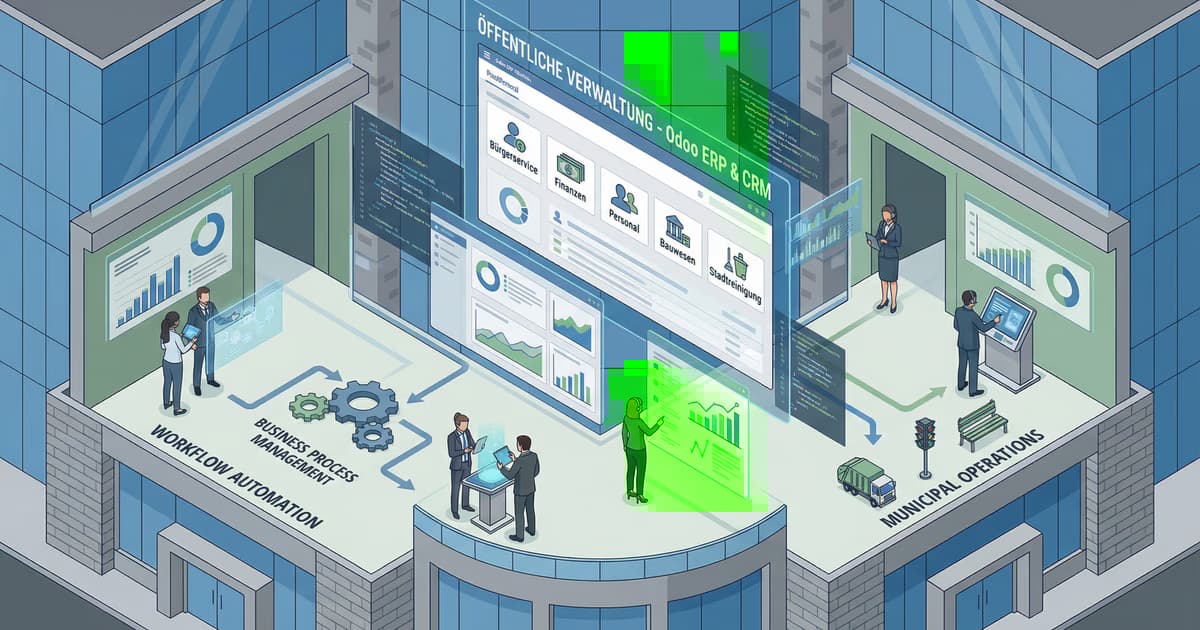
The logistics and transport industry is the critical foundation of the modern global economy.
For Interfaces and APIs. The Turbo for Logistics and Transport, API & Integration Projects, Cost Calculator. API Development, [Solution.
Integration Chaos](/en/solutions/integration-chaos) sowie RPA vs. API Integration help you align rollout, scope and budget before you commit.
The logistics sector coordinates multiple stakeholders simultaneously. Carriers, warehouses, customers, customs, and freight forwarders all exchange data.
When that data flows through email, fax, or manual CSV transfers, the result is delays, errors, and hidden costs.
APIs solve this by connecting systems directly. Data moves in real time — without human intermediaries.
The Three Core Problems APIs Solve in Logistics
Problem 1: Data Lock and Media Breaks
Most logistics operations run on disconnected IT systems:
- ERP systems manage orders independently.
- Warehouse management systems (WMS) operate in isolation.
- Transport management systems (TMS) function separately.
- Freight forwarders maintain proprietary portals.
Data exchange between these systems requires manual effort. Manual processes introduce errors and delay decision-making.
The effects are concrete:
- Information arrives after the operational need has passed.
- Manual transmission corrupts data and creates inconsistencies.
- No unified view of current shipment or inventory status exists.
Problem 2: Inefficient Capacity Planning and Rate Finding
Short: Collecting carrier rates manually across multiple providers takes hours per transaction.
Collecting carrier rates manually across multiple providers takes hours per transaction. This prevents fast responses to urgent orders or market shifts. Best routing decisions are missed.
Unnecessary costs accumulate.
API connections to carrier networks and freight exchanges automate this process. Rates are retrieved in seconds. Capacity decisions happen based on current market data.
Problem 3: High Administrative Costs From Manual Processes
Short: Transport documentation, shipping label generation, and carrier planning consume large staff time.
Transport documentation, shipping label generation, and carrier planning consume large staff time. When these processes remain manual, headcount scales with volume — instead of staying flat.
API automation eliminates this scaling problem. The same staff handles higher volumes without extra administrative burden.
Key API Use Cases in Logistics
Automated Freight Booking
Short: APIs connect your TMS or ERP directly to carrier booking systems.
APIs connect your TMS or ERP directly to carrier booking systems. Orders trigger shipments automatically. Booking confirmation and tracking numbers return to your system without manual intervention.
Real-Time Shipment Tracking
Short: APIs aggregate tracking data from multiple carriers into one view.
APIs aggregate tracking data from multiple carriers into one view. Customers and internal teams see current shipment status — regardless of which carrier is handling each shipment.
Digital Customs Documentation
APIs connect to customs systems and automate the generation and submission of customs documents. Error rates fall. Customs clearance time decreases.
Warehouse and Inventory Synchronization
APIs keep inventory data synchronized across warehouse systems, e-commerce platforms, and ERP in real time. Overselling, stockouts, and manual reconciliation are eliminated.
What to Evaluate Before Building Logistics APIs
Before implementing API integrations, clarify:
- Which systems need to exchange which data, and how often?
- What data formats do existing systems support (REST, EDI, SOAP)?
- Who owns the integration and maintains it after go-live?
- What happens when an API endpoint is unavailable — is there a fallback?
Well-planned API architecture reduces logistics costs and creates the foundation for further automation.
"A well-designed API is the invisible bridge between systems — and often the biggest lever for efficiency." — Björn Groenewold, Managing Director, Groenewold IT Solutions
Frequently Asked Questions (FAQ)
What is this article about: “Interfaces and APIs: The Turbo for Logistics and Transport”?
This article sums up practical aspects of Interfaces and APIs. The Turbo for Logistics and Transport for leaders and delivery teams.
In short: The logistics and transport industry is the critical foundation of the modern global economy.
From procurement to production to delivery to the end customers – the smooth movement of goods is a complex combination...
Who benefits most from the content described here?
It is especially relevant for firms in Schnittstellen & APIs that need reliable systems, clear interfaces, and predictable delivery — from mid-market teams to expert departments.
How does this topic fit into an IT or digital strategy?
You can map the topic to service building blocks such as custom software and delivery support. Architecture reviews and stepwise rollout reduce risk and rework.
For multi-system landscapes, IT consulting and architecture helps align vendors and internal teams.
What are sensible next steps if we need support?
For architecture, rollout, or a second expert opinion, book a free initial consultation — including timeline and interface alignment.
References and further reading
The following separate references complement the topics in this article:
About the author

Managing Director of Groenewold IT Solutions GmbH and Hyperspace GmbH
Since 2009 Björn Groenewold has been developing software solutions for the mid-market. He is Managing Director of Groenewold IT Solutions GmbH (founded 2010) and Hyperspace GmbH. As founder of Groenewold IT Solutions he has successfully supported more than 250 projects – from legacy modernisation to AI integration.
Blog recommendations
Related articles
These posts might also interest you.
Interfaces & APIs for Education & Research: The key to digital excellence
In recent years, digital transformation has penetrated all areas of society, and the education and research sector is no exception. Universities, research institutions and educational technology…
Interfaces and APIs in Production and Manufacturing: The Key to Smart Factory
The fourth industrial revolution, known as Industry 4.0, transforms the way goods are produced. Networking is at the centre of this profound change. But the vision of a Smart Factory in which Mas...
Interfaces & APIs for healthcare: The key to digital interoperability
Digital transformation in healthcare is no longer a distant future scenario, but an urgent need. In view of increasing patient numbers, complex treatment paths and the demand for more efficient and…
Free download
Checklist: 10 questions before software development
Key points before you start: budget, timeline, and requirements.
Get the checklist in a consultationRelevant next steps
Related services & solutions
Based on this article's topic, these pages are often the most useful next steps.
Related services
Related solutions
Related comparison
Cost calculators
Related industries
Practical next steps after Interfaces and APIs: The Turbo for Logistics and Transport
Interfaces and APIs: The Turbo for Logistics and Transport addresses a practical choice for logistics teams. Start with one clear goal: connect systems without losing control of data, ownership, or later changes.
Check the current process, the data involved, and the result users need. Then record the main risks and define a small first step. This keeps the decision easy to review and gives your team a shared basis.
For implementation support, our API and integration engineering connects the article's guidance with architecture, delivery, and stable operations. Engineering and project ownership stay with our team in Leer, Germany.
This post belongs to Schnittstellen & APIs. Browse the related Schnittstellen & APIs articles or use the English software blog for other topics.
When budget is the next question, the software cost calculators provide planning ranges. The IT glossary explains key terms, while in-depth technology guides cover wider decisions.
If the topic affects a live project, book a technical consultation or send the context through our project contact form. We usually reply within one working day.