
As of: 19 June 2026 · Reading time: 4 min
Key takeaways
- The integration of ChatGPT in business processes promises efficiency improvements, cost reductions and improved customer experience.
- But how can the success of such an implemen...
The integration of ChatGPT in business processes promises efficiency improvements, cost reductions and improved customer experience. But how can the success of such an implemen...
“Good software is not an accident—it comes from a structured development process with clear quality standards.”
– Björn Groenewold, Managing Director, Groenewold IT Solutions
Measuring the success of a ChatGPT integration relies on KPIs like response accuracy, average handling time, escalation rate to human agents, user satisfaction (CSAT), and cost per interaction.
A/B testing between AI-assisted and manual processes delivers the most reliable ROI evidence.
The integration of ChatGPT in business processes promises efficiency improvements, cost reductions and improved customer experience. But how can the success of such an implementation be measured?
Without a clear strategy for success measurement and the right key performance indicators (KPIs), the actual benefits often remain hidden.
In this post you will learn how to systematically capture and evaluate the success of your ChatGPT integration.
Why the measurement of success is crucial
Short: Executive answer: The integration of ChatGPT in business processes promises efficiency improvements, cost reductions and improved customer experience.
Executive answer: The integration of ChatGPT in business processes promises efficiency improvements, cost reductions and improved customer experience.
When planning ChatGPT Integration: Success Measurement and KPIs from idea to delivery, API & Integration Projects, Cost Calculator: API Development, Solution: Integration Chaos sowie RPA vs. API Integration offer practical next steps on our site.
The introduction of AI technologies like ChatGPT is more than just a technical innovation – it is a strategic investment.
In order to justify return on investment (ROI) and exploit the full potential of technology, continuous success measurement is essential.
It allows you to monitor performance, identify weaknesses and make data-based decisions for future optimizations. A thoughtful ChatGPT integration in the company therefore requires a clear measurement concept from the outset.
The most important KPIs for success measurement
Short: Choosing the right KPIs depends on the specific goals you follow with the ChatGPT integration.
Choosing the right KPIs depends on the specific goals you follow with the ChatGPT integration. Nevertheless, there are a number of proven key figures that have established themselves in practice.
These can be roughly divided into customer satisfaction, efficiency and value.
Customer satisfaction
Short: The satisfaction of your customers is a central indicator of the success of your ChatGPT integration, especially in customer service.
The satisfaction of your customers is a central indicator of the success of your ChatGPT integration, especially in customer service.
- Customer Satisfaction Score (CSAT): Measure the satisfaction of users directly after interaction with the chatbot by short surveys.
- **Net Promoter Score (NPS):**Receive the likelihood that customers would recommend to your company. A high NPS indicates a positive overall experience.
- First Contact Resolution (FCR): A high FCR value means that many enquiries are already resolved at first contact by the chatbot, which increases customer satisfaction.
Efficiency and performance
Short: These KPIs help you to evaluate the operational performance of your ChatGPT solution.
These KPIs help you to evaluate the operational performance of your ChatGPT solution.
- Resolution rate: Which percentage of requests is fully answered by the chatbot without human intervention? A high solution rate relieves your employees.
- ** Average processing time (Average Handling Time):** How long does an interaction last from start to end? A short processing time is a sign of efficiency.
- Accuracy responses: The correctness and completeness of the answers given by the chatbot is crucial for its acceptance and benefit.
Business value
Short: In the end, the investment in a ChatGPT integration must also pay off business.
In the end, the investment in a ChatGPT integration must also pay off business.
- Cost reduction (cost R)
References and further reading
Short: The following independent references complement the topics in this article:
The following independent references complement the topics in this article:
- Bitkom – German digital industry association
- German Federal Office for Information Security (BSI)
- European Commission – Digital strategy
- MDN Web Docs (Mozilla)
- W3C – World Wide Web Consortium
Frequently Asked Questions (FAQ)
What is this article about: “ChatGPT Integration: Success Measurement and KPIs”?
Here we cover ChatGPT Integration: Success Measurement and KPIs — focused on architecture, process, and business outcomes.
In short: The integration of ChatGPT in business processes promises efficiency improvements, cost reductions and improved customer experience. But how can the success of such an implemen...
Who benefits most from the content described here?
Typical readers are business and IT leaders in Software development who want to secure quality, security, and maintainability over the long term.
How does this topic fit into an IT or digital strategy?
In a digital strategy, prioritize stable core processes first, then extensions. See also professional software development and consulting. For multi-system landscapes, IT consulting and architecture helps align vendors and internal teams.
What are sensible next steps if we need support?
If you need support with design, delivery, or modernization: schedule an appointment or outline your project via contact.
About the author

Managing Director of Groenewold IT Solutions GmbH and Hyperspace GmbH
Since 2009 Björn Groenewold has been developing software solutions for the mid-market. He is Managing Director of Groenewold IT Solutions GmbH (founded 2012) and Hyperspace GmbH. As founder of Groenewold IT Solutions he has successfully supported more than 250 projects – from legacy modernisation to AI integration.
Blog recommendations
Related articles
These posts might also interest you.

Nearshore Trends 2026: New markets and developments in IT services
The global IT landscape is undergoing a steady change that forces companies to continuously adapt their business strategies to remain competitive. One of the central...
From Offshore to Nearshore: When a change makes sense
In today's globalised business world, outsourcing is a key factor for many companies to remain competitive. The outsourcing of software development projects can ...
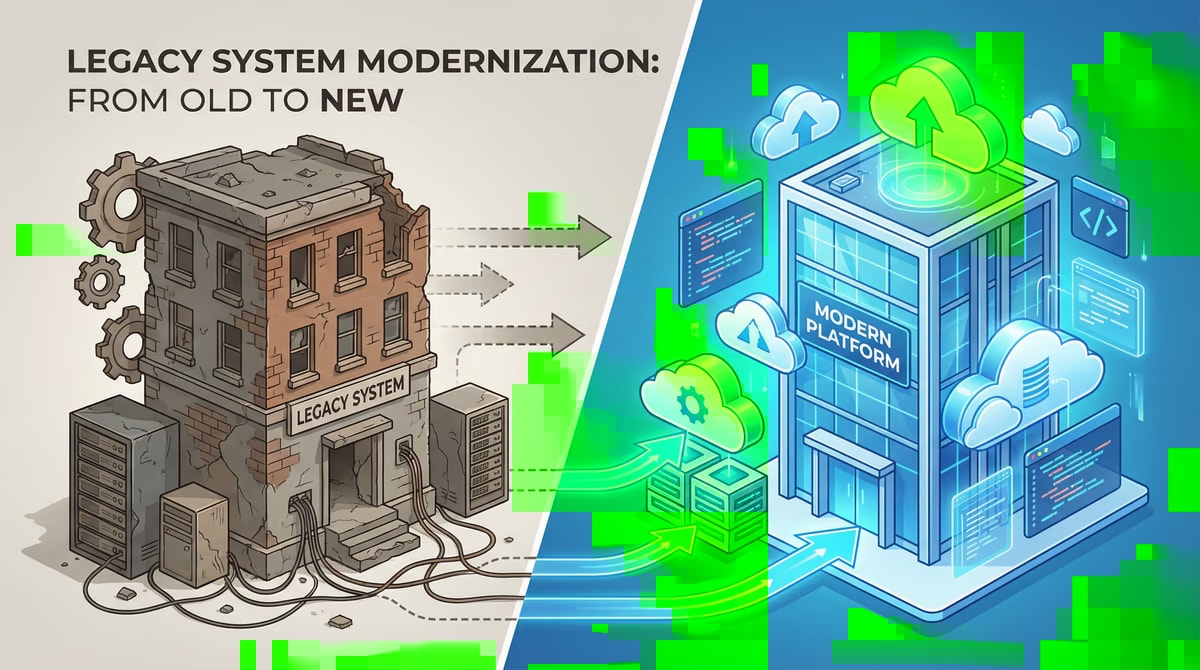
Software Migration: Planning, implementation and frequent errors
In today's fast-paced digital landscape, modernization of IT systems is essential for companies to remain competitive. A Software migration is often a...
Free download
Checklist: 10 questions before software development
Key points before you start: budget, timeline, and requirements.
Get the checklist in a consultationRelevant next steps
Related services & solutions
Based on this article's topic, these pages are often the most useful next steps.
Related solutions
Related comparison
Cost calculators
More on Software development and next steps
This article is in the Software development topic. In our blog overview you will find all articles; under category Software development more posts on this subject.
For topics like Software development we offer matching services – from app development and AI integration to legacy modernisation and maintenance. We describe typical use cases under solutions. Our cost calculators give initial estimates. Key terms are in the IT glossary. Books and long-form guides appear on the publications page; deeper articles live under topics.
If you have questions about this article or want a non-binding discussion about your project, you can book a consultation or reach us via contact. We usually respond within one working day.