
As of: 19 June 2026 · Reading time: 4 min
Key takeaways
- Learn the best practices for successful software projects.
- From clear requirements to agile methods to effective communication.
Learn the best practices for successful software projects. From clear requirements to agile methods to effective communication.
“Good software is not an accident—it comes from a structured development process with clear quality standards.”
– Björn Groenewold, Managing Director, Groenewold IT Solutions
Why are some software projects failing, while others are going to succeed? The answer is often not in technology, but in the way projects are planned, implemented and controlled.
In this article we share the Best Practices, which we learned from hundreds of successful projects.
70 % IT projects exceed budget or time
17 % failure complete
3x higher success rate with best practices
The 6 pillars of successful software projects
Short: Executive answer: Learn the best practices for successful software projects.
Executive answer: Learn the best practices for successful software projects.
For Successful software projects: best practices for your project success, see View services und Discover solutions on our website for implementation paths and planning.
- Clear Requirements and Vision The most common reason for failure of projects is unclear or constantly changing requirements. Invest time in a thorough request analysis and make sure that all stakeholders have a common understanding of the project objectives.
Define clear, measurable targets
Documentation Requirements in writing
Priority You features by value
Establish a change management process
- Agile methodology and iterative approach Agile methods such as Scrum or Kanban make it possible to react quickly to changes and deliver regularly functioning software. Short iterations reduce risks and allow early feedback.
Work in short sprints (2-4 weeks)
Supply regularly functioning increments
Perform sprint reviews and retrospectives
Adjust the process continuously
- Effective communication Communication is the adhesive that holds a project together. Regular exchange between all parties prevents misunderstandings and ensures that everyone is at the same level.
Daily stand-ups for the development team
Weekly status updates for stakeholders
Clear communication channels and rules
Transparent documentation of decisions
- Continuous testing Quality cannot be added at the end of a project – it must be installed from the beginning. Automated tests and continuous integration ensure that errors are detected early.
Test Driven Development (TDD) practice
Automated unit, integration and E2E tests
Continuous Integration/Continuous Deployment (CI/CD)
Regular code reviews
- Clean documentation Good documentation is not a luxury, but a necessity. It allows knowledge transfer, helps maintenance and protects against loss of know-how.
Technical documentation of architecture
API documentation for interfaces
User manuals and training materials
Documentation as part of the definition of Done
- Continuous improvement The best teams are constantly learning. Retrospectives, post-mortems and open dealing with errors create a culture of continuous improvement.
Perform regular retrospectives
Document and share Lessons Learned
Collect and analyze metrics
Error culture: Learning from mistakes, not punishing
Sources: Unless cited inline, market figures and percentages are for orientation; see public sources such as Bitkom (2025) and Destatis. Project budgets and examples: Groenewold IT Solutions, internal reporting 2026.
References and further reading
Short: The following independent references complement the topics in this article:
The following independent references complement the topics in this article:
- Bitkom – German digital industry association
- German Federal Office for Information Security (BSI)
- European Commission – Digital strategy
- MDN Web Docs (Mozilla)
- W3C – World Wide Web Consortium
"Cloud-native only pays off when operations, security, and cost model match the architecture—otherwise you ship complexity faster."
— Björn Groenewold, Managing Director, Groenewold IT Solutions
Frequently Asked Questions (FAQ)
What is this article about: “Successful software projects: best practices for your project success”?
This article summarizes practical aspects of Successful software projects: best practices for your project success for decision-makers and delivery teams. In short: Learn the best practices for successful software projects.
From clear requirements to agile methods to effective communication.
Who benefits most from the content described here?
It is especially relevant for organizations in Software development that need reliable systems, clear interfaces, and predictable delivery — from mid-market teams to specialized departments.
How does this topic fit into an IT or digital strategy?
You can map the topic to service building blocks such as custom software and delivery support: architecture reviews and iterative rollout reduce risk and rework. For multi-system landscapes, IT consulting and architecture helps align vendors and internal teams.
What are sensible next steps if we need support?
For architecture, implementation, or a second expert opinion, book a free initial consultation — including timeline and interface alignment.
About the author

Managing Director of Groenewold IT Solutions GmbH and Hyperspace GmbH
Since 2009 Björn Groenewold has been developing software solutions for the mid-market. He is Managing Director of Groenewold IT Solutions GmbH (founded 2012) and Hyperspace GmbH. As founder of Groenewold IT Solutions he has successfully supported more than 250 projects – from legacy modernisation to AI integration.
Blog recommendations
Related articles
These posts might also interest you.

Nearshore Trends 2026: New markets and developments in IT services
The global IT landscape is undergoing a steady change that forces companies to continuously adapt their business strategies to remain competitive. One of the central...
From Offshore to Nearshore: When a change makes sense
In today's globalised business world, outsourcing is a key factor for many companies to remain competitive. The outsourcing of software development projects can ...
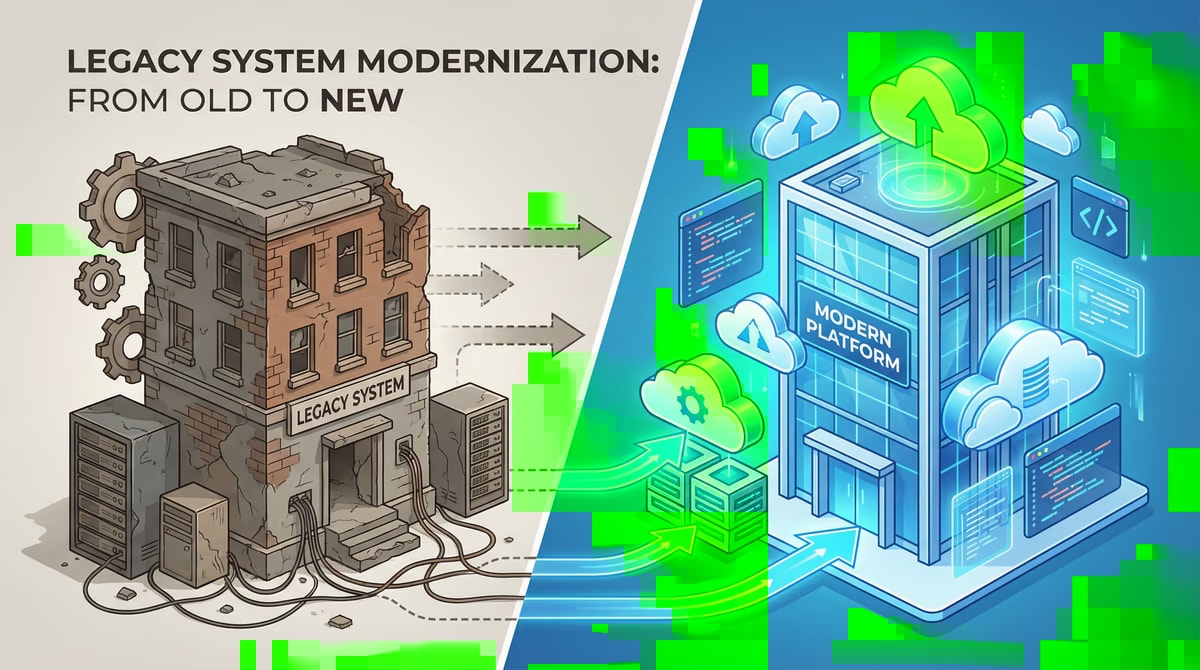
Software Migration: Planning, implementation and frequent errors
In today's fast-paced digital landscape, modernization of IT systems is essential for companies to remain competitive. A Software migration is often a...
Free download
Checklist: 10 questions before software development
Key points before you start: budget, timeline, and requirements.
Get the checklist in a consultationRelevant next steps
Related services & solutions
Based on this article's topic, these pages are often the most useful next steps.
Related services
Related solutions
More on Software development and next steps
This article is in the Software development topic. In our blog overview you will find all articles; under category Software development more posts on this subject.
For topics like Software development we offer matching services – from app development and AI integration to legacy modernisation and maintenance. We describe typical use cases under solutions. Our cost calculators give initial estimates. Key terms are in the IT glossary. Books and long-form guides appear on the publications page; deeper articles live under topics.
If you have questions about this article or want a non-binding discussion about your project, you can book a consultation or reach us via contact. We usually respond within one working day.