
As of: 23 September 2026 · Reading time: 7 min
Key takeaways
- In today's digital landscape, the development and use of software is unthinkable without taking into account the General Data Protection Regulation (GDPR).
- Since its launch in May 2018 ...
In today's digital landscape, the development and use of software is unthinkable without taking into account the General Data Protection Regulation (GDPR). Since its launch in May 2018 ...
“Good software is not an accident—it comes from a structured development process with clear quality standards.”
– Björn Groenewold, Managing Director, Groenewold IT Solutions
The most important thing in the short term: GDPR-compliant software implements three technical principles.
Privacy by Design (data protection from the beginning in the design of architecture), data minimisation (customised survey only) and data rights (device, deletion, portability as introduced features).
These needs have been binding for all companies in the EU since May 2018.
In today's digital landscape, the development and use of software is unthinkable without taking into account the General Data Protection Regulation (GDPR).
Since its introduction in May 2018, the GDPR has redefined the rules for the processing of personal data in the European Union.
For software developers and companies, this means that they must integrate the legal needs into their products and processes from the outset.
But what exactly does it mean to develop a DSGVO compliant software? This contribution gives a technical overview of the essential needs.
The basic principles of the GDPR in software development
In today's digital landscape, the development and use of software is unthinkable without taking into account the General Data Protection Regulation (GDPR).
When planning GDPR needs for software: A technical overview from idea to delivery, IT Security, Cost Calculator: Software Development sowie Our Development Process offer practical next steps on our site.
The GDPR is based on central principles that must be observed in the development of software. These form the foundation for the data protection-compliant handling of personal data.
Legality, Processing by Trust and Faith, Transparency
Short: Each data processing requires a legal basis.
Each data processing requires a legal basis. Usually this is the user's consent. This must be voluntary, informed and unambiguous.
For developers, this means that they need to implement mechanisms such as the double opt-in procedure. The aim is to document consent in a legally secure manner.
Clarity also requires users to be clearly and understandably informed about which data is processed for what purpose.
Purpose binding and data minimisation
Personal data may only be processed for the purpose for which they were collected.
The principle of data minimisation states that only the data that are really needed for this purpose may be collected.
For software development, this means waiving unnecessary data requests and focusing on the essentials.
Technical and organizational measures (TOMs)
Article 32 of the GDPR requires appropriate technical and organisational measures to ensure a level of protection appropriate to the risk.
This is a central point for the technical rollout of the GDPR in software.
Privacy by Design and Privacy by Default
These two principles are enshrined in Article 25 of the GDPR and are crucial for software development:
- Privacy by Design: Data protection must be integrated into the system architecture from the outset. This means that data protection aspects must already be taken into account when designing the software.
- Privacy by Default: The most data protection-friendly presets must be enabled by default. Users should not have to become active themselves to protect their privacy.
Specific technical measures
Short: Different technical measures are required to ensure the security of the data.
Different technical measures are required to ensure the security of the data. The following table gives an overview of important aspects:
| Measure | Description |
|---|---|
| Encryption | Both in transfer (transport encryption, e.g. TLS) and in storage (encryption of databases and backups) personal data must be encrypted. |
| Pseudonymization & Anonymization | Wherever possible, data should be pseudonymized or anonymized to remove direct personal reference. |
| Access control | A detailed role and authorization concept ensures that only authorized persons can access the data. |
| Protocoling | Changes to personal data must be comprehensible. Complete logging is so essential. |
| Löschkonzept There must be a concept for the timely deletion of data whose storage period has expired or whose processing purpose has been omitted. |
The rights of those affected
Short: The GDPR strengthens the rights of persons whose data are processed.
The GDPR strengthens the rights of persons whose data are processed. A GDPR compliant software must create the technical needs to implement these rights.
Right of access (Art. 15 GDPR)
Short: Users have the right to know which data are stored about them.
Users have the right to know which data are stored about them. The software must provide a function that can export this data.
Right to rectification (Art. 16 GDPR)
Short: Faulty data must be corrected.
Faulty data must be corrected. This can be introduced by a matching function in the user profile.
Right to deletion (Art. 17 GDPR)
Short: Users may request the deletion of their data.
Users may request the deletion of their data. The software must make this technically possible and ensure that the data is also removed from all connected systems.
Conclusion: Understanding GDPR as a Chance
The needs of the GDPR for software development are complex but by no means insurmountable.
Careful planning and the integration of data protection principles from the outset are the key to success. A DSGVO compliant software is not only a legal need.
However, also an important quality feature and a competitive advantage. It creates trust among users and minimizes the risk of sensitive fines.
The rollout of the GDPR requires deep technical and legal expertise. Groenewold IT Solutions is your competent partner when it comes to developing and implementing data protection-compliant software.
We support you not only fulfilling the needs of the GDPR. However, as an opportunity for your company.
Find out our Individual software development and how we can support your company.
Next consultation appointment →
Integration into your IT landscape
Typical integration points are ERP, CRM, identity providers, payment services and industry software. stable contracts, version policy for APIs and transparent error semantics –.
This means partners and internal teams do not have to guess.
If you need support in technical rollout, we assign DSGVO needs to software: A technical overview would like to include your existing architecture – including prioritization and resilient releases.
Matching entry points: Software development, IT consulting.
Technology, interfaces and operation
As soon as more than one system is involved, clear API contracts, comprehensible error objects and idempotent write operations become important.
For topics related to needs and technical, you should plan staging environments, test data and restart concepts. This also covers features.
Observability belongs to this. Correlation IDs via gateway and services, meaningful log levels and alarms on business KPI – not only on CPU green.
Backups and recovery tests are part of the “Definition of Ready” for productive load, not a later footnote.
Frequently Asked Questions (FAQ)
What is this article about: “GDPR requirements for software: A technical overview”?
Here we cover GDPR needs for software. A technical overview — focused on architecture, process, and business outcomes. In short.
In today's digital landscape, the development and use of software is unthinkable without taking into account the General Data Protection Regulation (GDPR).
Since its launch in May 2018 ...
Who benefits most from the content described here?
Typical readers are business and IT leaders in Softwareentwicklung who want to secure quality, security, and ease of upkeep over the long term.
How does this topic fit into an IT or digital strategy?
In a digital strategy, prioritize stable core processes first, then extensions. See also professional software development and consulting.
For multi-system landscapes, IT consulting and architecture helps align vendors and internal teams.
What are sensible next steps if we need support?
If you need support with design, delivery, or modernization: schedule an appointment or outline your project via contact.
Conclusion and next steps
Short: GDPR needs for software.
GDPR needs for software. A technical overview can be successfully introduced when technology, organization and measurability match – instead of isolated tool rollouts without process reference.
Use the overview in this article as a basis for discussion on priorities, risks and the first loadable pilot. .Intensify matching topics in category overview Blog category and check operational support via software development, IT consulting. Groenewold IT accompanies review, rollout and operation – from the first grouping to scalable releases.
References and further reading
The following separate references complement the topics in this article:
About the author

Managing Director of Groenewold IT Solutions GmbH and Hyperspace GmbH
Since 2009 Björn Groenewold has been developing software solutions for the mid-market. He is Managing Director of Groenewold IT Solutions GmbH (founded 2010) and Hyperspace GmbH. As founder of Groenewold IT Solutions he has successfully supported more than 250 projects – from legacy modernisation to AI integration.
Blog recommendations
Related articles
These posts might also interest you.

Having Software Developed: Costs and a Realistic Price Overview (2026)
A clear guide to what drives custom software budgets, typical net price bands from MVP to ERP integration, in-house vs. agency – plus your next step to the software development cost calculator.
Implicites make explicit knowledge: techniques and tools for a successful knowledge transfer
In today's knowledge-based working environment, the effective knowledge transfer between employees is a decisive competitive advantage. Companies that create the valuable implicit...
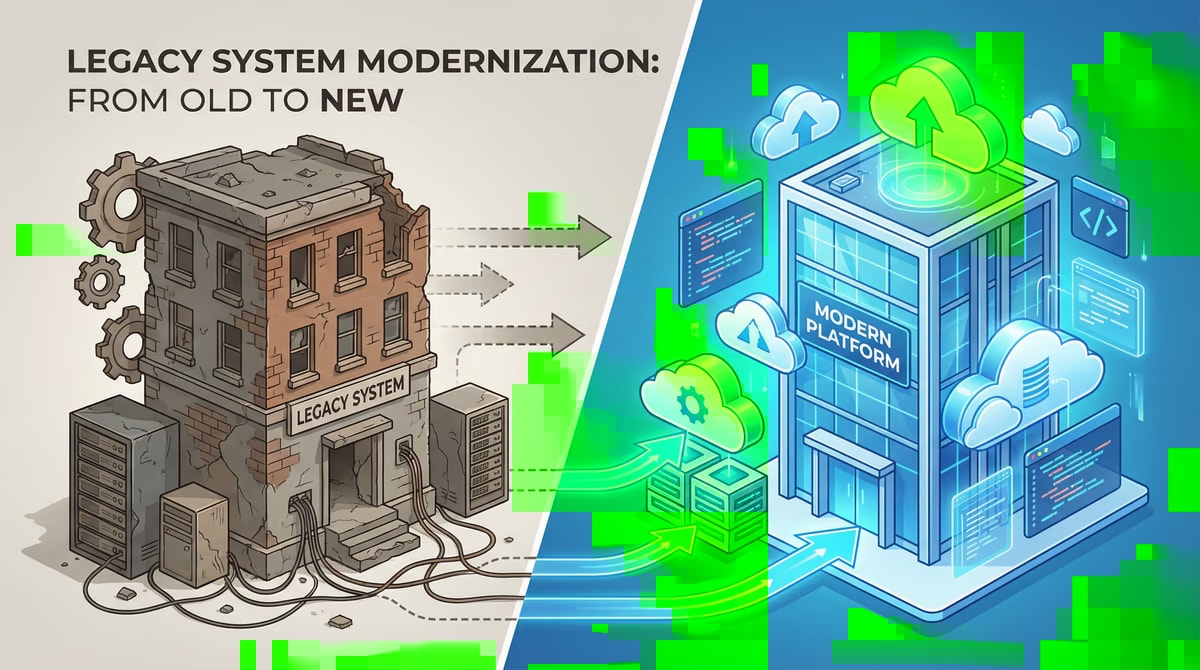
Altsystem migration: Avoid frequent errors
The digital transformation is in full swing and forces companies to continually modernise their IT infrastructure. A central component here is the Altsystem migration, so the...
Free download
Checklist: 10 questions before software development
Key points before you start: budget, timeline, and requirements.
Get the checklist in a consultationRelevant next steps
Related services & solutions
Based on this article's topic, these pages are often the most useful next steps.
Related services
Related solutions
Cost calculators
Practical next steps after GDPR requirements for software: A technical overview
GDPR requirements for software: A technical overview addresses a practical choice for product and IT teams. Start with one clear goal: align software scope, technical risk, and business value before the next investment.
Check the current process, the data involved, and the result users need. Then record the main risks and define a small first step. This keeps the decision easy to review and gives your team a shared basis.
For implementation support, our custom software development connects the article's guidance with architecture, delivery, and stable operations. Engineering and project ownership stay with our team in Leer, Germany.
This post belongs to Softwareentwicklung. Browse the related Softwareentwicklung articles or use the English software blog for other topics.
When budget is the next question, the software cost calculators provide planning ranges. The IT glossary explains key terms, while in-depth technology guides cover wider decisions.
If the topic affects a live project, book a technical consultation or send the context through our project contact form. We usually reply within one working day.