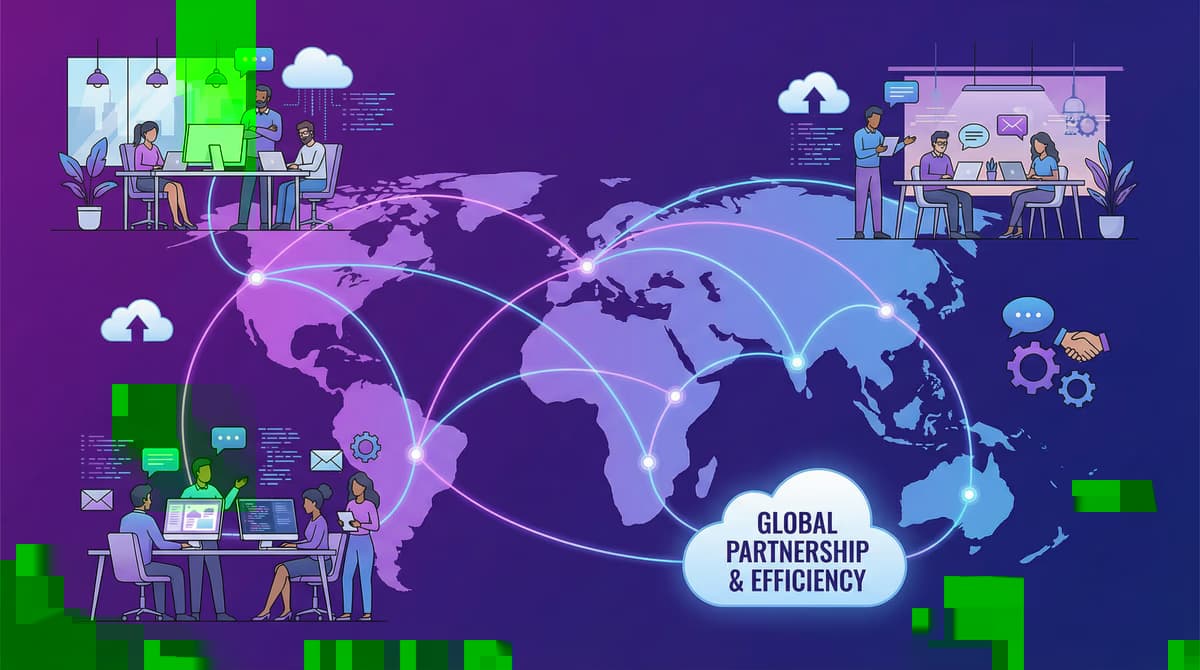
As of: 19 June 2026 · Reading time: 4 min
Key takeaways
- In today's globalized economy, the outsourcing of IT projects to offshore service providers has become a common practice for many companies.
- The promises are tempting...
In today's globalized economy, the outsourcing of IT projects to offshore service providers has become a common practice for many companies. The promises are tempting...
“Good software is not an accident—it comes from a structured development process with clear quality standards.”
– Björn Groenewold, Managing Director, Groenewold IT Solutions
Failed offshore projects can be rescued through systematic code analysis, stabilization of the most critical modules, building test coverage, and transition to a reliable development team.
The first step is an honest audit of the current codebase and architecture.
Save offshore projects: If it went wrong
Introduction: The horror of failed IT projects
Short: Executive answer: In today's globalized economy, the outsourcing of IT projects to offshore service providers has become a common practice for many companies.
Executive answer: In today's globalized economy, the outsourcing of IT projects to offshore service providers has become a common practice for many companies.
For Rescue offshore projects: If it went wrong, Cost Calculator: Software Rescue, Our Development Process sowie Software Rescue help you align implementation, scope and budget before you commit.
In today's globalized economy, the outsourcing of IT projects to offshore service providers has become a common practice for many companies.
The promises are tempting: cost savings, access to a larger talent pool and faster implementation. But reality often looks different.
A considerable number of offshore projects are slate, exceeds budgets and schedules or even fails completely.
This failure can have far-reaching consequences, from financial losses to sustainable damage to the reputation of the company.
But what are the reasons for this recurring problem and what can you do if your offshore project threatens to escape?
This article highlights the most common case knits and shows how you can bring a havared project back on track.
The most common reasons for the failure of offshore projects
Short: The decision for an offshore project is often made quickly, but the mosquitoes are in detail.
The decision for an offshore project is often made quickly, but the mosquitoes are in detail. Cooperation with teams in other parts of the world has specific challenges that are often underestimated.
To solve problems effectively, it is crucial to understand the roots of evil.
Communication problems
Short: The geographical and cultural distance is one of the largest hurdles.
The geographical and cultural distance is one of the largest hurdles.
Different time zones make spontaneous coordination difficult, while language barriers and cultural differences in the way of working can lead to misunderstandings.
Missing or inefficient communication almost inevitably leads to misdevelopments and delays. If teams do not speak regularly and openly, a vacuum is created in which assumptions and misinterpretations thrive.
Unclear requirements
Short: Another critical factor is the definition of project requirements.
Another critical factor is the definition of project requirements. If no clear, detailed objectives and specifications are defined at the beginning, the project is condemned to failure from the outset.
Vage formulated requirements allow too much space for interpretations and lead to the end product not meeting expectations.
This is a main reason why many are convinced: No offshore development without clear targets.
Lack of project management
Short: A successful project, whether offshore or not, stands and falls with professional project management.
A successful project, whether offshore or not, stands and falls with professional project management. Lack of control over progress, insufficient risk management and unrealistic schedules are poison for each project.
Without clear leadership and transparent processes, the participants quickly lose sight of the project, and the project is out of control.
Quality problems and hidden costs
Short: Hope for cost savings can quickly prove to be a fallacy if
Hope for cost savings can quickly prove to be a fallacy if
References and further reading
Short: The following independent references complement the topics in this article:
The following independent references complement the topics in this article:
- Bitkom – German digital industry association
- German Federal Office for Information Security (BSI)
- European Commission – Digital strategy
- MDN Web Docs (Mozilla)
- W3C – World Wide Web Consortium
Frequently Asked Questions (FAQ)
What is this article about: “Rescue offshore projects: If it went wrong”?
Here we cover Rescue offshore projects: If it went wrong — focused on architecture, process, and business outcomes.
In short: In today's globalized economy, the outsourcing of IT projects to offshore service providers has become a common practice for many companies. The promises are tempting...
Who benefits most from the content described here?
Typical readers are business and IT leaders in Software development who want to secure quality, security, and maintainability over the long term.
How does this topic fit into an IT or digital strategy?
In a digital strategy, prioritize stable core processes first, then extensions. See also professional software development and consulting. For multi-system landscapes, IT consulting and architecture helps align vendors and internal teams.
What are sensible next steps if we need support?
If you need support with design, delivery, or modernization: schedule an appointment or outline your project via contact.
About the author

Managing Director of Groenewold IT Solutions GmbH and Hyperspace GmbH
Since 2009 Björn Groenewold has been developing software solutions for the mid-market. He is Managing Director of Groenewold IT Solutions GmbH (founded 2012) and Hyperspace GmbH. As founder of Groenewold IT Solutions he has successfully supported more than 250 projects – from legacy modernisation to AI integration.
Blog recommendations
Related articles
These posts might also interest you.

Nearshore Trends 2026: New markets and developments in IT services
The global IT landscape is undergoing a steady change that forces companies to continuously adapt their business strategies to remain competitive. One of the central...
From Offshore to Nearshore: When a change makes sense
In today's globalised business world, outsourcing is a key factor for many companies to remain competitive. The outsourcing of software development projects can ...
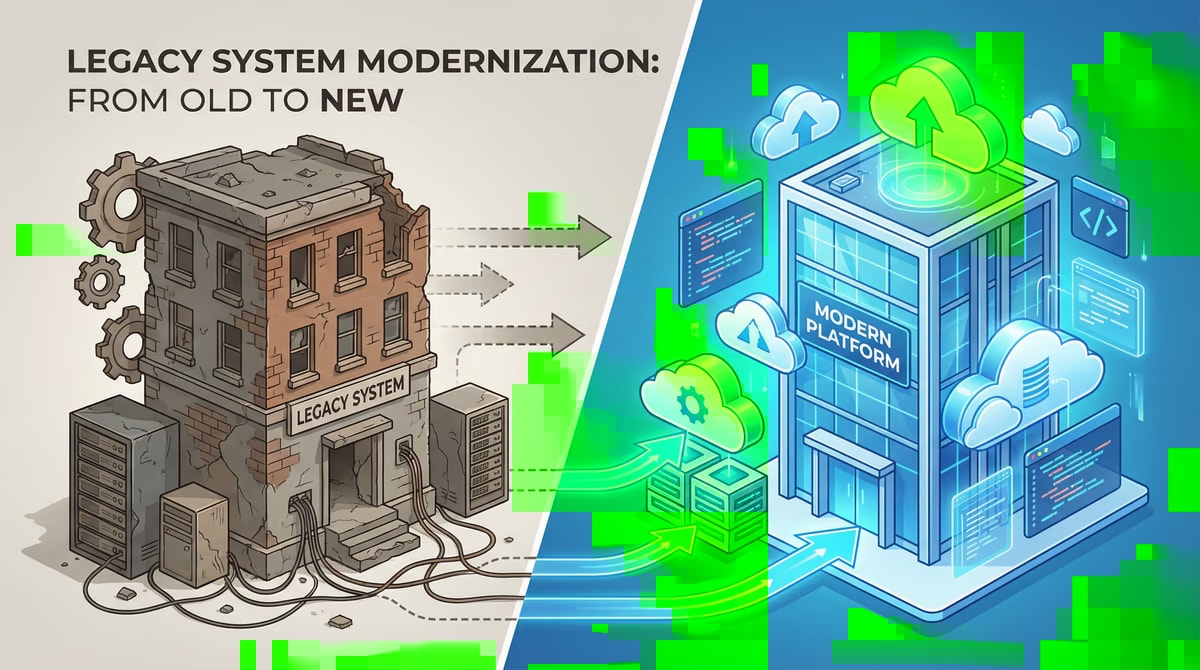
Software Migration: Planning, implementation and frequent errors
In today's fast-paced digital landscape, modernization of IT systems is essential for companies to remain competitive. A Software migration is often a...
Free download
Checklist: 10 questions before software development
Key points before you start: budget, timeline, and requirements.
Get the checklist in a consultationRelevant next steps
Related services & solutions
Based on this article's topic, these pages are often the most useful next steps.
Related services
Related solutions
Cost calculators
More on Software development and next steps
This article is in the Software development topic. In our blog overview you will find all articles; under category Software development more posts on this subject.
For topics like Software development we offer matching services – from app development and AI integration to legacy modernisation and maintenance. We describe typical use cases under solutions. Our cost calculators give initial estimates. Key terms are in the IT glossary. Books and long-form guides appear on the publications page; deeper articles live under topics.
If you have questions about this article or want a non-binding discussion about your project, you can book a consultation or reach us via contact. We usually respond within one working day.