
As of: 23 September 2026 · Reading time: 7 min
Key takeaways
- In today's digital world, the development of software is inseparably linked to the processing of personal data.
- Since the introduction of the General Data Protection Regulation (GDPR) in...
In today's digital world, the development of software is inseparably linked to the processing of personal data. Since the introduction of the General Data Protection Regulation (GDPR) in...
“Good software is not an accident—it comes from a structured development process with clear quality standards.”
– Björn Groenewold, Managing Director, Groenewold IT Solutions
The most important thing in the short term: A data protection impact assessment (DSFA) is according to Art. 35 GDPR mandatory if the processing of personal data involves a high risk, such as profiling, biometric data or large-scale monitoring.
The process includes risk assessment, action planning and documentation and should start at the design stage of a software project.
In today's digital world, the development of software is inseparably linked to the processing of personal data.
Since the introduction of the General Data Protection Regulation (GDPR) in 2018, companies are more than ever required to ensure the protection of these data.
A central tool that the GDPR provides for risk assessment is the privacy impact assessment (DSFA).
But what exactly hides behind it and when does it become relevant for a software project?
This article provides a complete overview and shows how a DSFA contributes to the development of DSGVO konformer Software.
What is a privacy impact assessment (DSFA)?
In today's digital world, the development of software is inseparably linked to the processing of personal data.
Leaders exploring Privacy Policy Assessment for Software Projects: A Guide to… can use Data Analytics & Business Intelligence, Cost Calculator: Software Development, Our Development Process sowie IT Security as structured entry points.
The Privacy Policy Assessment, in accordance with Article 35 of the GDPR, is a process for describing, evaluating and controlling the risks to the rights and freedoms of natural persons arising from the processing of their personal data.
It is a preventive measure which must be carried out before the start of a new or substantially changed data processing.
The aim is to find potential data protection risks at an early stage and to minimize them by appropriate measures.
A DSFA is so an essential component of the principle of “data protection through technology design and data protection-friendly defaults” (Privacy by Design and by Default).
When is a DSFA necessary for your software project?
The GDPR does not require a DSFA for any data processing.
The obligation to carry out is always proven if a form of processing, in specific when using new technologies, is likely to result in a high risk for the rights and freedoms of natural persons due to the nature, scope, circumstances and purposes.
The GDPR itself mentions some examples in which a DSFA must be carried out.
Rule Examples from the GDPR
Article 35(3) of the GDPR lists three cases in which a DSFA is obligatory:
- Systematic and complete assessment of personal aspects of natural persons, based on automated processing including profiling, which in turn serves as the basis for decisions, develop legal effects towards natural persons or impair them in a similar way.
- Current processing of special categories of personal data (e.g. health data, political opinions) or data on criminal convictions and criminal offences.
- Systematic broad monitoring of publicly accessible areas.
The criteria of supervisory authorities
In order to clarify the general clause of the "high risk", European data protection supervisory authorities have published a list of criteria.
If two or more of these criteria apply to a processing process in your software project, a DSFA is usually to be performed.
In case of doubt, a DSFA will always be introduced.
| Criterion | Description |
|---|---|
| Scoring/Profiling | Assessment or grouping of persons, including profiling. |
| Automated decisions | Decisions that follow legal effects for affected persons or significantly affect them. |
| Systematic monitoring | Monitoring, monitoring or control of affected persons. |
| Special data categories | Processing sensitive data such as health data or biometric data. |
| Large size | Processing of data to a large extent. |
| Data recovery | Combination or reconciliation of records. |
| Protective persons | Processing of data from persons in a weaker position (e.g. children, workers). |
| New technologies | Using new technologies or organizational solutions (e.g. AI, IoT). |
| Third country transfer | Data transmission to countries outside the EU/EEA. |
| Legal exercise change | Processing that prevents persons concerned from exercising their rights. |
Implementation of a DSFA in practice
Short: A DSFA is not a unique event, but an stepwise process.
A DSFA is not a unique event, but an stepwise process. It should be integrated as early as possible into the life cycle of a software project.
The GDPR does not provide a rigid method. However, the following four steps have proven themselves in practice.
The 4 central steps of a DSFA
Short: Systematic description: A detailed description of the planned processing operations, the purposes of processing, the actors involved and the systems used.Two.
Systematic description: A detailed description of the planned processing operations, the purposes of processing, the actors involved and the systems used.Two. Assessing the need and proportionality: Asssess whether the processing is needed and appropriate to achieve the purpose.
An review of potential risks to the rights and freedoms of the persons concerned (e.g. discrimination, identity theft, financial loss).
4. Planned remedial measures: The establishment of technical and organisational measures (TOMs) to address and minimize the identified risks.
The advantages of a proactive DSFA for the development of GDPR conformer Software
The rollout of a data protection impact assessment should not only be regarded as an annoying duty exercise. Rather, it offers considerable benefits.
It not only helps to avoid sensitive fines. However, also contributes significantly to the development of high-quality and trustworthy software.
A proactive DSFA shows that a company takes data protection seriously. This strengthens customer and user confidence.
Finally, the development of DSGVO konformer Software is a clear quality feature and a competitive advantage.
Conclusion: With Groenewold IT Solutions safe by DSFA
The Privacy Policy Assessment is an vital tool to ensure compliance with GDPR in software projects.
It enables a systematic discussion of data protection risks and helps to develop solid and DSGVO-compliant software from the outset.
However, the complexity of a DSFA requires deep legal and technical expertise.
Groenewold IT Solutions is your competent partner when it comes to developing customized and data protection-compliant software. We support you not only in the technical rollout.
However, also in the rollout of data protection impact assessments.
Our team of experts ensures that your software project is based on a solid data protection foundation from the outset.
Contact us to learn more about how we can make your next project safe and successful.
Find out our Individual software development and how we can support your company.
Next consultation appointment →
Frequently Asked Questions (FAQ)
What is this article about: “Privacy Policy Assessment for Software Projects: A Guide to GDPR-compliant Software”?
This article sums up practical aspects of Privacy Policy Assessment for Software Projects. A Guide to GDPR-compliant Software for leaders and delivery teams. In short.
In today's digital world, the development of software is inseparably linked to the processing of personal data. Since the introduction of the General Data Protection Regulation (GDPR) in...
Who benefits most from the content described here?
It is especially relevant for firms in software development that need reliable systems, clear interfaces, and predictable delivery — from mid-market teams to expert departments.
How does this topic fit into an IT or digital strategy?
You can map the topic to service building blocks such as custom software and delivery support. Architecture reviews and stepwise rollout reduce risk and rework.
For multi-system landscapes, IT consulting and architecture helps align vendors and internal teams.
What are sensible next steps if we need support?
For architecture, rollout, or a second expert opinion, book a free initial consultation — including timeline and interface alignment.
References and further reading
The following separate references complement the topics in this article:
About the author

Managing Director of Groenewold IT Solutions GmbH and Hyperspace GmbH
Since 2009 Björn Groenewold has been developing software solutions for the mid-market. He is Managing Director of Groenewold IT Solutions GmbH (founded 2010) and Hyperspace GmbH. As founder of Groenewold IT Solutions he has successfully supported more than 250 projects – from legacy modernisation to AI integration.
Blog recommendations
Related articles
These posts might also interest you.

Having Software Developed: Costs and a Realistic Price Overview (2026)
A clear guide to what drives custom software budgets, typical net price bands from MVP to ERP integration, in-house vs. agency – plus your next step to the software development cost calculator.

Implicites make explicit knowledge: techniques and tools for a successful knowledge transfer
In today's knowledge-based working environment, the effective knowledge transfer between employees is a decisive competitive advantage. Companies that create the valuable implicit...
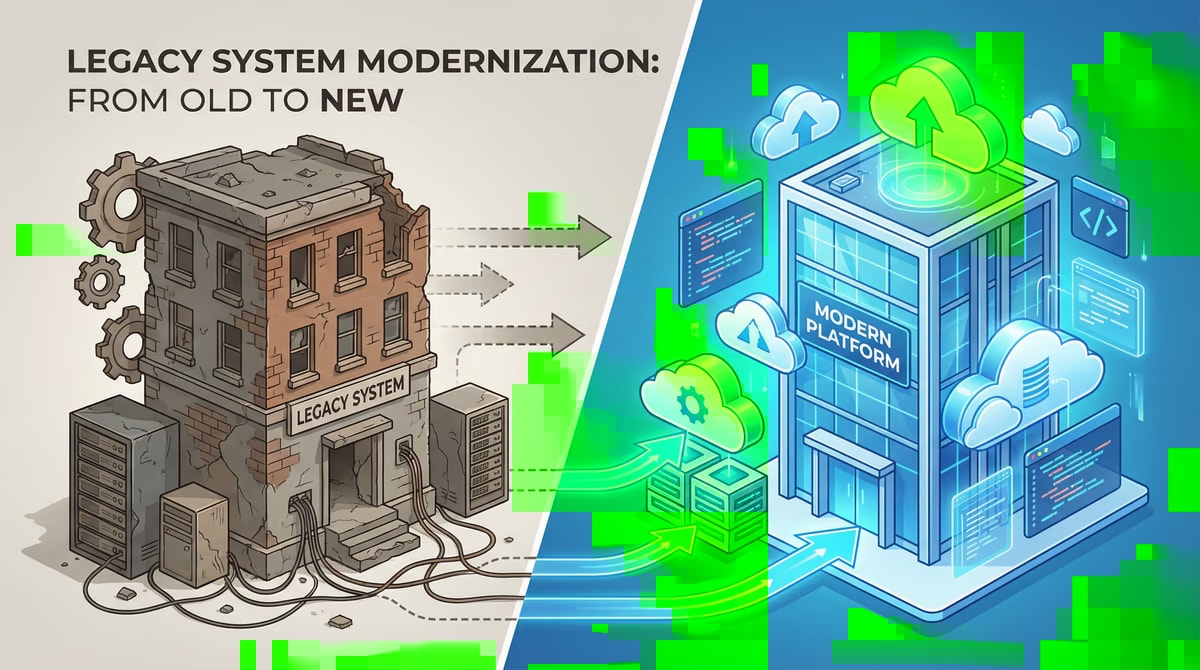
Altsystem migration: Avoid frequent errors
The digital transformation is in full swing and forces companies to continually modernise their IT infrastructure. A central component here is the Altsystem migration, so the...
Free download
Checklist: 10 questions before software development
Key points before you start: budget, timeline, and requirements.
Get the checklist in a consultationRelevant next steps
Related services & solutions
Based on this article's topic, these pages are often the most useful next steps.
Related solutions
Cost calculators
Practical next steps after Privacy Policy Assessment for Software Projects: A Guide to GDPR-compliant Software
Privacy Policy Assessment for Software Projects: A Guide to GDPR-compliant Software addresses a practical choice for product and IT teams. Start with one clear goal: align software scope, technical risk, and business value before the next investment.
Check the current process, the data involved, and the result users need. Then record the main risks and define a small first step. This keeps the decision easy to review and gives your team a shared basis.
For implementation support, our custom software development connects the article's guidance with architecture, delivery, and stable operations. Engineering and project ownership stay with our team in Leer, Germany.
This post belongs to Softwareentwicklung. Browse the related Softwareentwicklung articles or use the English software blog for other topics.
When budget is the next question, the software cost calculators provide planning ranges. The IT glossary explains key terms, while in-depth technology guides cover wider decisions.
If the topic affects a live project, book a technical consultation or send the context through our project contact form. We usually reply within one working day.