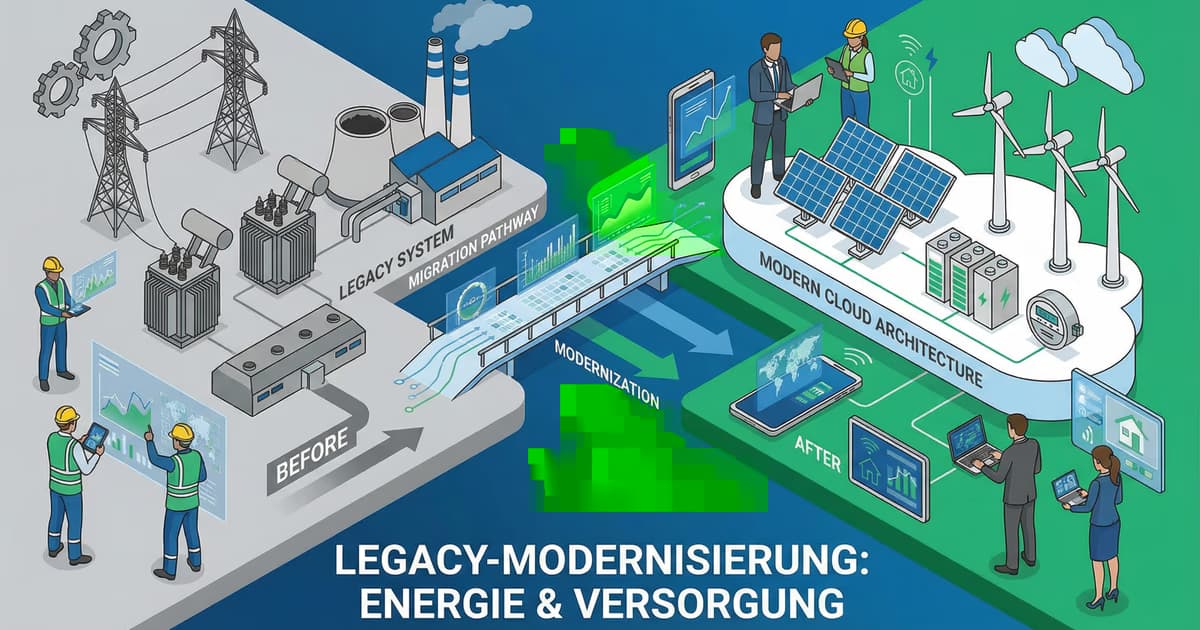
As of: 19 June 2026 · Reading time: 4 min
Key takeaways
- The logistics and transport industry is the backbone of the global economy.
- It ensures that goods arrive from A to B on time.
- In a world where speed, precision and transparency are crucial, **Information...
The logistics and transport industry is the backbone of the global economy. It ensures that goods arrive from A to B on time. In a world where speed, precision and transparency are crucial, **Information...
“Good software maintenance is like scheduled inspections—it prevents expensive outages before they happen.”
– Björn Groenewold, Managing Director, Groenewold IT Solutions
IT maintenance in logistics ensures the availability of transport management, warehouse management, and track-and-trace systems. Unplanned outages cost thousands of euros per hour through delivery delays.
Proactive monitoring, automated failover mechanisms, and planned maintenance windows minimize the risk.
The logistics and transport industry is the backbone of the global economy. It ensures that goods arrive from A to B on time.
In a world where speed, precision and transparency are crucial, Information Technology (IT) is no longer just a tool, but the central, invisible motor that drives the entire supply chain.
But this engine requires regular and professional maintenance. A failure of IT can quickly lead to massive delays, contractual penalties and irreparable reputation damage in logistics.
This article highlights why specialized IT maintenance and support for logistics companies is indispensable, what specific challenges the industry poses and how a proactive approach increases efficiency and secures competitiveness.
The specific IT challenges in logistics and transport
Short: Executive answer: The logistics and transport industry is the backbone of the global economy.
Executive answer: The logistics and transport industry is the backbone of the global economy.
Decision-makers exploring IT maintenance and support in logistics: The invisible motor for… can use AI & Machine Learning, Cost Calculator: AI Development, Solution: Logistics sowie Software Maintenance as structured entry points.
IT landscape in logistics is fundamentally different from other industries. It is characterized by high complexity, the need for real-time communication** and the integration of many, often heterogeneous systems.
H3: High system complexity and networking
Short: Logistics companies work with a variety of systems that must seamlessly interlock:
Logistics companies work with a variety of systems that must seamlessly interlock:
Transport Management Systems (TMS): For route planning, freight optimization and order management.
Warehouse Management Systems (WMS): To control and improve storage processes.
Telematic and GPS systems: For real-time ordering of vehicles and charges.
EDI (Electronic Data Interchange): For standardised data exchange with customers, suppliers and customs authorities.
An error in one of these systems can bring the entire chain to a standstill. Support therefore needs not only to control the individual components, but also their complex interaction.
H3: The compulsion to 24/7 availability
Short: Logistics never sleeps.
Logistics never sleeps. Transports take place around the clock, seven days a week. This requires IT support, which is also available 24/7 and is able to fix critical disturbances immediately.
A 3:00 a.m. server failure that blocks the handling of trucks is a worst-case scenario that can only be prevented or quickly solved by specialized emergency support.
H3: Mobile infrastructure and terminals
Short: The logistics staff often work on the move: truck drivers, warehouses with scanners and forklift terminals.
The logistics staff often work on the move: truck drivers, warehouses with scanners and forklift terminals.
The IT maintenance must therefore ensure solid solutions for mobile devices, wireless networks in large warehouses and safe data transmission over wide distances.
Advantages of a specialized IT maintenance and support partner
Short: The decision for an IT service provider who understands the logistics industry brings decisive advantages that go far beyond the pure error elimination.
The decision for an IT service provider who understands the logistics industry brings decisive advantages that go far beyond the pure error elimination.
H3: Proactive maintenance
References and further reading
Short: The following independent references complement the topics in this article:
The following independent references complement the topics in this article:
- Bitkom – German digital industry association
- German Federal Office for Information Security (BSI)
- European Commission – Digital strategy
- MDN Web Docs (Mozilla)
- W3C – World Wide Web Consortium
Frequently Asked Questions (FAQ)
What is this article about: “IT maintenance and support in logistics: The invisible motor for punctual supply chains”?
Here we cover IT maintenance and support in logistics: The invisible motor for punctual supply chains — focused on architecture, process, and business outcomes.
In short: The logistics and transport industry is the backbone of the global economy. It ensures that goods arrive from A to B on time.
In a world where speed, precision and transparency are crucial, **Information...
Who benefits most from the content described here?
Typical readers are business and IT leaders in Wartung & Support who want to secure quality, security, and maintainability over the long term.
How does this topic fit into an IT or digital strategy?
In a digital strategy, prioritize stable core processes first, then extensions. See also professional software development and consulting. For multi-system landscapes, IT consulting and architecture helps align vendors and internal teams.
What are sensible next steps if we need support?
If you need support with design, delivery, or modernization: schedule an appointment or outline your project via contact.
About the author

Managing Director of Groenewold IT Solutions GmbH and Hyperspace GmbH
Since 2009 Björn Groenewold has been developing software solutions for the mid-market. He is Managing Director of Groenewold IT Solutions GmbH (founded 2012) and Hyperspace GmbH. As founder of Groenewold IT Solutions he has successfully supported more than 250 projects – from legacy modernisation to AI integration.
Blog recommendations
Related articles
These posts might also interest you.
IT maintenance and support in healthcare: The backbone of patient care
Digitization has revolutionized healthcare. From electronic patient records (ePA) to imaging procedures to complex hospital information systems (KIS) – information technology is the **backbone of…
Maintenance & Support for Energy & Supply: Why 24/7 IT services are indispensable for critical infrastructures
The energy and supply industry is at the heart of a profound transformation. The energy transition, the decentralization of production and the introduction of intelligent networks (smart grids) have…
IT maintenance & support for crafts & services: your key to digital sovereignty
Digitization is no longer a vision of the future, but the living reality in every craft business and in every service company. From digital order management to mobile time recording on the…
Free download
Checklist: 10 questions before software development
Key points before you start: budget, timeline, and requirements.
Get the checklist in a consultationRelevant next steps
Related services & solutions
Based on this article's topic, these pages are often the most useful next steps.
Related services
Related solutions
More on Wartung & Support and next steps
This article is in the Wartung & Support topic. In our blog overview you will find all articles; under category Wartung & Support more posts on this subject.
For topics like Wartung & Support we offer matching services – from app development and AI integration to legacy modernisation and maintenance. We describe typical use cases under solutions. Our cost calculators give initial estimates. Key terms are in the IT glossary. Books and long-form guides appear on the publications page; deeper articles live under topics.
If you have questions about this article or want a non-binding discussion about your project, you can book a consultation or reach us via contact. We usually respond within one working day.