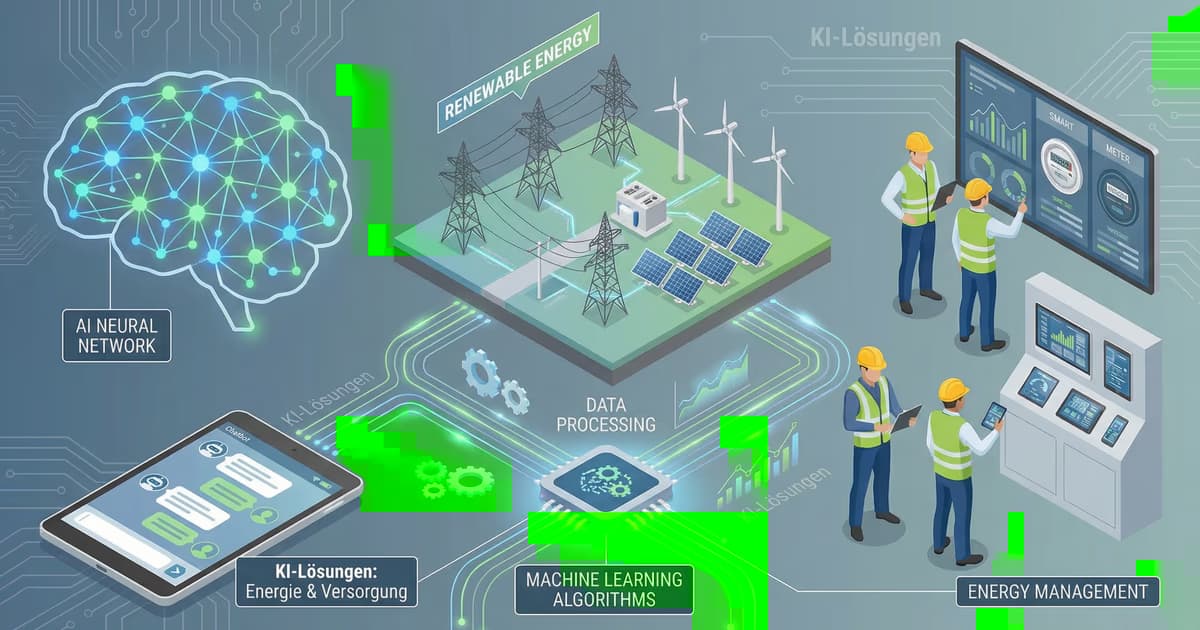
As of: 4 September 2026 · Reading time: 5 min
Key takeaways
- Digitization of public administration is no longer an option, but an urgent need.
- Citizens expect the same efficiency and the same digital service from their authorities and municipalities, which they have gained from the private sector...
Digitization of public administration is no longer an option, but an urgent need. Citizens expect the same efficiency and the same digital service from their authorities and municipalities, which they have gained from the private sector...
“An ERP system is only as good as its fit to your actual business processes.”
– Björn Groenewold, Managing Director, Groenewold IT Solutions
Odoo ERP & CRM for Public Administration: The Way to Integrated and Citizenship Digitization
Author: Björn Groenewold | Published: January 2026
"An ERP system is only as good as its fit to your actual business processes." — Björn Groenewold, Managing Director, Groenewold IT Solutions
The Digitalization Pressure on Public Administration
Digitization of public administration is no longer an option, but an urgent need.
When planning Odoo ERP & CRM for Public Administration. The Way to Integrated and… from idea to delivery, API & Integration Projects, Cost Calculator. API Development, [Solution.
Integration Chaos](/en/solutions/integration-chaos) sowie RPA vs. API Integration offer practical next steps on our site.
Germany's Online Access Act (OZG) requires administrative services to be available digitally. Citizens expect fast, transparent, and accessible digital processes.
Many authorities are failing to meet these goals — not because of a lack of effort, but because their IT systems are fragmented.
Data is scattered across redundant systems and Excel files. Processes that should take minutes take days because information must be manually transferred between tools.
Digitalization for public administration is no longer optional. It is a legal and operational requirement.
Four Concrete Problems in Administrative IT
Problem 1: Fragmented Island Solutions
Short: Many authorities operate separate software tools for each administrative function.
Many authorities operate separate software tools for each administrative function. One system for budget management, another for HR, another for procurement, and another for citizen requests.
These systems do not communicate.
Staff must enter the same data multiple times. Errors accumulate. Reporting requires manual compilation.
Problem 2: Data Redundancy and Inconsistency
Short: When the same citizen data exists in multiple systems, it becomes inconsistent over time.
When the same citizen data exists in multiple systems, it becomes inconsistent over time. Address changes made in one system are not reflected in others.
This creates errors in communications, delays in processing, and potential GDPR compliance issues.
Problem 3: Slow, Error-Prone Manual Processes
Short: Manual data transfers between systems are slow and error-prone.
Manual data transfers between systems are slow and error-prone. A citizen application that requires data from three different systems takes significantly longer to process than it should.
Staff time is consumed by administrative overhead rather than actual service delivery.
Problem 4: Poor Citizen Experience
Citizens compare digital government services to private sector digital experiences. Slow response times, opaque processes.
And the need to submit the same information multiple times create frustration and distrust.
How Odoo Addresses Administrative Requirements
Short: Odoo is a modular, open-source business suite.
Odoo is a modular, open-source business suite. It combines ERP and CRM features in a single platform. For public administration, the relevant features include:
- Central data management: All citizen and process data in one database, eliminating redundancy.
- Workflow automation: Application processing workflows are configured to reflect actual administrative procedures.
- Budget management: Budget planning, allocation, and tracking in one integrated tool.
- HR and payroll: Personnel management linked to budget and procurement.
- Procurement: Purchase requests, approvals, and supplier management with full audit trail.
- Citizen service management: Requests, status tracking, and communication history in one view.
- Reporting and clarity: Real-time dashboards for management reporting and regulatory documentation.
All modules share a single database. This ensures that data entered once is available across all functions without manual transfer.
Compliance and Audit Readiness
Short: Administration-specific workflows can be mapped in Odoo exactly as they exist in practice.
Administration-specific workflows can be mapped in Odoo exactly as they exist in practice. The central database ensures that all changes are logged with timestamps and user identifiers.
This creates an automatic audit trail that satisfies German public sector clarity and documentation needs.
GDPR compliance is supported through role-based access controls and recorded data retention policies.
Open Source as a Strategic Advantage
Short: Proprietary ERP systems create vendor dependency.
Proprietary ERP systems create vendor dependency. Licensing costs are high and increase over time. Odoo is open source. The source code is accessible and can be audited.
Customisations are owned by the authority, not by a vendor.
This reduces long-term IT costs and eliminates the risk of a single-vendor dependency for critical infrastructure.
Implementation Approach
An Odoo rollout for public administration follows a structured process:
- Process review: Current workflows are recorded and mapped to Odoo modules.
- Compliance configuration: Audit needs, GDPR settings, and approval workflows are built in from the start.
- Data migration: Existing data is cleaned, mapped, and migrated with validation.
- Staff training: All user groups receive role-specific training before go-live.
- Phased rollout: Departments go live in sequence, reducing risk and enabling learning between phases.
References and Further Reading
- Bitkom — German digital industry association.
- German Federal Office for Information Security (BSI).
- European Commission — Digital strategy.
About the Author: Björn Groenewold (Dipl.-Inf.) is Managing Director of Groenewold IT Solutions GmbH.
Since 2012, he has supported over 250 IT projects — including ERP implementations in public sector environments.
Frequently Asked Questions (FAQ)
What is this article about: “Odoo ERP & CRM for Public Administration: The Way to Integrated and Citizenship Digitiz…”?
This article sums up practical aspects of Odoo ERP &. CRM for Public Administration. The Way to Integrated and Citizenship Digitiz… for leaders and delivery teams.
In short: Digitization of public administration is no longer an option, but an urgent need.
Citizens expect the same efficiency and the same digital service from their authorities and municipalities. This they have gained from the private sector...
Who benefits most from the content described here?
It is especially relevant for firms in ERP & CRM that need reliable systems, clear interfaces, and predictable delivery — from mid-market teams to expert departments.
How does this topic fit into an IT or digital strategy?
You can map the topic to service building blocks such as custom software and delivery support. Architecture reviews and stepwise rollout reduce risk and rework.
For multi-system landscapes, IT consulting and architecture helps align vendors and internal teams.
What are sensible next steps if we need support?
For architecture, rollout, or a second expert opinion, book a free initial consultation — including timeline and interface alignment.
The following separate references complement the topics in this article:
About the author

Managing Director of Groenewold IT Solutions GmbH and Hyperspace GmbH
Since 2009 Björn Groenewold has been developing software solutions for the mid-market. He is Managing Director of Groenewold IT Solutions GmbH (founded 2010) and Hyperspace GmbH. As founder of Groenewold IT Solutions he has successfully supported more than 250 projects – from legacy modernisation to AI integration.
Blog recommendations
Related articles
These posts might also interest you.

Hosting and operation of web applications
Hosting and operation of web applications: What companies should pay attention to in terms of security, scaling, GDPR, support and responsibility in everyday life.
Mobile Applications for Logistics Processes: The Practice Guide
Mobile applications for logistics processes optimize storage, transport and supply chain. Advantages, features and selection at a glance – now discover.
Create mobile app for companies
Create mobile app for companies: How to plan goals, functions, interfaces, GDPR and operation for measurable results.
Free download
Checklist: 10 questions before software development
Key points before you start: budget, timeline, and requirements.
Get the checklist in a consultationRelevant next steps
Related services & solutions
Based on this article's topic, these pages are often the most useful next steps.
Related services
Related solutions
Related comparison
Cost calculators
Related industries
Practical next steps after Odoo ERP & CRM for Public Administration: The Way to Integrated and Citizenship Digitization
Odoo ERP & CRM for Public Administration: The Way to Integrated and Citizenship Digitization addresses a practical choice for public-sector teams. Start with one clear goal: select and adapt an ERP setup around real workflows instead of generic feature lists.
Check the current process, the data involved, and the result users need. Then record the main risks and define a small first step. This keeps the decision easy to review and gives your team a shared basis.
For implementation support, our Odoo ERP consulting and development connects the article's guidance with architecture, delivery, and stable operations. Engineering and project ownership stay with our team in Leer, Germany.
This post belongs to ERP & CRM. Browse the related ERP & CRM articles or use the English software blog for other topics.
When budget is the next question, the software cost calculators provide planning ranges. The IT glossary explains key terms, while in-depth technology guides cover wider decisions.
If the topic affects a live project, book a technical consultation or send the context through our project contact form. We usually reply within one working day.