As of: 23 September 2026 · Reading time: 4 min
Key takeaways
- The modernisation of outdated IT systems, also called old systems or legacy systems, is an inevitable necessity for many companies.
- Outdated technologies not only slow down the Inn...
The modernisation of outdated IT systems, also called old systems or legacy systems, is an inevitable necessity for many companies. Outdated technologies not only slow down the Inn...
“Good software is not an accident—it comes from a structured development process with clear quality standards.”
– Björn Groenewold, Managing Director, Groenewold IT Solutions
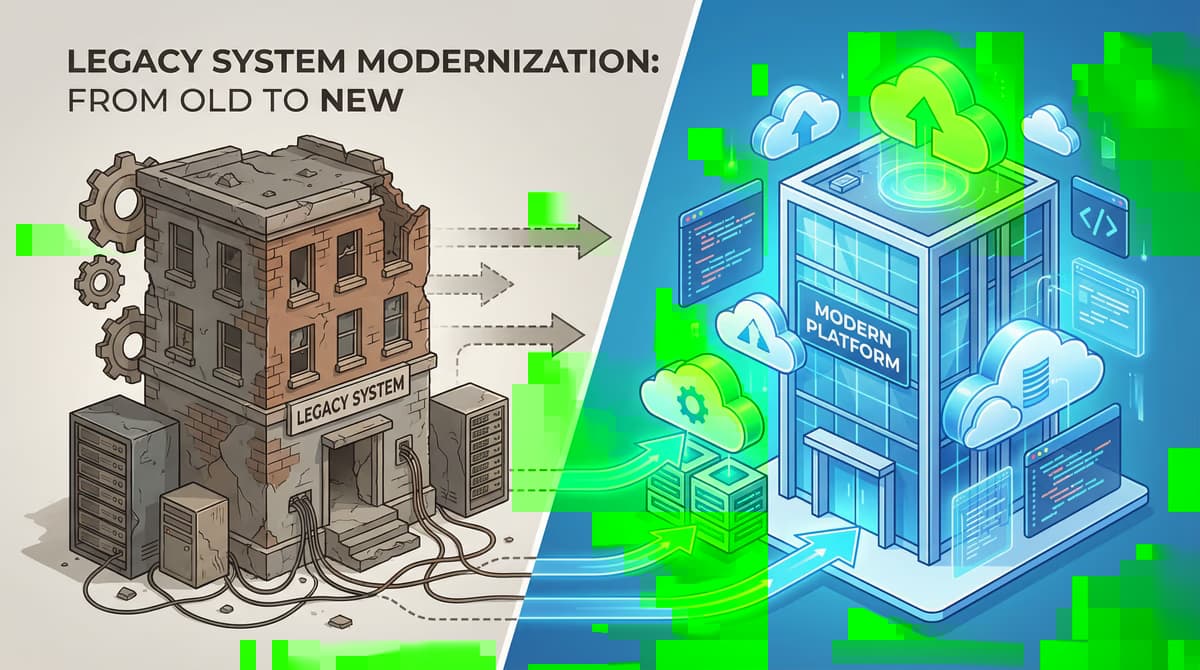
The modernisation of outdated IT systems, also called old systems or legacy systems, is an inevitable need for many companies. Outdated technologies not only slow innovation.
However, also cause high maintenance costs and provide considerable safety risks.
A central and often underestimated aspect in the Altsystem migration is the transfer of existing data into the new system. Successful data migration.
This ensures high data quality, is the key to a smooth transition and the company's sustainability.
The challenges of the old system migration
The modernisation of outdated IT systems, also called old systems or legacy systems, is an inevitable need for many companies.
When planning Altsystem migration: successfully master data migration and data quality from idea to delivery, Legacy Modernisation, Cost Calculator: Legacy Modernisation, Solution: Legacy Reduction sowie Monolith vs. Microservices offer practical next steps on our site.
The migration of old systems is a complex undertaking that goes far beyond the pure technical change.
The biggest hurdles are often in detail and require careful planning and rollout.
Complexity and missing documentation
Short: Old systems have often grown organic for years or even decades.
Old systems have often grown organic for years or even decades. The original developers are often no longer lacking in the company and complete documentation.
This makes it difficult to understand system architecture, data structures and business logic. This significantly impedes the planning of migration.
Data migration as a critical success factor
The transfer of data from the old system to the new environment is one of the most difficult steps in the entire migration process.
Errors in this phase can lead to data loss, inconsistencies and ultimately to impairment of business processes.
The quality of the migrated data is crucial for the acceptance and benefit of the new system.
Ensuring data quality
Short: The data in old systems are often of poor quality.
The data in old systems are often of poor quality. Dublet, outdated information, inconsistent formats and missing values are not rare.
A pure 1:1 transmission of data would drag these problems into the new system and impair its performance from the start.
So, complete data purification and validation before and during migration is essential.
Best Practices for Successful Data Migration
A structured approach and adherence to proven methods are crucial to mastering the challenges of data migration and ensuring high data quality.
| Phase | Activities | Objective |
|---|---|---|
| 1. Review and planning | - Identification of data to be migrated review of data structures and quality - Definition of migration strategy and schedule |
- Complete understanding of the initial situation - Realistic planning of migration process |
| 2. Data purification | - Identification and correction of errors - Dedupplication of datasets - Enrichment and standardization of data |
- Improvement of data quality before migration |
| 3. M |
References and further reading
The following separate references complement the topics in this article:
- Bitkom – German digital industry association.
- German Federal Office for Information Security (BSI).
- European Commission – Digital strategy.
- MDN Web Docs (Mozilla)
- W3C – World Wide Web Consortium.
"APIs are the backbone of modern systems; stabilise contracts early or pay twice in integration work later."
— Björn Groenewold, Managing Director, Groenewold IT Solutions
Frequently Asked Questions (FAQ)
What is this article about: “Altsystem migration: successfully master data migration and data quality”?
This post explores Altsystem migration. Successfully master data migration and data quality from the perspective of needs, typical pitfalls. And sensible next steps. In short.
The modernisation of outdated IT systems, also called old systems or legacy systems, is an inevitable need for many companies.
Who benefits most from the content described here?
Useful for project leads and product owners in Software development who must choose between standard software, custom development, and integration.
How does this topic fit into an IT or digital strategy?
Technically and organizationally, alignment with experienced partners pays off — from requirements to operations; start with the [services overview](/en/services/software-development). For multi-system landscapes, [IT consulting and architecture](/en/services/it-consulting) helps align vendors and internal teams.
What are sensible next steps if we need support?
A practical next step: book a consultation and clarify which MVP or pilot fits your team and landscape.
About the author

Managing Director of Groenewold IT Solutions GmbH and Hyperspace GmbH
Since 2009 Björn Groenewold has been developing software solutions for the mid-market. He is Managing Director of Groenewold IT Solutions GmbH (founded 2010) and Hyperspace GmbH. As founder of Groenewold IT Solutions he has successfully supported more than 250 projects – from legacy modernisation to AI integration.
Blog recommendations
Related articles
These posts might also interest you.

Software Depreciation: Understanding and Using AfA Rules for Companies
In today's digitalized business world, software solutions are the backbone of thousands of German companies. From accounting to customer management to production control – oh...

KfW-Kredite for Digitization Projects: Your Way to Modern Software Solution
In today's digital landscape, modernization of business processes is no longer a luxury, but a necessity. However, many small and medium-sized enterprises (SMEs) are facing the...

Avoid Vendor Lock-in: Flexibility in Outsourcing
In today's digital landscape, companies are faced with a fundamental decision in software development: are they relying on Inhouse vs Outsourcing Software Development? While...
Free download
Checklist: 10 questions before software development
Key points before you start: budget, timeline, and requirements.
Get the checklist in a consultationRelevant next steps
Related services & solutions
Based on this article's topic, these pages are often the most useful next steps.
Related services
Related solutions
Related comparison
Cost calculators
Practical next steps after Altsystem migration: successfully master data migration and data quality
Altsystem migration: successfully master data migration and data quality addresses a practical choice for product and IT teams. Start with one clear goal: reduce legacy risk in controlled steps while daily work and key data remain available.
Check the current process, the data involved, and the result users need. Then record the main risks and define a small first step. This keeps the decision easy to review and gives your team a shared basis.
For implementation support, our legacy software modernization connects the article's guidance with architecture, delivery, and stable operations. Engineering and project ownership stay with our team in Leer, Germany.
This post belongs to Software development. Browse the related Software development articles or use the English software blog for other topics.
When budget is the next question, the software cost calculators provide planning ranges. The IT glossary explains key terms, while in-depth technology guides cover wider decisions.
If the topic affects a live project, book a technical consultation or send the context through our project contact form. We usually reply within one working day.