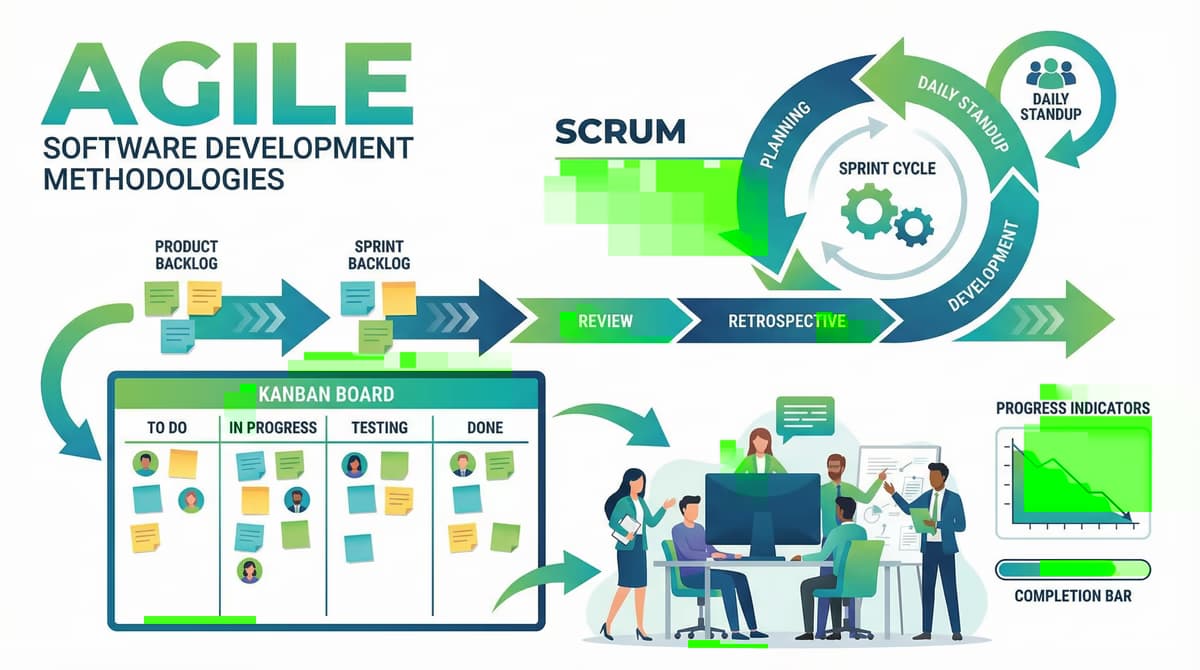
As of: 19 June 2026 · Reading time: 4 min
Key takeaways
- In the fast-paced world of agile software development, the pressure to quickly deliver results is ubiquitous.
- Teams work in short cycles to add new features and functionalities to imp...
In the fast-paced world of agile software development, the pressure to quickly deliver results is ubiquitous. Teams work in short cycles to add new features and functionalities to imp...
“Good software is not an accident—it comes from a structured development process with clear quality standards.”
– Björn Groenewold, Managing Director, Groenewold IT Solutions
In the fast-paced world of agile software development, the pressure to quickly deliver results is ubiquitous. Teams work in short cycles to implement new features and functionalities. But in this striving for speed, a costly problem can arise quietly and often unnoticed: technical debt. Similar to financial debt, they can offer short-term benefits, but in the long term lead to significant interest rates in the form of slower development, increased susceptibility to errors and frustrated teams. This article highlights what technical debts are, why they are a challenge in agile projects and how to manage them effectively.
What are technical debts and how do they arise?
Short: Executive answer: In the fast-paced world of agile software development, the pressure to quickly deliver results is ubiquitous.
Executive answer: In the fast-paced world of agile software development, the pressure to quickly deliver results is ubiquitous.
Decision-makers exploring Managing technical debt in agile projects: A guide for sustainable… can use AI & Machine Learning, Cost Calculator: AI Development, Solution: Legacy Reduction sowie Legacy Modernisation as structured entry points.
The term "technical debt" describes the implicit costs arising from the decision for a fast but not best technical solution, instead of choosing a better but more time-consuming method.
It is the difference between what has been done and what should have been done.
Typical causes in agile teams
Short: Technical debts are not a sign of bad work, but often a compromise that will be made consciously or unconsciously.
Technical debts are not a sign of bad work, but often a compromise that will be made consciously or unconsciously. The most common causes are:
- High pressure: In order to comply with deadlines, abbreviations are often taken.
- ** Changing requirements:** Agile projects live with flexibility. Sometimes a solution is built for a request that changes later, making the original code cumbersome or outdated.
- Dangerous Consciousness: If the team does not understand the long-term consequences of short-term decisions, debt can accumulate uncontrolledly.
- Focus on new features: Stakeholder and Product Owner often prioritize visible new features compared to "invisible" improvements of the code base.
- Inexperience: New team members may not know the established best practices or system architecture, which may lead to suboptimal code.
The silent costs: Why not ignore technical debt
Short: The effects of technical debt are hardly noticeable at the beginning, but grow exponentially with time.
The effects of technical debt are hardly noticeable at the beginning, but grow exponentially with time. They manifest themselves in different forms:
- Slower development: Any new function or change requires more effort, as developers have to fight through complex and poorly structured code. *** Increased error susceptibility:** Provisional solutions are often susceptible to errors and difficult to test, which leads to an increase in bugs.
- Sinking Team-Moral: Always fighting against a fragile code base is frustrating and demotivating for developers.
- Slower innovative strength: If a large part of the
References and further reading
Short: The following independent references complement the topics in this article:
The following independent references complement the topics in this article:
- Bitkom – German digital industry association
- German Federal Office for Information Security (BSI)
- European Commission – Digital strategy
- MDN Web Docs (Mozilla)
- W3C – World Wide Web Consortium
"Mobile apps need clear offline and security models alongside UX—trust collapses without both."
— Björn Groenewold, Managing Director, Groenewold IT Solutions
Frequently Asked Questions (FAQ)
What is this article about: “Managing technical debt in agile projects: A guide for sustainable success”?
Here we cover Managing technical debt in agile projects: A guide for sustainable success — focused on architecture, process, and business outcomes.
In short: In the fast-paced world of agile software development, the pressure to quickly deliver results is ubiquitous. Teams work in short cycles to add new features and functionalities to imp...
Who benefits most from the content described here?
Typical readers are business and IT leaders in Software development who want to secure quality, security, and maintainability over the long term.
How does this topic fit into an IT or digital strategy?
In a digital strategy, prioritize stable core processes first, then extensions. See also professional software development and consulting. For multi-system landscapes, IT consulting and architecture helps align vendors and internal teams.
What are sensible next steps if we need support?
If you need support with design, delivery, or modernization: schedule an appointment or outline your project via contact.
About the author

Managing Director of Groenewold IT Solutions GmbH and Hyperspace GmbH
Since 2009 Björn Groenewold has been developing software solutions for the mid-market. He is Managing Director of Groenewold IT Solutions GmbH (founded 2012) and Hyperspace GmbH. As founder of Groenewold IT Solutions he has successfully supported more than 250 projects – from legacy modernisation to AI integration.
Blog recommendations
Related articles
These posts might also interest you.

Why data silos pose a serious problem
> # Resolve data silos: Change management don't forget > > In today's data-driven business world, information is the life elixir of each company. But too often are the...
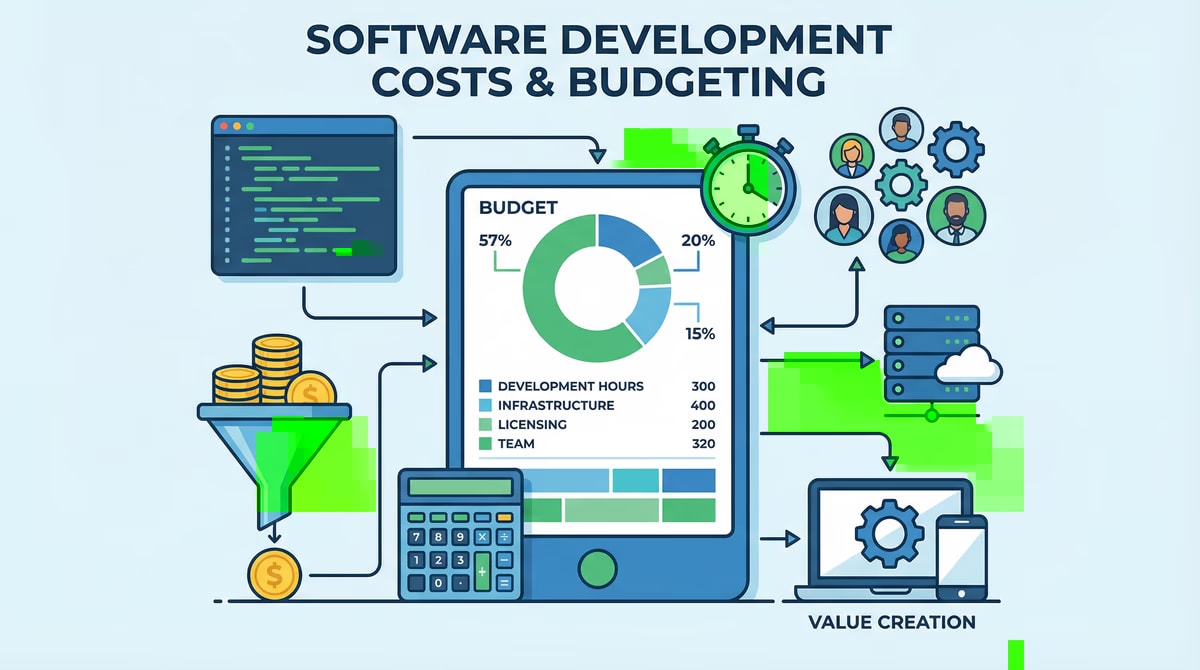
Altsystem Migration: A Guide to Costs and Budgeting
In today's fast-paced digital landscape, outdated IT systems, often referred to as old systems, are a considerable burden for companies. They're not just expensive in maintenance, sonde...
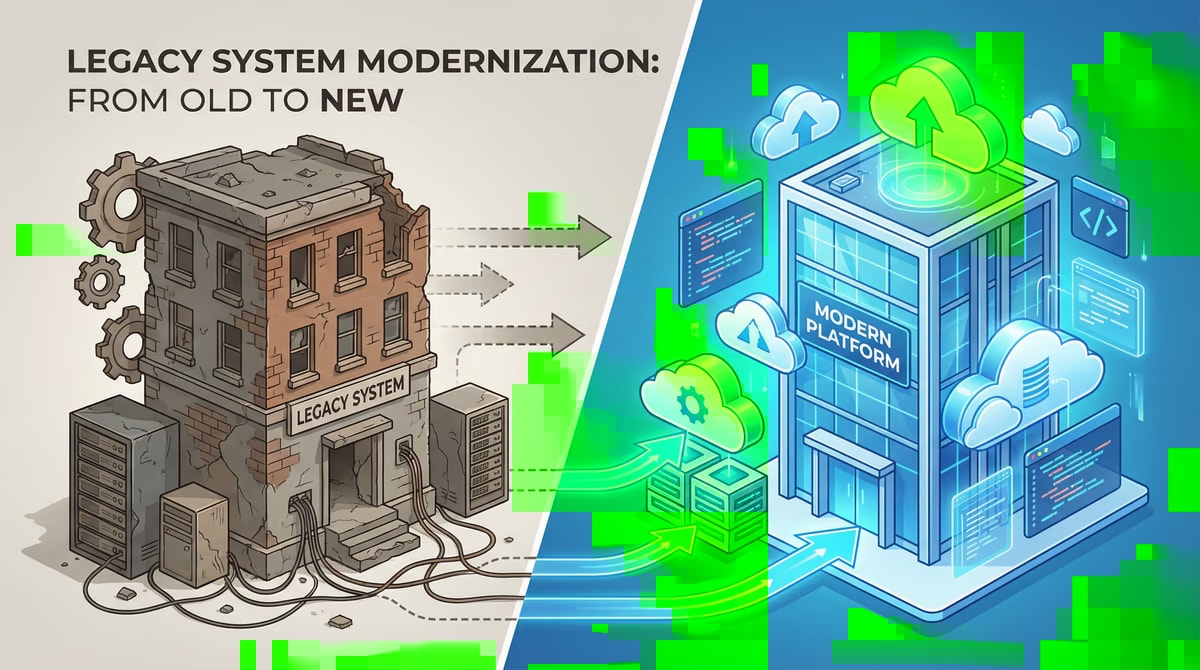
Altsystem migration: The smooth transfer of knowledge
The Altsystem migration is an unavoidable but also a great challenge for many companies. Outdated systems, often referred to as legacy systems, brake the innovative power,...
Free download
Checklist: 10 questions before software development
Key points before you start: budget, timeline, and requirements.
Get the checklist in a consultationRelevant next steps
Related services & solutions
Based on this article's topic, these pages are often the most useful next steps.
Related services
Related solutions
Cost calculators
More on Software development and next steps
This article is in the Software development topic. In our blog overview you will find all articles; under category Software development more posts on this subject.
For topics like Software development we offer matching services – from app development and AI integration to legacy modernisation and maintenance. We describe typical use cases under solutions. Our cost calculators give initial estimates. Key terms are in the IT glossary. Books and long-form guides appear on the publications page; deeper articles live under topics.
If you have questions about this article or want a non-binding discussion about your project, you can book a consultation or reach us via contact. We usually respond within one working day.