As of: 3 September 2026 · Reading time: 4 min
Key takeaways
- In today's fast-paced digital world, companies increasingly rely on agile development methods to remain competitive.
- At the same time, the decision for the right sourcin...
In today's fast-paced digital world, companies increasingly rely on agile development methods to remain competitive. At the same time, the decision for the right sourcin...
“Good software is not an accident—it comes from a structured development process with clear quality standards.”
– Björn Groenewold, Managing Director, Groenewold IT Solutions
In today's fast-paced digital world, companies more often rely on agile development methods to remain competitive.
At the same time, the decision for the right sourcing model – onshore, nearshore or offshore – is crucial for project success.
While offshore solutions often attract cost savings, it is becoming clear that Onshore development, i.e. teamwork with a partner in one's own country, offers considerable benefits, especially for agile projects.
This article highlights why geographical proximity and cultural convergence can make the decisive difference and why the initially higher costs are a rewarding investment in quality and efficiency.
The most important findings shortly
In today's fast-paced digital world, companies more often rely on agile development methods to remain competitive.
For Onshore development: A profit for agile projects, Our Development Process outlines how we support rollout and delivery.
- Communication: Same time zone and language prevent misunderstandings. *High quality: compliance with local standards and laws.
- More control: Direct teamwork and quick adjustments.
- Cultural proximity: Equal working understanding and mentality.
- Required risks: Legal security and data protection according to local laws.
The strengths of onshore development in agile projects
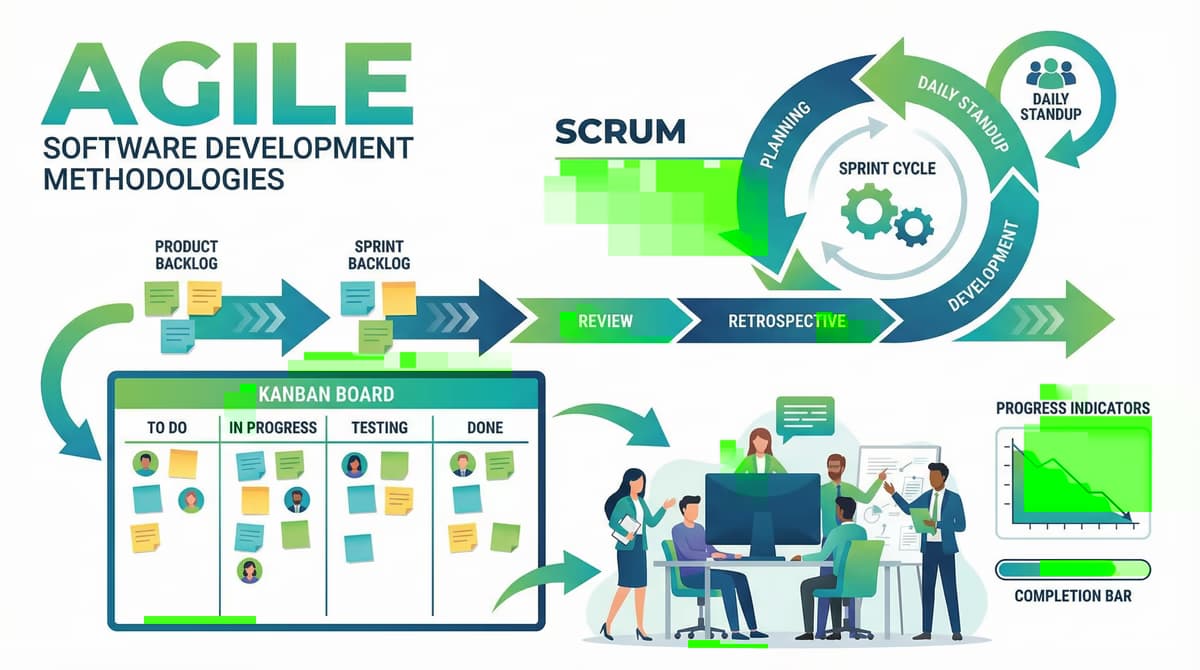
Agile methods like Scrum or Kanban live from fast communication, close teamwork and short feedback loops. Right here, onshore development plays its strengths.
Teamwork with a team in the same time zone and in the same culture space minimizes friction losses and promotes smooth, efficient planning.
Improved communication and cooperation
Short: One of the biggest benefits of onshore development is improved communication .
One of the biggest benefits of onshore development is improved communication. Teams can interact in real time, which accelerates decision making and reduces misunderstandings.
Personal meetings are easy to organize and allow a direct, personal exchange that is essential for building trust and a common vision.
Especially in agile projects where needs can quickly change, this direct communication is worth gold.
This ensures that the development team is always at the same level as the customer and can respond quickly to new needs.
Cultural proximity also plays a decisive role.
A common understanding of working morals, punctuality and approaches to problem solutions makes teamwork extremely easier and prevents frustrations that can arise through different cultural practices.
One avoids the typical fall knits that can bring a no offshore development.
Higher quality and robust quality assurance
Onshore teams are subject to the same high quality standards and legal framework as the contracting company. This leads to a higher P
On the numbers: Survey and market figures without an inline footnote follow common public reports (e.g. Bitkom) and official statistics (Destatis). Practical examples: Groenewold IT internal data, 2026.
References and further reading
The following separate references complement the topics in this article:
- Bitkom – German digital industry association.
- German Federal Office for Information Security (BSI).
- European Commission – Digital strategy.
- MDN Web Docs (Mozilla)
- W3C – World Wide Web Consortium.
"APIs are the backbone of modern systems; stabilise contracts early or pay twice in integration work later."
— Björn Groenewold, Managing Director, Groenewold IT Solutions
Frequently Asked Questions (FAQ)
What is this article about: “Onshore development: A profit for agile projects”?
Here we cover Onshore development. A profit for agile projects — focused on architecture, process, and business outcomes. In short.
In today's fast-paced digital world, companies more often rely on agile development methods to remain competitive. At the same time, the decision for the right sourcin...
Who benefits most from the content described here?
Typical readers are business and IT leaders in Software development who want to secure quality, security, and ease of upkeep over the long term.
How does this topic fit into an IT or digital strategy?
In a digital strategy, prioritize stable core processes first, then extensions. See also professional software development and consulting.
For multi-system landscapes, IT consulting and architecture helps align vendors and internal teams.
What are sensible next steps if we need support?
If you need support with design, delivery, or modernization: schedule an appointment or outline your project via contact.
About the author

Managing Director of Groenewold IT Solutions GmbH and Hyperspace GmbH
Since 2009 Björn Groenewold has been developing software solutions for the mid-market. He is Managing Director of Groenewold IT Solutions GmbH (founded 2010) and Hyperspace GmbH. As founder of Groenewold IT Solutions he has successfully supported more than 250 projects – from legacy modernisation to AI integration.
Blog recommendations
Related articles
These posts might also interest you.

Quality assurance in offshore projects: How to ensure the success of your software development
In today's globalised business world, the outsourcing of software development projects to external service providers, known as offshoring, is a strategic emergency for many companies...

Data integration: Strategies against data silos
In today's data-driven business world, information is the life elixir of each company. But too often these valuable data are trapped in isolated systems, so-called...

Digitalise knowledge transfer: tools and platforms for modern workplaces
In today's fast-paced business world, the effective knowledge transfer between employees is a key factor in the company's success. Companies that make it, the Wiss...
Free download
Checklist: 10 questions before software development
Key points before you start: budget, timeline, and requirements.
Get the checklist in a consultationRelevant next steps
Related services & solutions
Based on this article's topic, these pages are often the most useful next steps.
Related services
Related solutions
Practical next steps after Onshore development: A profit for agile projects
Onshore development: A profit for agile projects addresses a practical choice for product and IT teams. Start with one clear goal: align software scope, technical risk, and business value before the next investment.
Check the current process, the data involved, and the result users need. Then record the main risks and define a small first step. This keeps the decision easy to review and gives your team a shared basis.
For implementation support, our custom software development connects the article's guidance with architecture, delivery, and stable operations. Engineering and project ownership stay with our team in Leer, Germany.
This post belongs to Software development. Browse the related Software development articles or use the English software blog for other topics.
When budget is the next question, the software cost calculators provide planning ranges. The IT glossary explains key terms, while in-depth technology guides cover wider decisions.
If the topic affects a live project, book a technical consultation or send the context through our project contact form. We usually reply within one working day.