As of: 19 June 2026 · Reading time: 4 min
Key takeaways
- In today's digital landscape, the agility and scalability of business applications is crucial for success.
- More and more companies recognize the advantages that shift their...
In today's digital landscape, the agility and scalability of business applications is crucial for success. More and more companies recognize the advantages that shift their...
“Good software is not an accident—it comes from a structured development process with clear quality standards.”
– Björn Groenewold, Managing Director, Groenewold IT Solutions
In today's digital landscape, the agility and scalability of business applications is crucial for success. More and more companies recognize the advantages that bring their software and IT infrastructure to the cloud.
But what exactly does a Software migration mean in the cloud and what steps are necessary for successful implementation?
This article highlights the key aspects of cloud migration and shows how companies can benefit from it.
What is a cloud migration?
Short: Executive answer: In today's digital landscape, the agility and scalability of business applications is crucial for success.
Executive answer: In today's digital landscape, the agility and scalability of business applications is crucial for success.
Decision-makers exploring Cloud Migration: Move Software to Cloud can use Legacy Modernisation, Cost Calculator: Legacy Modernisation, Solution: Legacy Reduction sowie Monolith vs. Microservices as structured entry points.
Cloud migration means the process in which digital assets of a company – such as data, applications and IT resources – are moved from a local data center (on-premise) to a cloud environment.
This step allows companies to benefit from the flexibility, scalability and cost efficiency of the cloud.
The driving forces behind the cloud migration
Short: The decision for a cloud migration is often driven by a combination of business and technological requirements.
The decision for a cloud migration is often driven by a combination of business and technological requirements. The most common motives include:
- ** Cost savings:** Due to the elimination of investments in expensive hardware and their maintenance, operating costs can be significantly reduced.
- Scalability and flexibility: Cloud resources can be quickly and easily adjusted as needed, allowing a flexible response to market requirements.
- Improved collaboration: Cloud-based applications promote team collaboration across different locations.
- Increased security: Leading cloud providers invest massively in security measures that often go beyond the possibilities of individual companies.
- Automatic updates: Software updates and security patches are usually automatically played by the provider, which reduces internal IT requirements.
Strategies for successful software migration
Short: Careful planning is the key to a successful Software migration.
Careful planning is the key to a successful Software migration. There are different strategies that are used according to the specific requirements and objectives of a company.
The most famous are the "7 Rs of cloud migration":
| Strategy | Description |
|---|---|
| ** Rehost | Also known as "Lift and Shift". Applications are moved to the cloud without changes. |
| ** Relocate | Similar to Rehost, but for larger environments like VMware clusters. |
| ** Replatform | Applications are migrated into the cloud with slight adjustments to benefit from cloud functions. |
| ** Refactor | Applications are fundamentally reworked or rewritten to optimally use the cloud-native architecture. |
| ** Repurchase Change from an existing application to a new, cloud-based solution (SaaS). | |
| ** Retire |
Method note: External statistics refer to published industry and official data (Bitkom, Destatis) where not otherwise attributed. Company-specific figures: Groenewold IT, 2026.
References and further reading
Short: The following independent references complement the topics in this article:
The following independent references complement the topics in this article:
- Bitkom – German digital industry association
- German Federal Office for Information Security (BSI)
- European Commission – Digital strategy
- MDN Web Docs (Mozilla)
- W3C – World Wide Web Consortium
"Cloud-native only pays off when operations, security, and cost model match the architecture—otherwise you ship complexity faster."
— Björn Groenewold, Managing Director, Groenewold IT Solutions
Frequently Asked Questions (FAQ)
What is this article about: “Cloud Migration: Move Software to Cloud”?
Here we cover Cloud Migration: Move Software to Cloud — focused on architecture, process, and business outcomes.
In short: In today's digital landscape, the agility and scalability of business applications is crucial for success. More and more companies recognize the advantages that shift their...
Who benefits most from the content described here?
Typical readers are business and IT leaders in Software development who want to secure quality, security, and maintainability over the long term.
How does this topic fit into an IT or digital strategy?
In a digital strategy, prioritize stable core processes first, then extensions. See also professional software development and consulting. For multi-system landscapes, IT consulting and architecture helps align vendors and internal teams.
What are sensible next steps if we need support?
If you need support with design, delivery, or modernization: schedule an appointment or outline your project via contact.
About the author

Managing Director of Groenewold IT Solutions GmbH and Hyperspace GmbH
Since 2009 Björn Groenewold has been developing software solutions for the mid-market. He is Managing Director of Groenewold IT Solutions GmbH (founded 2012) and Hyperspace GmbH. As founder of Groenewold IT Solutions he has successfully supported more than 250 projects – from legacy modernisation to AI integration.
Blog recommendations
Related articles
These posts might also interest you.

Why data silos pose a serious problem
> # Resolve data silos: Change management don't forget > > In today's data-driven business world, information is the life elixir of each company. But too often are the...
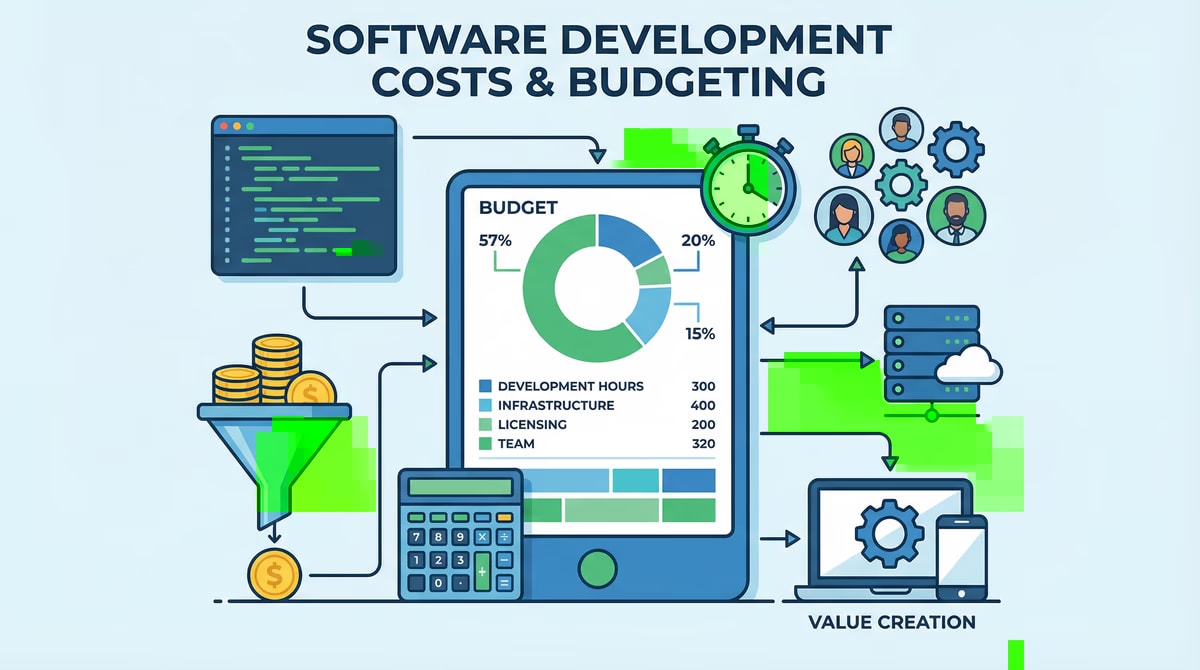
Altsystem Migration: A Guide to Costs and Budgeting
In today's fast-paced digital landscape, outdated IT systems, often referred to as old systems, are a considerable burden for companies. They're not just expensive in maintenance, sonde...
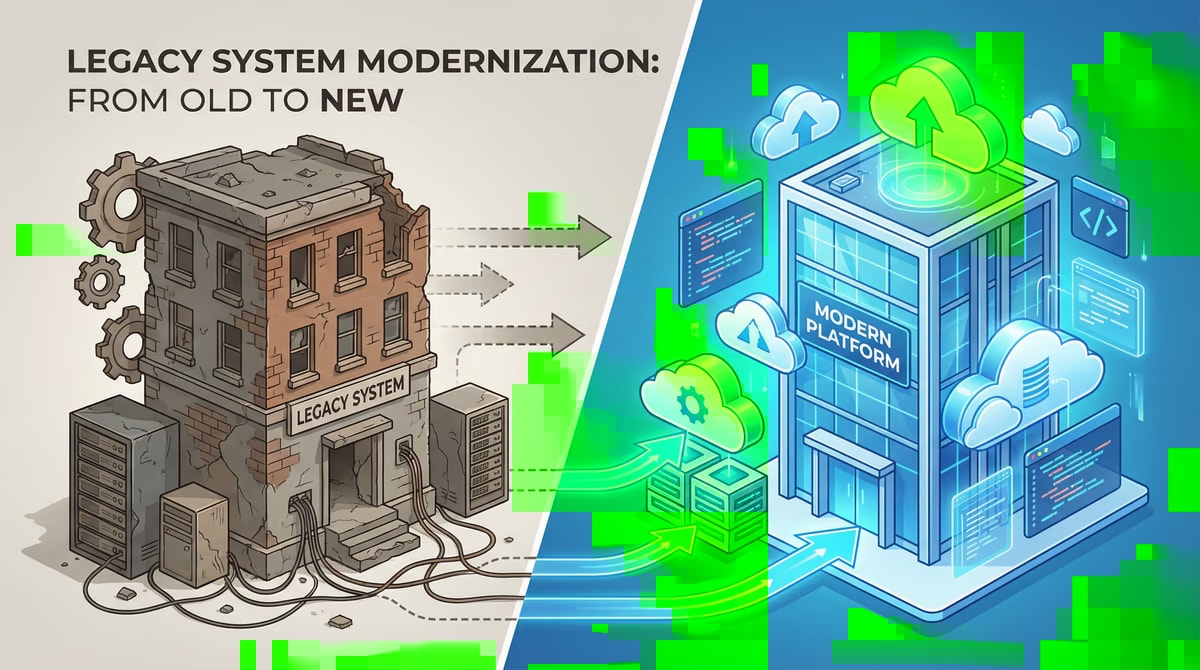
Altsystem migration: The smooth transfer of knowledge
The Altsystem migration is an unavoidable but also a great challenge for many companies. Outdated systems, often referred to as legacy systems, brake the innovative power,...
Free download
Checklist: 10 questions before software development
Key points before you start: budget, timeline, and requirements.
Get the checklist in a consultationRelevant next steps
Related services & solutions
Based on this article's topic, these pages are often the most useful next steps.
Related services
Related solutions
Related comparison
Cost calculators
More on Software development and next steps
This article is in the Software development topic. In our blog overview you will find all articles; under category Software development more posts on this subject.
For topics like Software development we offer matching services – from app development and AI integration to legacy modernisation and maintenance. We describe typical use cases under solutions. Our cost calculators give initial estimates. Key terms are in the IT glossary. Books and long-form guides appear on the publications page; deeper articles live under topics.
If you have questions about this article or want a non-binding discussion about your project, you can book a consultation or reach us via contact. We usually respond within one working day.