
As of: 23 September 2026 · Reading time: 7 min
Key takeaways
- In today's dynamic working world, the change of employees is an inevitable process.
- Whether through retirement, new professional challenges or internal changes – with every ...
In today's dynamic working world, the change of employees is an inevitable process. Whether through retirement, new professional challenges or internal changes – with every ...
“Good software is not an accident—it comes from a structured development process with clear quality standards.”
– Björn Groenewold, Managing Director, Groenewold IT Solutions
The most important thing in the short term: Structured documentation is the most effective remedy for loss of knowledge in employee changes.
Proven formats are process manuals, decision logs and contextual code documentation – ideally combined with regular review cycles to keep the content up to date.
Documentation as a Knowledge Transfer: Best Practices for the Recognition of Business Knowledge
In today's dynamic working world, the change of employees is an inevitable process.
Whether through retirement, new professional challenges or internal changes – with every way, potentially valuable knowledge is lost. For companies, so, the urgent question arises.
How can this knowledge be effectively secured and passed on to subsequent colleagues?
The answer lies in a thought-out strategy for knowledge transfer, where documentation plays a central role. In this article we will explain why good documentation is essential and what best practices have proven themselves in practice.
Why is documentation so important for knowledge transfer?
In today's dynamic working world, the change of employees is an inevitable process.
Leaders exploring Documentation as a Knowledge Transfer: Best Practices for Observing… can use AI & Machine Learning, Cost Calculator: Software Development, Our Development Process sowie Cost Calculator: AI Knowledge Base as structured entry points.
Effective Knowledge transfer for employees is more than just a handover of tasks. It is the foundation for the continuity and further development of a company.
A systematic documentation of processes, project experiences and expertise offers decisive benefits:
- Securing explicit knowledge: While implicit knowledge based on personal experiences is difficult to grasp, explicit knowledge – i.e. facts, instructions and process descriptions – can be recorded excellently. Thus, it becomes accessible to all and remains available to the company even after the excretion of knowledge carriers.
- Accelerated onboarding: New employees find themselves in their tasks much faster if they can rely on a structured knowledge base. This not only shortens the incorporation time, but also increases motivation and productivity from the start.
- Property of process consistency: Recorded standards and procedures ensure that tasks are performed uniformly and consistently high quality. This reduces error, avoids double work and creates reliability.
- Supporting innovation: If knowledge is transparent and accessible, employees can build on the experiences of their colleagues, question existing processes and develop new creative solutions.
Best Practices for Documentation as Knowledge Transfer
In order to exploit the full potential of the documentation for knowledge transfer, it is not enough to make information random. A strategic approach is required.
The following best practices have proved especially effective.
Creating clear structures and uniform standards
Short: A good documentation is primarily a well-organized documentation.
A good documentation is primarily a well-organized documentation. Without clear structures, the search for information quickly becomes the frustrating needle in the haystack.
Define uniform standards from the start:
- Use templates: Create templates for different types of documents, such as process descriptions, project debriefings or meeting protocols. This ensures consistent appearance and ensures that all relevant information is collected.
- Some name conventions: Set how files and folders are to be named. A logical and comprehensible naming makes it much easier to find documents.
- Central knowledge base: Share all relevant documents at a central location accessible to all employees. Whether a company wiki, a document management system or a shared drive – is crucial that there is a “Single Source of Truth”.
Select the right tools
Choosing the right tools is a key factor in the success of your documentation strategy. The needs may vary according to size and culture.
However, some tools have proven to be especially useful:
- Company Wikis (e.g. Confluence, Notion): Wikis are excellent for collaborative creation and maintenance of knowledge. They are flexible, easy to use and allow intuitive linking of content.
- Process documentation software (e.g. Miro, Lucidchart): Visual representations of processes are often more understandable than pure text descriptions. With special tools, complex processes can be clearly visualized.
- Knowledge management systems: Complete knowledge management platforms provide an integrated solution for the collection, organization and provision of knowledge across the company.
Implizites make explicit knowledge
The biggest challenge in knowledge transfer is the documentation of implicit knowledge – that wealth of experience that is difficult to put into words.
Still, there are methods to ensure this valuable knowledge:
| Method | Description | Suitable for |
|---|---|---|
| Expert interviews | Structured interviews with knowledge providers to capture their experiences, solution strategies and “Lessons Learned”. | Deep expert knowledge, project experiences |
| Job Shadowing | Employees accompany skilled colleagues in their daily work and document the processes and decision-making processes. | Practical skills, daily routines |
| Storytelling | Knowledge providers tell about concrete challenges and how they mastered them. These stories are often more memorable than dry facts. | Complex problem solutions, customer interactions |
| --- | --- | --- |
| Debriefing sessions After completing a project or an important task, the team comes together to reflect and document the experiences. | Project-specific knowledge, team experiences |
Integration of documentation into workflows
Documentation must not be perceived as an annoying extra task, which is only done if needed. Ideally, it becomes a natural part of daily work.
So anchor the documentation firmly in your processes:
- On and offboarding: Make the documentation and handover of knowledge a permanent part of the process when new employees start or leave the company.
- Projects: At the end of each project, plan time for detailed debriefing and documentation of results and experiences.
- Regular reviews: Make sure that existing documentation is regularly reviewed and updated so that they do not outdated.
Promoting a culture of knowledge sharing
The best tools and processes do not benefit if the corporate culture does not support the exchange of knowledge.
An open and trusting atmosphere is the basic prerequisite for employees to share their knowledge.
- Exhibitor function of executives: When executives actively share knowledge and experience the importance of documentation, they send a strong signal to the entire team.
- Recognition and appreciation: Address the commitment of employees who actively document and share their knowledge. This can be done by praiseworthy words, but also by material incentives.
- Creating Psychological Security: Promote an environment where questions are raised and errors are allowed. Only those who feel safe will be willing to open knowledge gaps and ask for support.
Conclusion: Your partner for sustainable knowledge transfer
A strategically planned and consistently introduced documentation is the key to a successful knowledge transfer of employees and thus to the sustainability of your company.
It not only ensures valuable know-how, it also increases efficiency, promotes innovation and makes your company more resilient to human changes.
The introduction of a sustainable knowledge culture and the establishment of an effective documentation structure can be a complex task. Groenewold IT Solutions is a competent partner for you.
With our expertise in process optimization and rollout of tailor-made IT solutions, we help you develop and successfully implement a tailor-made strategy for your knowledge transfer.
Contact us to jointly secure your company's knowledge and make it useful for the future.
Find out our Individual software development and how we can support your company.
Next consultation appointment →
Frequently Asked Questions (FAQ)
What is this article about: “Documentation as a Knowledge Transfer: Best Practices for Observing Business Knowledge”?
Here we cover Documentation as a Knowledge Transfer. Best Practices for Observing Business Knowledge — focused on architecture, process, and business outcomes.
In short: In today's dynamic working world, the change of employees is an inevitable process. Whether through retirement, new professional challenges or internal changes – with every ...
Who benefits most from the content described here?
Typical readers are business and IT leaders in software development who want to secure quality, security, and ease of upkeep over the long term.
How does this topic fit into an IT or digital strategy?
In a digital strategy, prioritize stable core processes first, then extensions. See also professional software development and consulting.
For multi-system landscapes, IT consulting and architecture helps align vendors and internal teams.
What are sensible next steps if we need support?
If you need support with design, delivery, or modernization: schedule an appointment or outline your project via contact.
References and further reading
The following separate references complement the topics in this article:
About the author

Managing Director of Groenewold IT Solutions GmbH and Hyperspace GmbH
Since 2009 Björn Groenewold has been developing software solutions for the mid-market. He is Managing Director of Groenewold IT Solutions GmbH (founded 2010) and Hyperspace GmbH. As founder of Groenewold IT Solutions he has successfully supported more than 250 projects – from legacy modernisation to AI integration.
Blog recommendations
Related articles
These posts might also interest you.

Having Software Developed: Costs and a Realistic Price Overview (2026)
A clear guide to what drives custom software budgets, typical net price bands from MVP to ERP integration, in-house vs. agency – plus your next step to the software development cost calculator.

Implicites make explicit knowledge: techniques and tools for a successful knowledge transfer
In today's knowledge-based working environment, the effective knowledge transfer between employees is a decisive competitive advantage. Companies that create the valuable implicit...
Altsystem migration: Avoid frequent errors
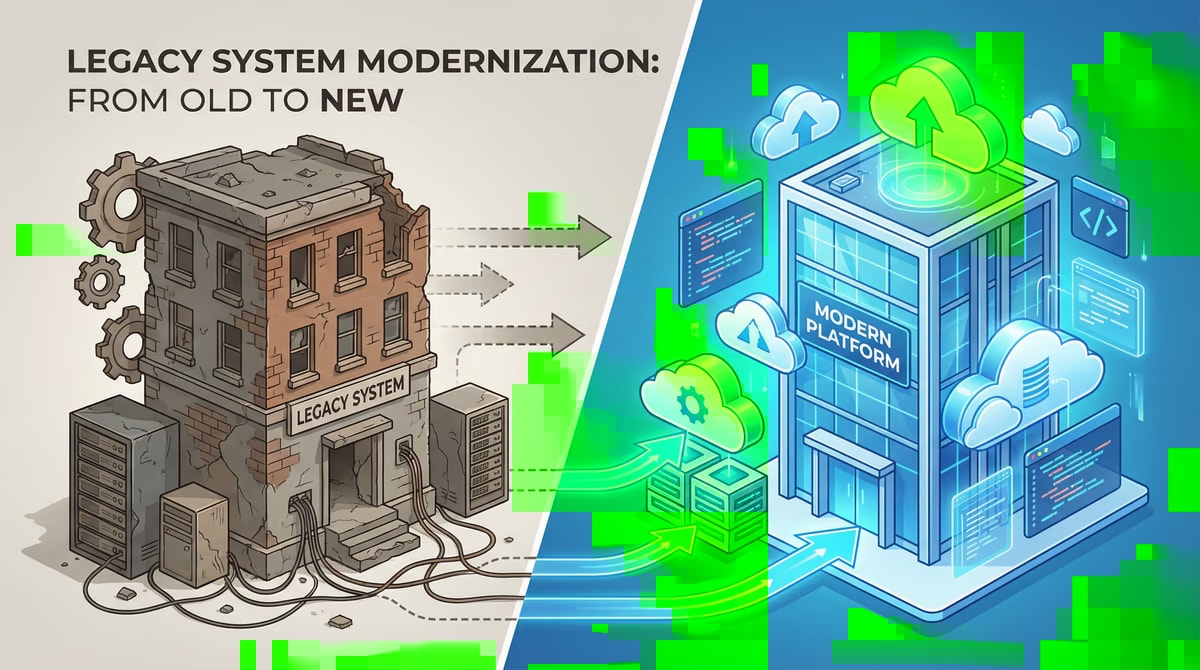
The digital transformation is in full swing and forces companies to continually modernise their IT infrastructure. A central component here is the Altsystem migration, so the...
Free download
Checklist: 10 questions before software development
Key points before you start: budget, timeline, and requirements.
Get the checklist in a consultationRelevant next steps
Related services & solutions
Based on this article's topic, these pages are often the most useful next steps.
Related services
Related solutions
Practical next steps after Documentation as a Knowledge Transfer: Best Practices for Observing Business Knowledge
Documentation as a Knowledge Transfer: Best Practices for Observing Business Knowledge addresses a practical choice for product and IT teams. Start with one clear goal: align software scope, technical risk, and business value before the next investment.
Check the current process, the data involved, and the result users need. Then record the main risks and define a small first step. This keeps the decision easy to review and gives your team a shared basis.
For implementation support, our custom software development connects the article's guidance with architecture, delivery, and stable operations. Engineering and project ownership stay with our team in Leer, Germany.
This post belongs to Softwareentwicklung. Browse the related Softwareentwicklung articles or use the English software blog for other topics.
When budget is the next question, the software cost calculators provide planning ranges. The IT glossary explains key terms, while in-depth technology guides cover wider decisions.
If the topic affects a live project, book a technical consultation or send the context through our project contact form. We usually reply within one working day.