As of: 23 September 2026 · Reading time: 4 min
Key takeaways
- In today's rapidly developing digital landscape, modernization of IT systems is essential for companies to remain competitive.
- A Software migration, al...
In today's rapidly developing digital landscape, modernization of IT systems is essential for companies to remain competitive. A Software migration, al...
“Good software is not an accident—it comes from a structured development process with clear quality standards.”
– Björn Groenewold, Managing Director, Groenewold IT Solutions
The success of a software migration can be measured by concrete KPIs.
System access after go-live, error rate compared to the legacy system, user acceptance (usage rate), performance benchmarks. And adherence to budget and timeline.
Without defined success criteria, no objective evaluation is possible.
In today's rapidly developing digital landscape, modernization of IT systems is essential for companies to remain competitive.
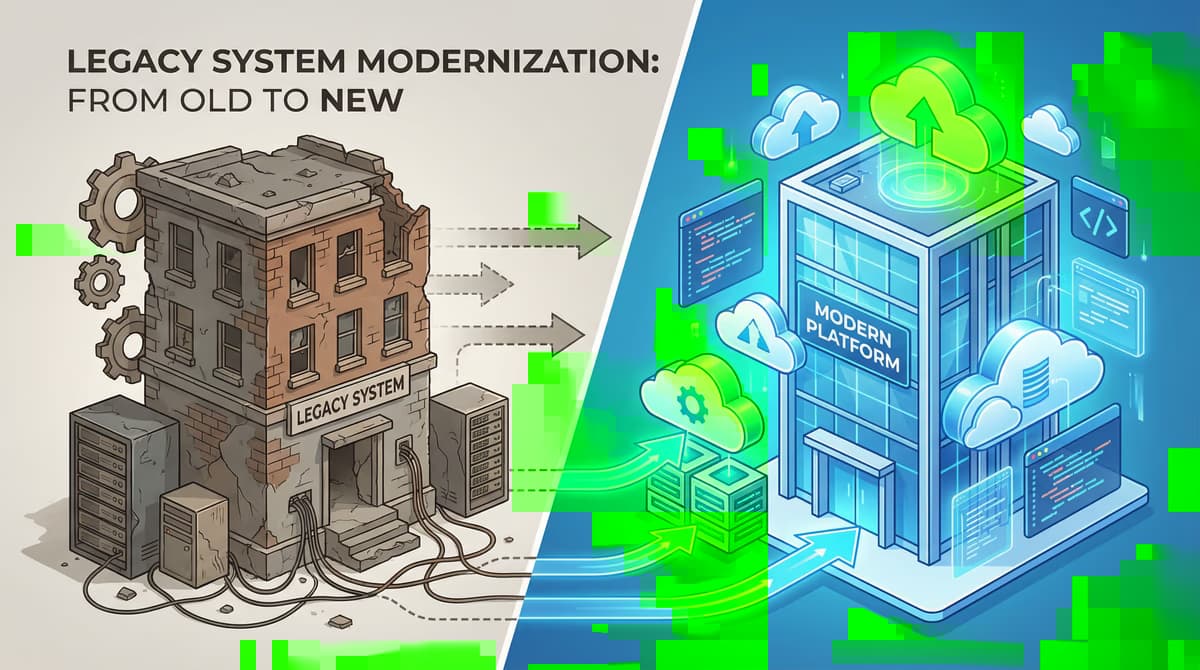
A software migration, i.e. the process of switching from one software environment to another, is a central but also complex process.
Whether it is changing to a new platform, updating outdated systems or moving to the cloud – the success of such a project must be measurable to justify the high effort in time and resources.
But how do you measure the success of a Software migration? The answer is defined and monitored by clear targets and key performance indicators (KPIs).
Why is the measurement of success crucial in a software migration?
In today's rapidly developing digital landscape, modernization of IT systems is essential for companies to remain competitive.
When planning Software migration: Success measurement and KPIs for a smooth transition from idea to delivery, Legacy Modernisation, Cost Calculator: Legacy Modernisation, Solution: Legacy Reduction sowie Monolith vs. Microservices offer practical next steps on our site.
The careful measurement of the success of a software migration offers far more than just a subsequent evaluation.
It is a strategic instrument that controls and improves the entire migration process. The key benefits of a consistent measurement of success are:
- Determination of business goals: The definition of KPIs ensures that the migration project pays directly to the higher-level strategic goals of the company, whether it is cost reduction, efficiency increase or the improvement of customer experience.
- Clarity and accountability: Clear metrics create a transparent communication basis for all stakeholders, from IT team to management. The project progress will be comprehensible and decisions can be made based on data.
- Continuous improvement: Data collected during and after migration provide valuable insights for future IT projects. Vulnerabilities in the process can be identified and best practices for the future can be derived.
- Risk minimisation: Continuous monitoring of KPIs enables potential problems to be identified and resolved at an early stage before they lead to serious disruption of the business.
The most important KPIs for measuring migration success
In order to comprehensively evaluate the success of a software migration, KPIs should be considered from different areas. These can be divided into several categories:
Cost management and optimization
Short: One of the most common reasons for migration is cost savings.
One of the most common reasons for migration is cost savings. To validate these, the following KPIs are crucial:
- Cost by Resource: Monitoring costs for custom resources such as virtual machines, storage or network components helps to find over-provisioned or unused resources.
- Cost per Project/Department: The allocation of costs to specific projects or departments creates clarity and promotes the company's ownership for costs.
- Cost Trends: Review of K.
References and further reading
The following separate references complement the topics in this article:
- Bitkom – German digital industry association.
- German Federal Office for Information Security (BSI).
- European Commission – Digital strategy.
- MDN Web Docs (Mozilla)
- W3C – World Wide Web Consortium.
Frequently Asked Questions (FAQ)
What is this article about: “Software migration: Success measurement and KPIs for a smooth transition”?
This post explores Software migration. Success measurement and KPIs for a smooth transition from the perspective of needs, typical pitfalls. And sensible next steps. In short.
In today's rapidly developing digital landscape, modernization of IT systems is essential for companies to remain competitive. A Software migration, al...
Who benefits most from the content described here?
Useful for project leads and product owners in Software development who must choose between standard software, custom development, and integration.
How does this topic fit into an IT or digital strategy?
Technically and organizationally, alignment with experienced partners pays off — from requirements to operations; start with the [services overview](/en/services/software-development). For multi-system landscapes, [IT consulting and architecture](/en/services/it-consulting) helps align vendors and internal teams.
What are sensible next steps if we need support?
A practical next step: book a consultation and clarify which MVP or pilot fits your team and landscape.
About the author

Managing Director of Groenewold IT Solutions GmbH and Hyperspace GmbH
Since 2009 Björn Groenewold has been developing software solutions for the mid-market. He is Managing Director of Groenewold IT Solutions GmbH (founded 2010) and Hyperspace GmbH. As founder of Groenewold IT Solutions he has successfully supported more than 250 projects – from legacy modernisation to AI integration.
Blog recommendations
Related articles
These posts might also interest you.

Digitization in the middle class: The right technology selection as a success factor
Digitization is no longer an option for small and medium-sized enterprises (SMEs), but a need to compete. But Digitalization in the middle class is...
Digitization in the middle class: How to measure your success
Digitization is no longer a trend for medium-sized enterprises, but a need to remain competitive. But how to measure the success of Digitalisie...
Digital Transformation: Leadership and Change Management as key to success
Digital transformation is more than just the introduction of new technologies. It is a profound change process that affects companies of all sizes. Especially for small and...
Free download
Checklist: 10 questions before software development
Key points before you start: budget, timeline, and requirements.
Get the checklist in a consultationRelevant next steps
Related services & solutions
Based on this article's topic, these pages are often the most useful next steps.
Related services
Related solutions
Related comparison
Cost calculators
Practical next steps after Software migration: Success measurement and KPIs for a smooth transition
Software migration: Success measurement and KPIs for a smooth transition addresses a practical choice for product and IT teams. Start with one clear goal: reduce legacy risk in controlled steps while daily work and key data remain available.
Check the current process, the data involved, and the result users need. Then record the main risks and define a small first step. This keeps the decision easy to review and gives your team a shared basis.
For implementation support, our legacy software modernization connects the article's guidance with architecture, delivery, and stable operations. Engineering and project ownership stay with our team in Leer, Germany.
This post belongs to Software development. Browse the related Software development articles or use the English software blog for other topics.
When budget is the next question, the software cost calculators provide planning ranges. The IT glossary explains key terms, while in-depth technology guides cover wider decisions.
If the topic affects a live project, book a technical consultation or send the context through our project contact form. We usually reply within one working day.