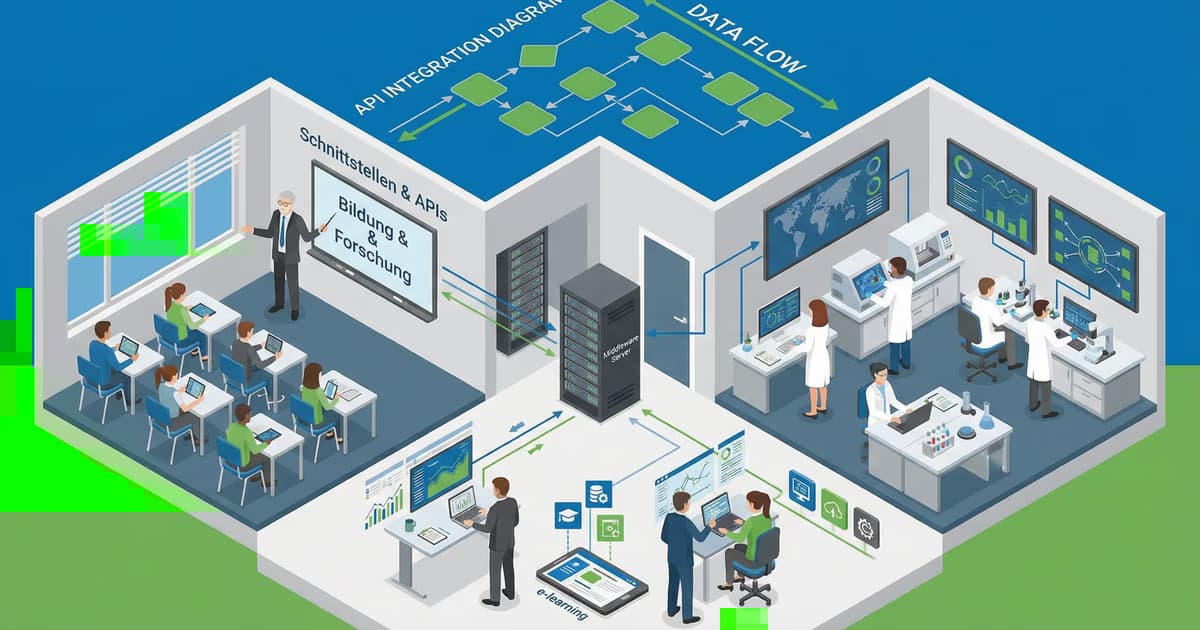
As of: 4 September 2026 · Reading time: 7 min
Key takeaways
- Logistics and transport form the backbone of the global economy.
- Demands for speed, transparency, and sustainability keep rising.
- Many companies are stuck with legacy IT systems that hold them back.
The logistics and transport industry is the backbone of the global economy. But while the demands on speed, transparency and sustainability are constantly rising, many companies are fighting with an invisible but powerful opponent:...
“The real challenge in legacy modernization is not the code—it is keeping operations running without disruption.”
– Björn Groenewold, Managing Director, Groenewold IT Solutions
Legacy Modernization in Logistics & Transport: The Way to Digital Supply Chain
Published: February 5, 2026 | Updated: May 6, 2026 | Reading time: 6 min Author: Björn Groenewold
Key Takeaways
The logistics and transport industry is the backbone of the global economy.
For Legacy Modernization in Logistics & Transport: The Way to Digital…, Legacy Modernisation, Cost Calculator: Legacy Modernisation, Solution: Legacy Reduction sowie Monolith vs. Microservices help you align rollout, scope and budget before you commit.
- Logistics and transport form the backbone of the global economy.
- Demands for speed, clarity, and sustainability keep rising.
- Many companies are stuck with legacy IT systems that hold them back.
Why Legacy Systems Are a Growing Cost in Logistics
Short: Logistics and transport companies face rising goals.
Logistics and transport companies face rising goals. Customers want faster delivery. They expect real-time tracking. They demand lower carbon footprints.
Many firms try to meet these goals with old IT systems. Those systems were built for simpler operations.
The gap between what the business needs and what the system can do keeps growing.
Legacy modernization is not just a tech upgrade. It is a strategic choice. It affects operating costs, competitive position, and the ability to win new contracts.
1. The Cost Problem: Why Old Systems Cost More Than They Should
High Maintenance Costs and Technical Debt
Short: Most legacy logistics systems run on outdated programming languages.
Most legacy logistics systems run on outdated programming languages. Few specialists understand them. Finding qualified developers takes time and costs more every year.
Industry estimates show a clear pattern:
- Over 80% of IT budgets go toward maintaining old systems.
- Less than 20% is left for innovation.
This makes funding digital supply chain projects nearly impossible.
Technical debt builds up slowly. Each workaround, custom interface, and delayed upgrade adds to future costs. The longer modernization is delayed, the more expensive it becomes.
Cost Comparison: Legacy vs. Modern Cloud-Based Systems
| Cost Factor | Legacy Systems | Modern Cloud-Based Systems |
|---|---|---|
| Maintenance | High — specialist staff, spare parts | Lower, predictable — managed services |
| Scalability | Limited — expensive hardware upgrades | Elastic — scales on demand (pay-as-you-go) |
| Downtime | Frequent — errors hard to diagnose | Minimized — redundancy and auto-failover |
| New features | High risk — changes may break things | Fast deployment via DevOps |
These differences add up over time. Companies that modernize earlier spend less over five years than those who wait.
2. Security Risks and Compliance
Short: Logistics companies handle critical data.
Logistics companies handle critical data. This includes shipment contents, customs records, customer contracts, and route data. Old systems that no longer receive security updates are known vulnerabilities.
Cyberattacks on logistics companies have increased sharply. A successful attack on a legacy TMS can halt operations for days.
Recovery is slow when systems lack documentation and are fragile.
Compliance rules add more pressure. Customs regulations, transport safety standards, and GDPR all require features that legacy systems often lack:
- Structured audit trails
- Data deletion mechanisms
- Encryption
3. Scalability and the Demands of Modern Logistics
Peak Load Handling
Short: E-commerce has created extreme seasonal peaks.
E-commerce has created extreme seasonal peaks. Black Friday, Christmas, and promotional campaigns can triple order volumes overnight. Legacy systems were built for stable, predictable workloads.
They cannot scale quickly without expensive hardware.
Even with extra hardware, performance often degrades.
Modern cloud platforms scale automatically. Capacity adjusts to demand. No advance hardware provisioning is needed for peak periods.
Real-Time Visibility
Short: Customers — both B2B shippers and B2C recipients — expect real-time tracking.
Customers — both B2B shippers and B2C recipients — expect real-time tracking. Legacy TMS platforms update data in batch cycles, often hours apart. Modern platforms use event-driven updates.
Every scan, status change, and handover is at once visible.
Multi-Modal and Cross-Border Complexity
Short: Modern logistics combines road, rail, sea, and air across multiple countries.
Modern logistics combines road, rail, sea, and air across multiple countries. Legacy systems were typically built for one mode and one geography.
Extending them to handle multi-modal or cross-border shipments is a costly custom project. Modern platforms support this out of the box.
4. What Modernization Enables
Connected Transport Management
A modern TMS connects to:
- Carrier APIs for real-time rates and booking.
- Telematics systems for live vehicle tracking.
- Customer portals for self-service booking and tracking.
- ERP systems for automated order-to-shipment processing.
- Customs platforms for automated filing.
When these systems are connected, coordinators spend less time on manual data entry. They focus on managing exceptions instead.
Smart Warehouse Operations
A modern WMS connects to:
- Automated storage and retrieval systems (ASRS).
- Pick-assist technologies (voice picking, light-directed picking).
- IoT sensors for inventory monitoring and environmental control.
- E-commerce platforms for direct order fulfillment triggers.
This reduces pick errors, speeds up fulfillment, and delivers real-time inventory accuracy.
Sustainability Reporting
Short: Customers and regulators more often require CO2 reporting.
Customers and regulators more often require CO2 reporting. Modern platforms calculate emissions per shipment based on distance, mode, and load factor.
Legacy systems cannot generate this data without manual calculation.
5. Modernization Approaches for Logistics
Strangler Pattern
Short: The Strangler Pattern replaces legacy modules one at a time.
The Strangler Pattern replaces legacy modules one at a time. New features is built on a modern platform alongside the old system.
Each module — routing, tracking, carrier management, invoicing — is migrated individually.
The legacy system handles less and less until it can be decommissioned. Operations continue across. There is no single cutover moment.
API Integration Layer
Short: A middleware layer connects the legacy system to modern applications via APIs.
A middleware layer connects the legacy system to modern applications via APIs. Customer portals, carrier booking tools, and analytics access data through this layer.
The legacy core does not need immediate replacement. New digital services can launch while migration is being planned.
Full Platform Migration
For smaller legacy systems with limited custom logic, full replacement is the most efficient path.
Historical data is migrated, the new system goes live, and the legacy platform is decommissioned. This approach requires careful data migration planning and a defined parallel operation period.
6. What IT Managers and Operations Directors Need to Address
Before starting a logistics modernization project:
- Map all current systems: TMS, WMS, carrier tools, customs platforms, customer portals.
- Document every integration — EDI connections, file transfers, API calls — and their dependencies.
- Find which processes cannot be interrupted during migration, and for how long.
- Assess data quality in the legacy system: is shipment and customer data clean enough to migrate?
- Define compliance needs: GDPR data handling, customs documentation, audit trail needs.
7. Getting Started
A practical first step for logistics modernization:
- Pick one system — TMS or WMS — with the highest maintenance cost or most frequent problems.
- Map its data flows and integrations.
- Design a migration path using the Strangler Pattern with a rollback plan.
- Start with one module: carrier booking or shipment tracking are common starting points.
- Run old and new systems in parallel for 60–90 days before cutting over.
Key Quote
"The real challenge in legacy modernization is not the code — it is keeping operations running without disruption." — Björn Groenewold, Managing Director, Groenewold IT Solutions
References and Further Reading
- Bitkom – German digital industry association.
- German Federal Office for Information Security (BSI).
- European Commission – Digital strategy.
- MDN Web Docs (Mozilla)
- W3C – World Wide Web Consortium.
Author: Björn Groenewold (Dipl.-Inf.), Managing Director, Groenewold IT Solutions GmbH
Frequently Asked Questions (FAQ)
What is this article about: “Legacy Modernization in Logistics & Transport: The Way to Digital Supply Chain”?
This post explores Legacy Modernization in Logistics &. Transport. The Way to Digital Supply Chain from the perspective of needs, typical pitfalls. And sensible next steps.
In short: The logistics and transport industry is the backbone of the global economy.
But while the demands on speed, clarity and sustainability are constantly rising, many companies are fighting with an invisible but powerful opponent:...
Who benefits most from the content described here?
Useful for project leads and product owners in Legacy-Modernisierung who must choose between standard software, custom development, and integration.
How does this topic fit into an IT or digital strategy?
Technically and organizationally, alignment with experienced partners pays off — from requirements to operations; start with the [services overview](/en/services/software-development). For multi-system landscapes, [IT consulting and architecture](/en/services/it-consulting) helps align vendors and internal teams.
What are sensible next steps if we need support?
A practical next step: book a consultation and clarify which MVP or pilot fits your team and landscape.
The following separate references complement the topics in this article:
About the author

Managing Director of Groenewold IT Solutions GmbH and Hyperspace GmbH
Since 2009 Björn Groenewold has been developing software solutions for the mid-market. He is Managing Director of Groenewold IT Solutions GmbH (founded 2010) and Hyperspace GmbH. As founder of Groenewold IT Solutions he has successfully supported more than 250 projects – from legacy modernisation to AI integration.
Blog recommendations
Related articles
These posts might also interest you.
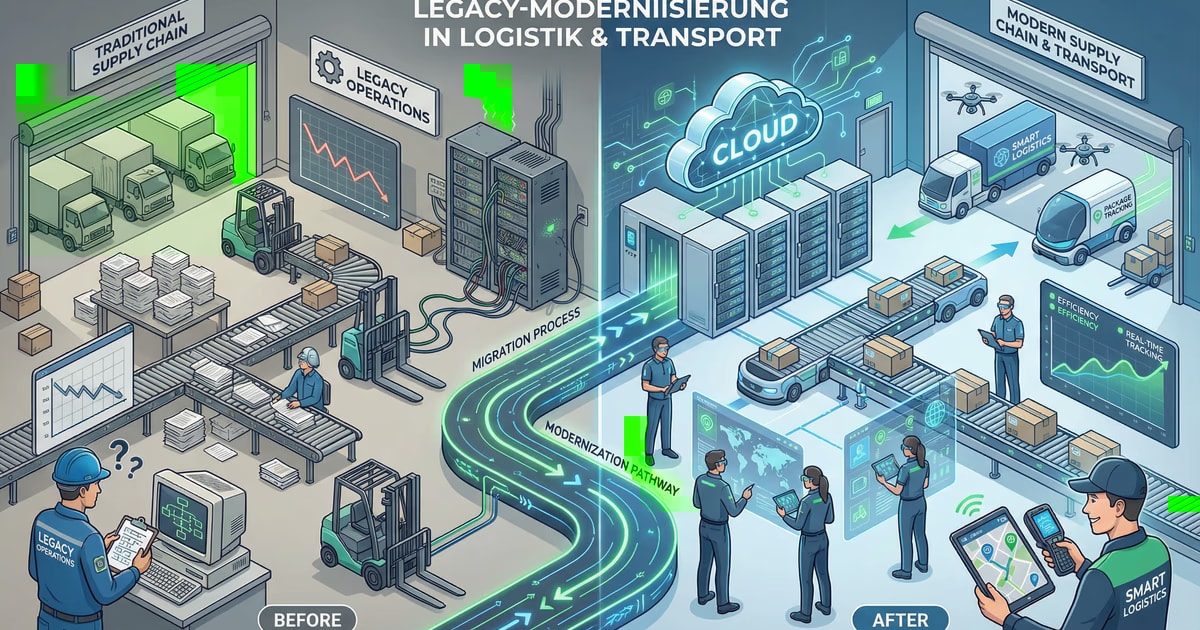
Legacy-Modernization for Crafts & Services: Your way from the IT-Falle
In an increasingly digitized economy, craft businesses and service companies face the challenge of making their business processes efficient, safe and sustainable. While modern technologies such as…
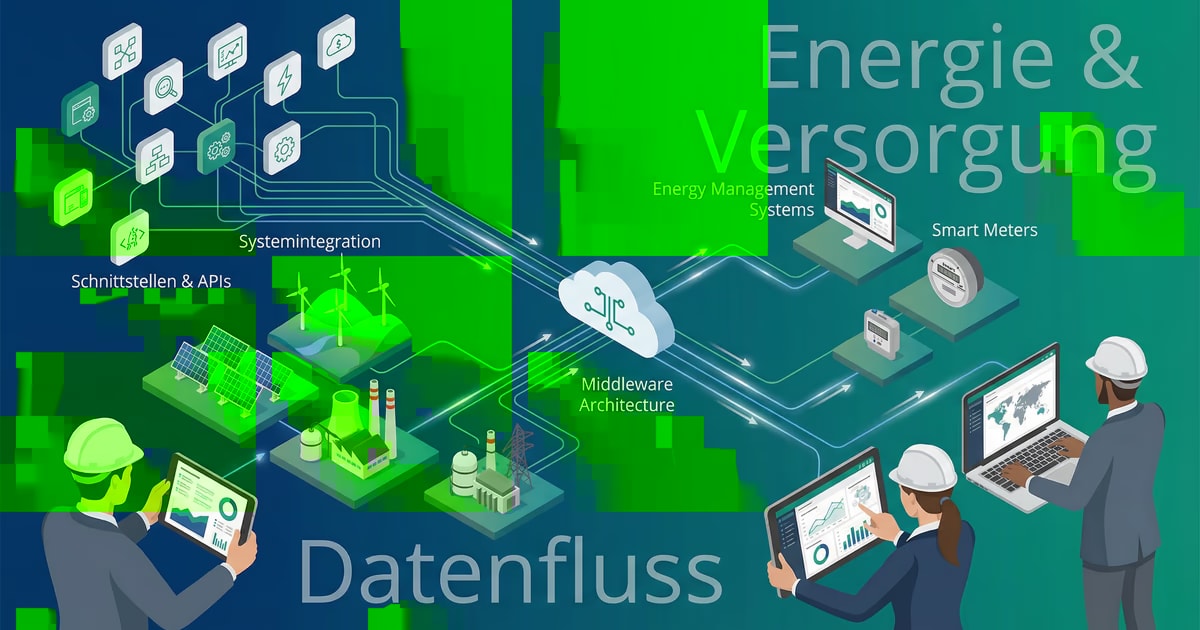
Legacy Modernization for Financial Services & Banks: The Way to the Digital Future
The financial sector is facing a profound change. Driven by new digital competitors (FinTechs), changing customer expectations and a steadily more complex regulatory system, banks and financial…
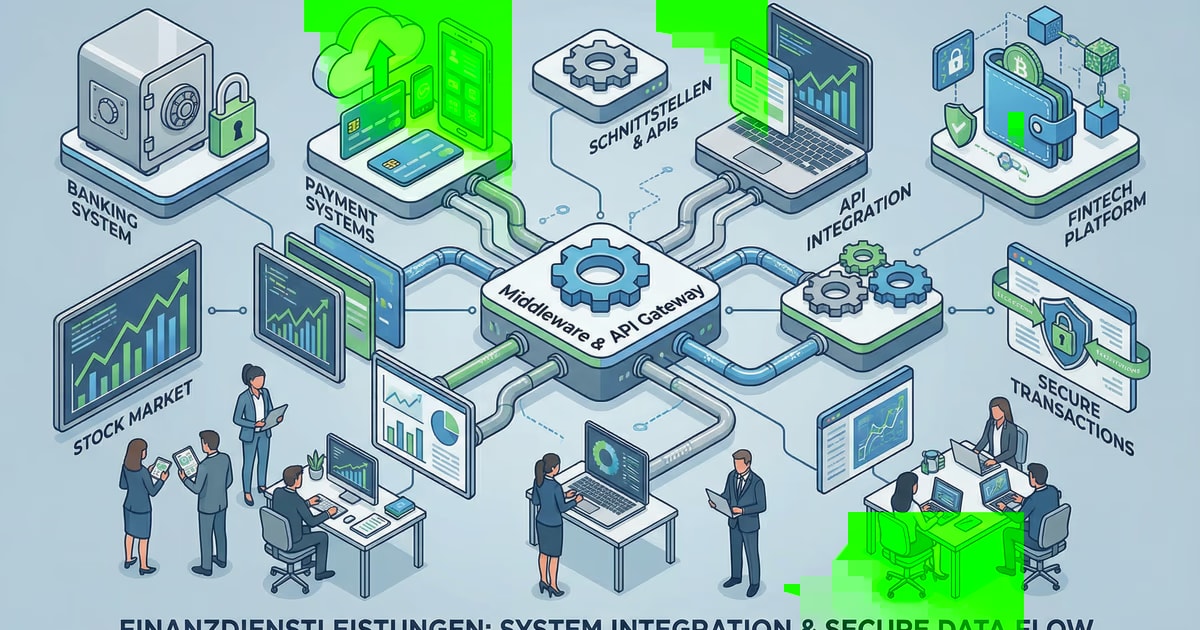
Legacy-Modernization in Healthcare: The Way to Future-proof Patient Care
The healthcare industry is facing a fundamental change worldwide. Driven by technological progress, demographic developments and increasing patient requirements, Digitalization is no longer an option…
Free download
Checklist: 10 questions before software development
Key points before you start: budget, timeline, and requirements.
Get the checklist in a consultationRelevant next steps
Related services & solutions
Based on this article's topic, these pages are often the most useful next steps.
Related solutions
Related comparison
Related industries
Practical next steps after Legacy Modernization in Logistics & Transport: The Way to Digital Supply Chain
Legacy Modernization in Logistics & Transport: The Way to Digital Supply Chain addresses a practical choice for energy providers. Start with one clear goal: reduce legacy risk in controlled steps while daily work and key data remain available.
Check the current process, the data involved, and the result users need. Then record the main risks and define a small first step. This keeps the decision easy to review and gives your team a shared basis.
For implementation support, our legacy software modernization connects the article's guidance with architecture, delivery, and stable operations. Engineering and project ownership stay with our team in Leer, Germany.
This post belongs to Legacy-Modernisierung. Browse the related Legacy-Modernisierung articles or use the English software blog for other topics.
When budget is the next question, the software cost calculators provide planning ranges. The IT glossary explains key terms, while in-depth technology guides cover wider decisions.
If the topic affects a live project, book a technical consultation or send the context through our project contact form. We usually reply within one working day.